Category Archives: 2026 Camino Caravaggio – Malta, Sicily, Napoli, Roma, Ireland

September 15, 2026 Washington DC to Dublin; return to DC on October 15, 2026

Straits of the Camino Caravaggio

It turns out that the Camino Caravaggio, for which we believe we are the pioneers, involves a crossing of straits, that is, a narrow but sometimes hazardous strip of ocean separating two land masses. “Straits” are in the news currently; in our case, we are thinking about the passage known as the Straits of Messina, a legendary waterway between the northeast corner of Sicily and the Italian mainland (near the toe of the “boot.”)
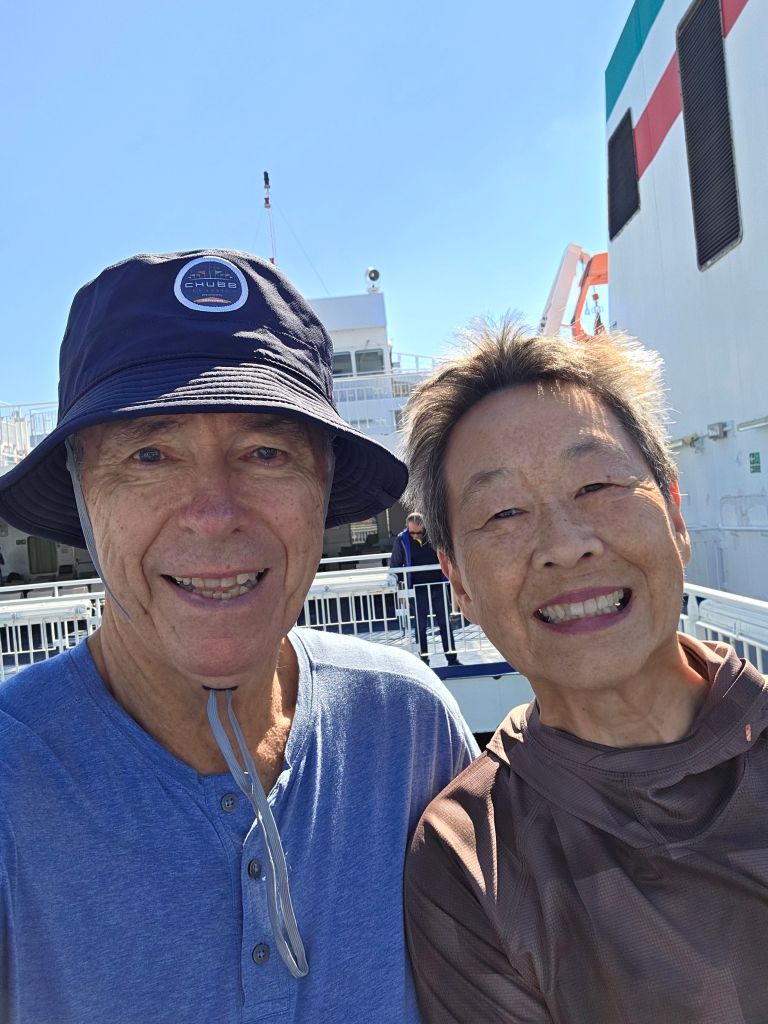
Crossing the Straits of Messina was even more exciting than we expected

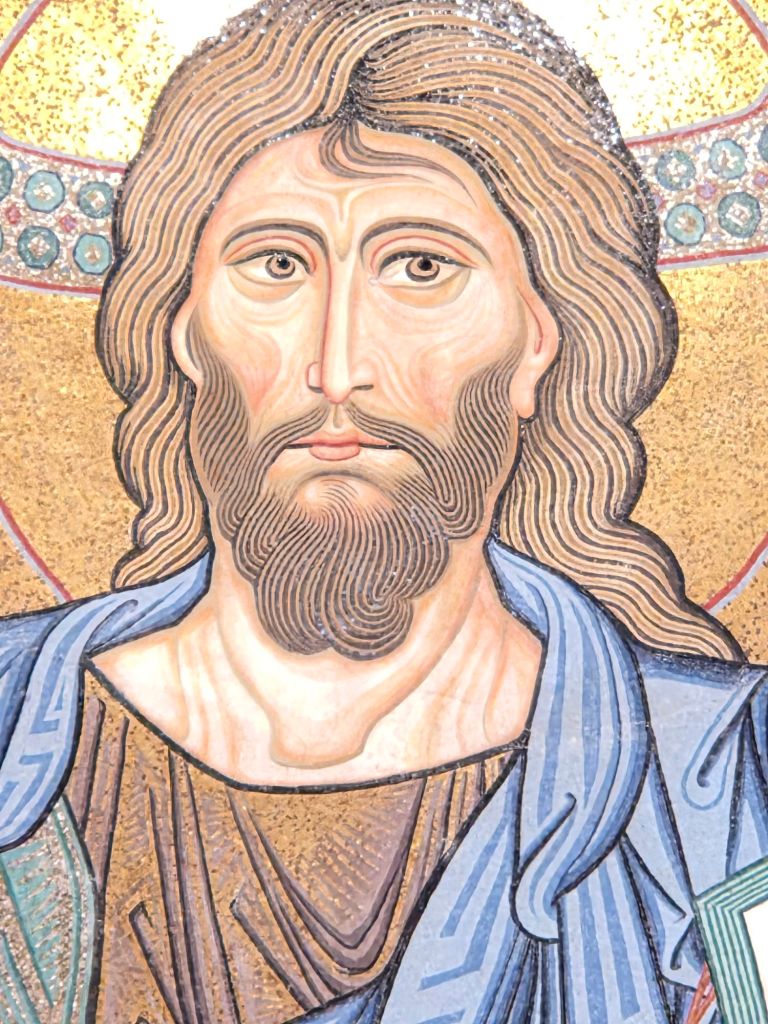
Before facing the Straits, we visited the Great Norman cathedral at Cefalù, not far from Palermo. We wanted to see the Byzantine-influenced mosaic of Christ Pantocrator — all-knowing, all-powerful, all-merciful.
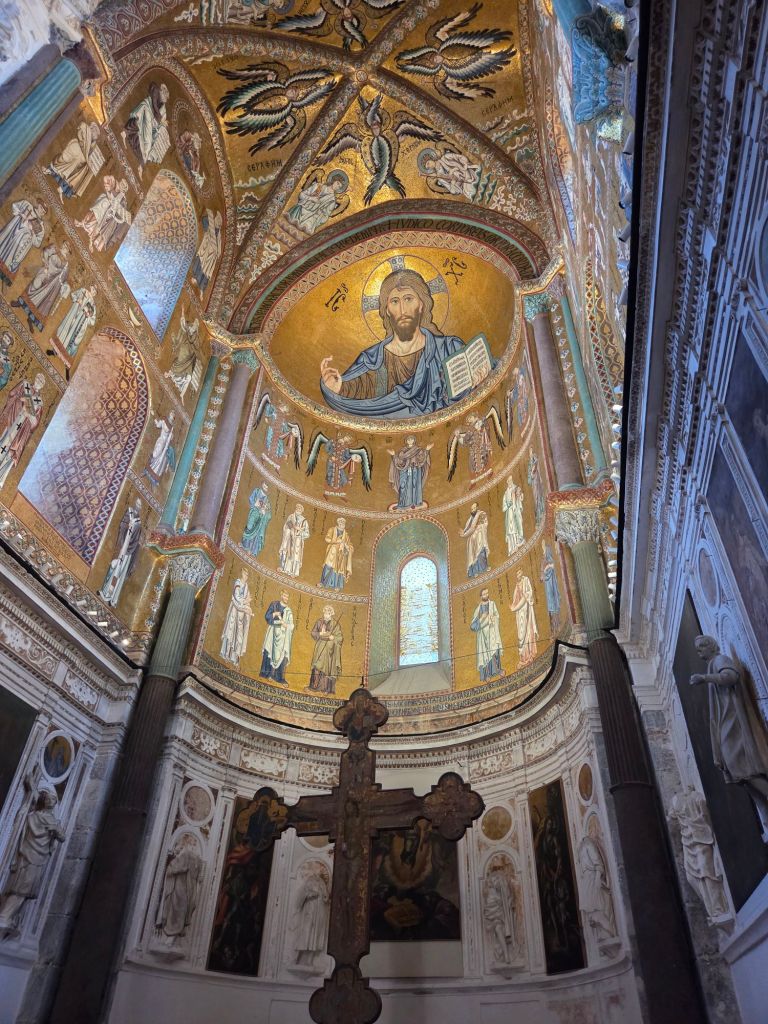
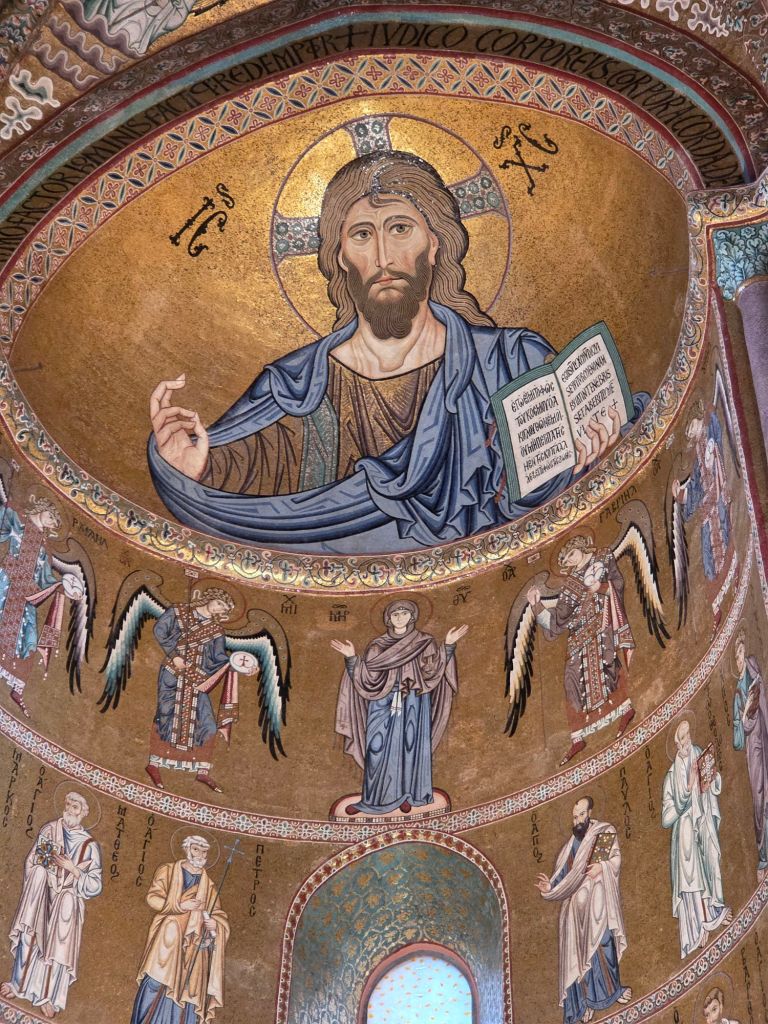
His gaze is piercing and tender.

Near the Cathedral we found the quirky Museo Mandralisca. Our interest was in the Sicilian artist of the Renaissance, Antonello da Messina.
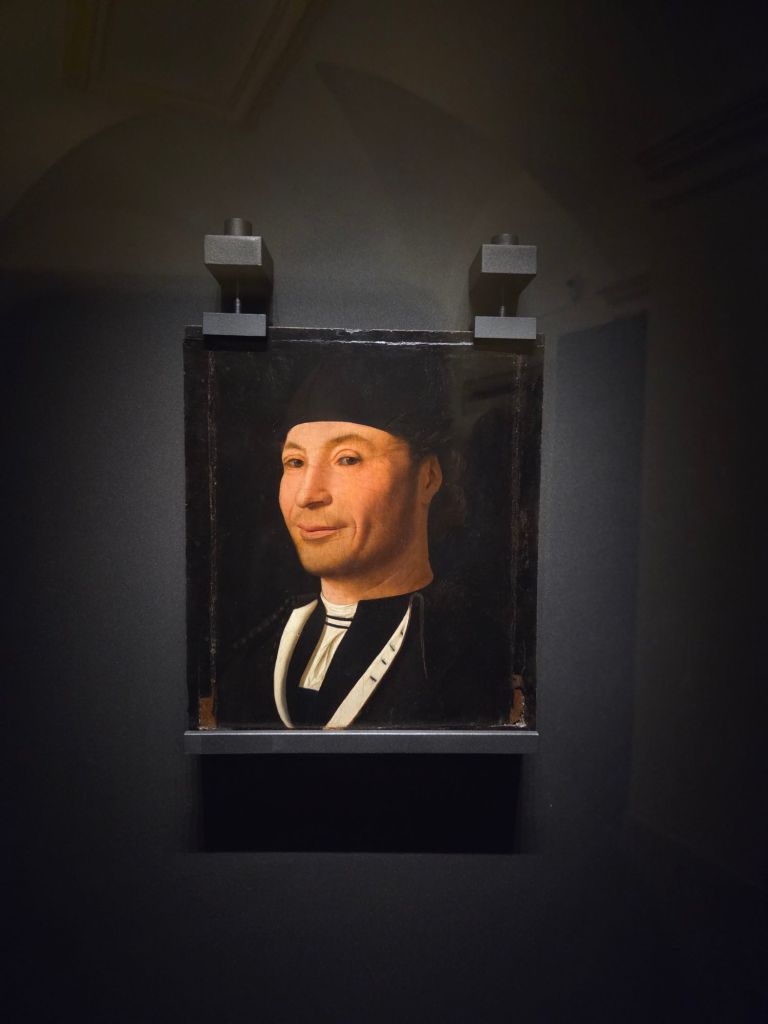
Antonello da Messina painted this portrait with a famously enigmatic smile. He is also famous for another reason, explained below.
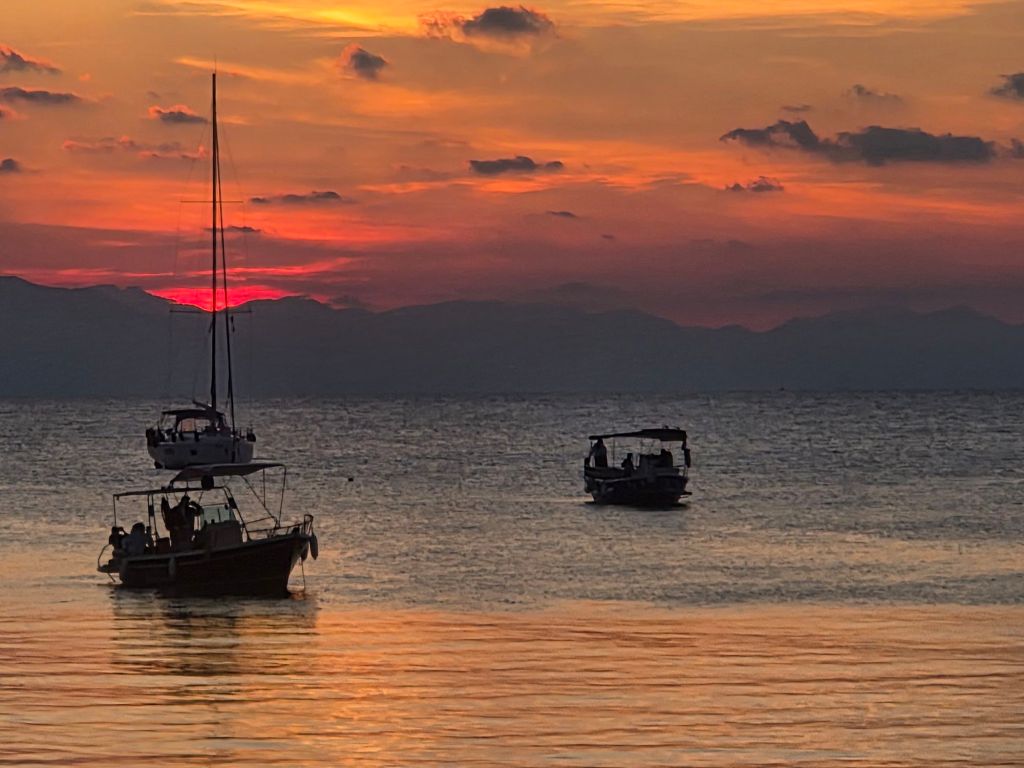
Cefalù is a popular beach resort. We enjoyed the sunset while eating Mediterranean seafood.

Next day we trained westward along Sicily’s north coast to Messina to view two Caravaggios at the Acascina Regional Museum in its excellent new building.
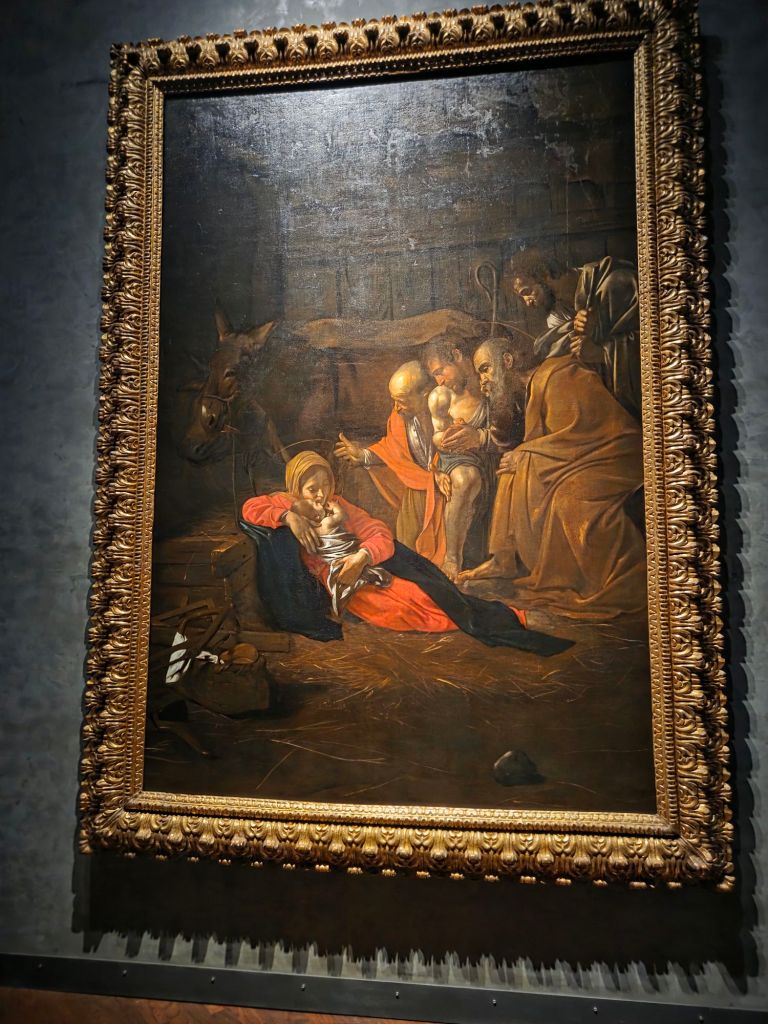
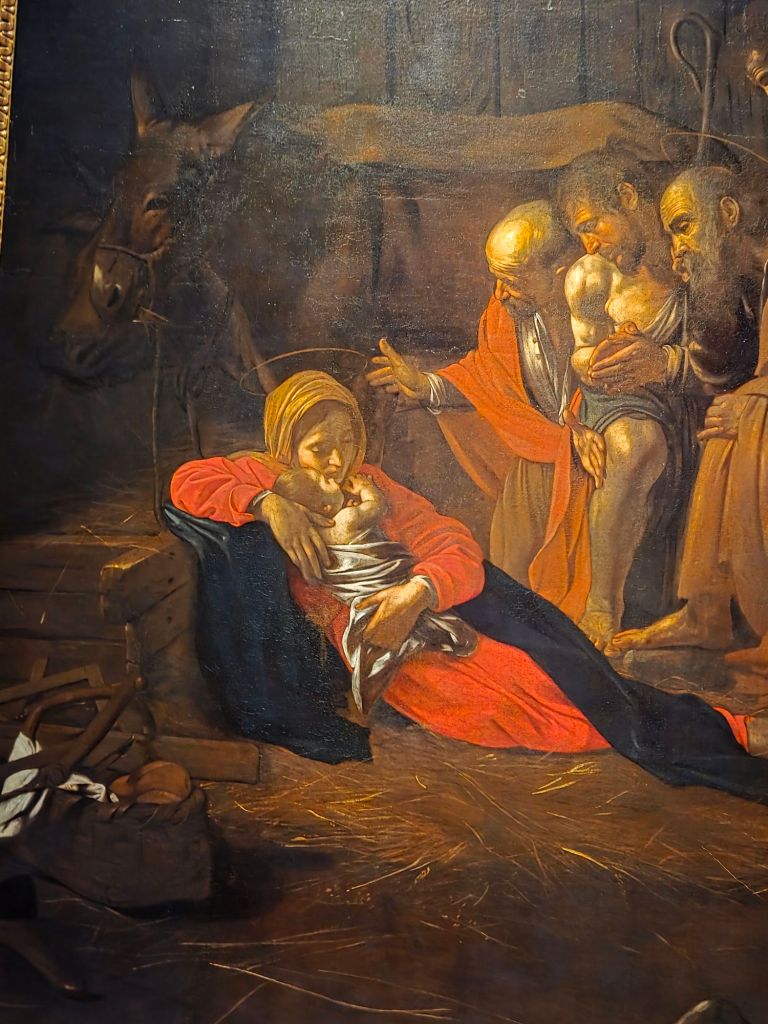
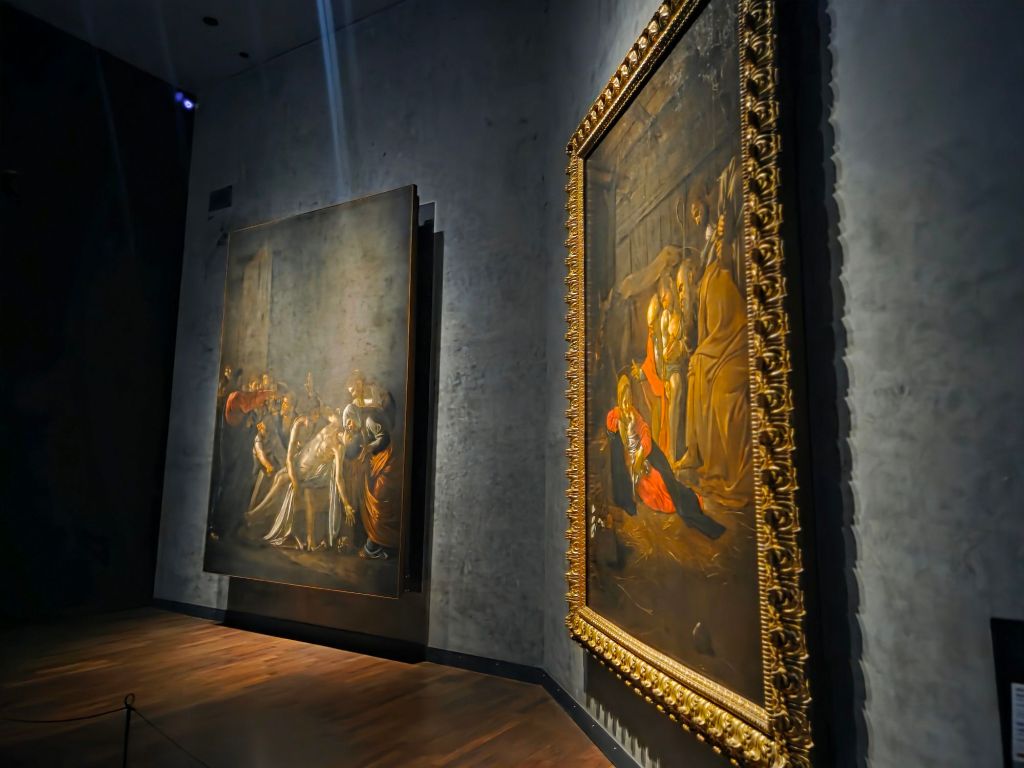
Adoration of the Shepherds was painted in Messina by Caravaggio  in 1609

Andrew Graham-Dixon, author of Caravaggio: A Life Sacred and Profane, points out the extreme sadness and poignancy of the scene. The new mother, exhausted, holding her infant to her face, is separated from the men, Joseph and two shepherds. They are essentially helpless to assist. She is alone, with her Child.
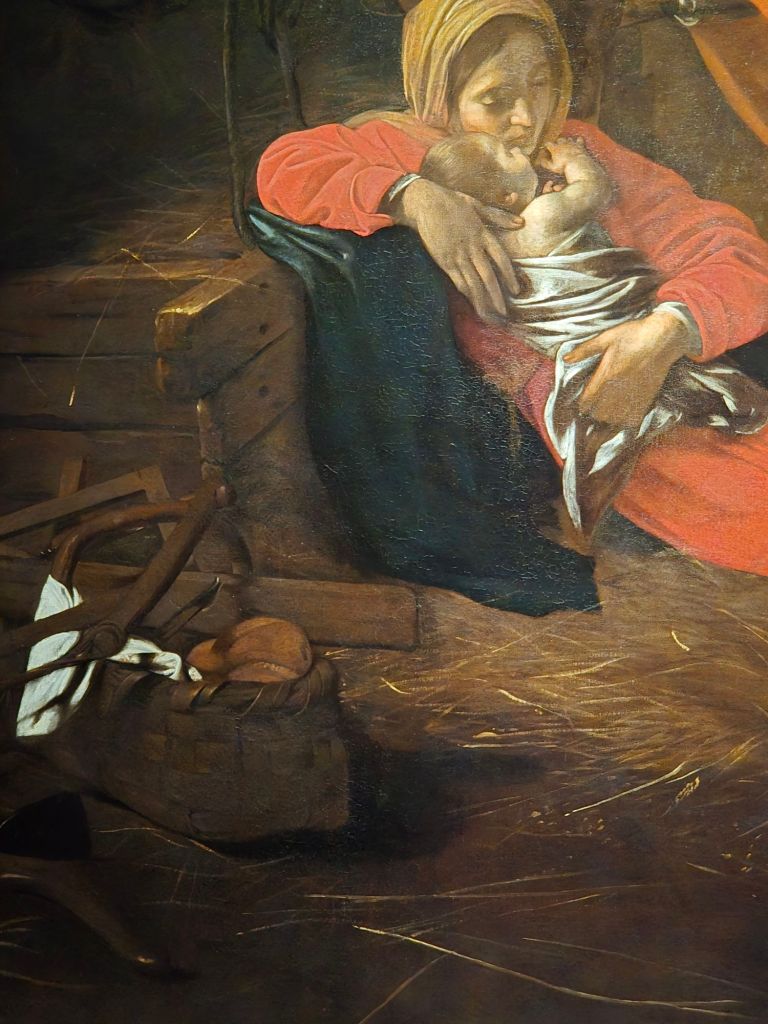
Caravaggio is also alone in the world at this time. His violent nature led him to be was disgraced before the Knights of Malta and he had fled to Sicily to avoid imprisonment, trial and punishment. In a year he would be dead.
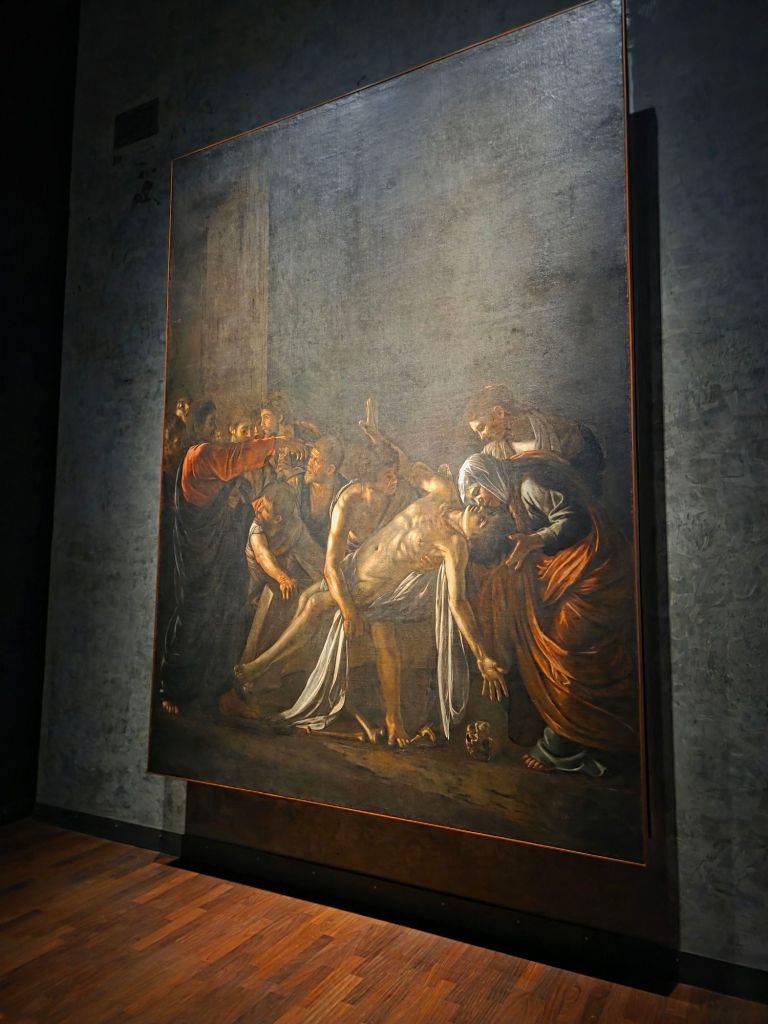
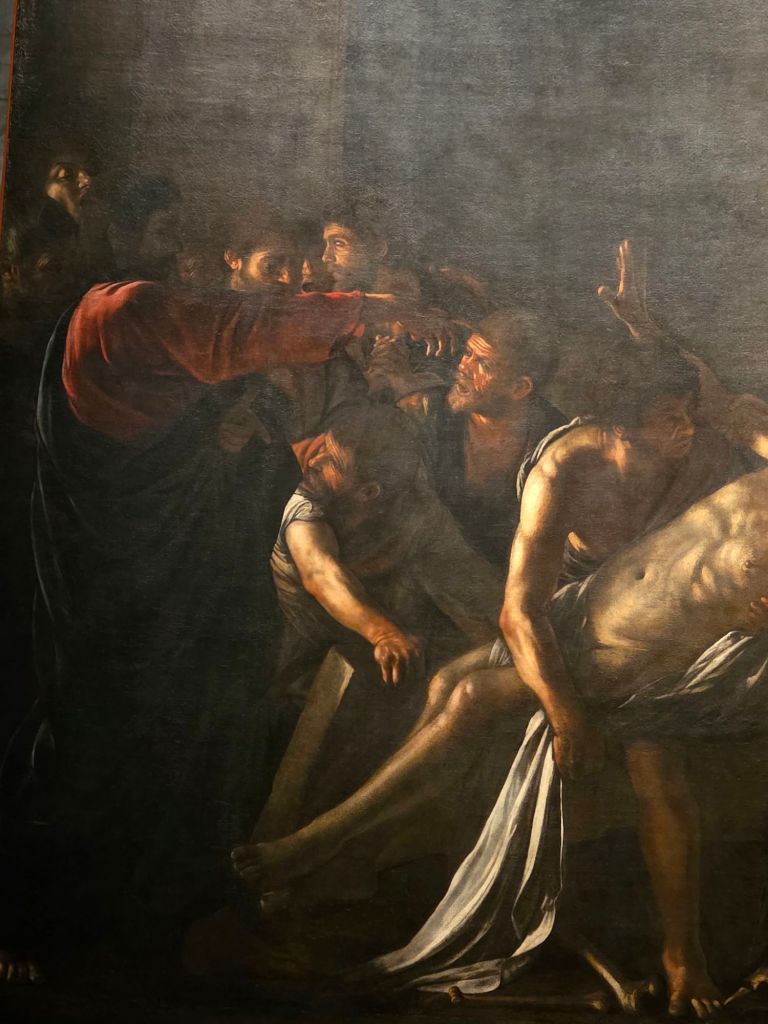
Next to Adoration of the Shepherds is displayed The Resurrection of Lazarus

Painted around the same time as Adoration, Resurrection shows the moment when Jesus, in red robe at the left, raises his arm and commands, ” Lazarus, come forth!”

Lazarus’ corpse is so clearly four days dead that the return to life is unmistakeably miraculous. Notorious and groundbreaking in his realism, Caravaggio enlisted gravediggers and their subjects as models for this painting.

Above Jesus’ raised arm can be seen one of Carravaggio’s many self portraits. Why is he looking away from the miraculous resurrection about to take place?
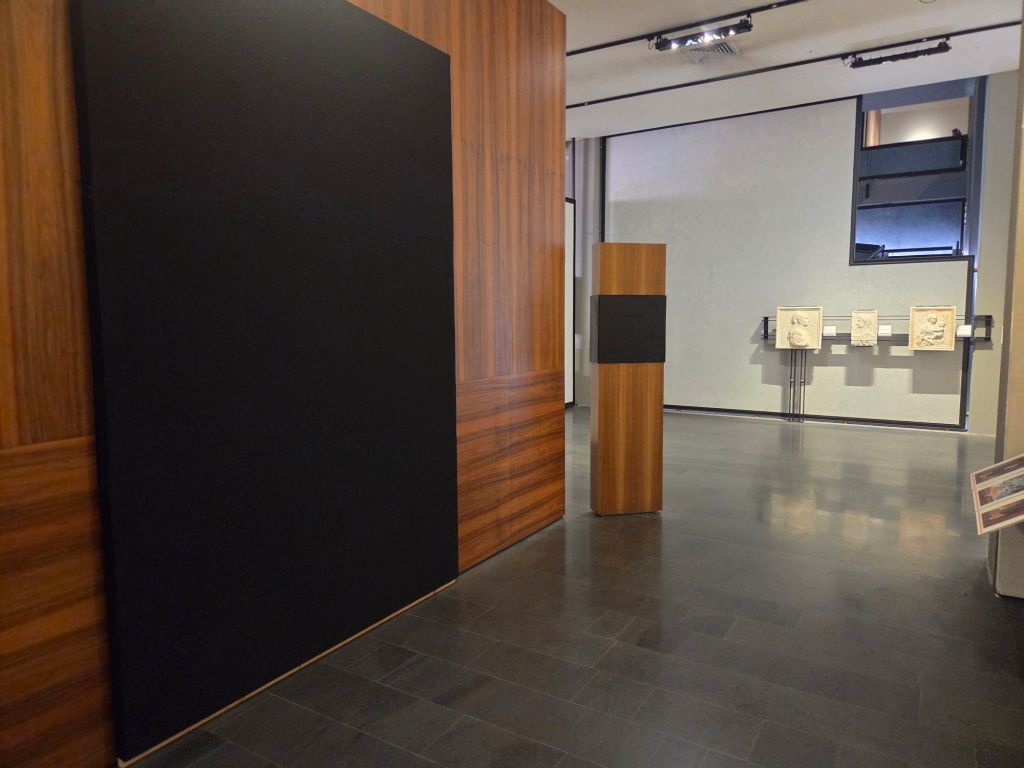
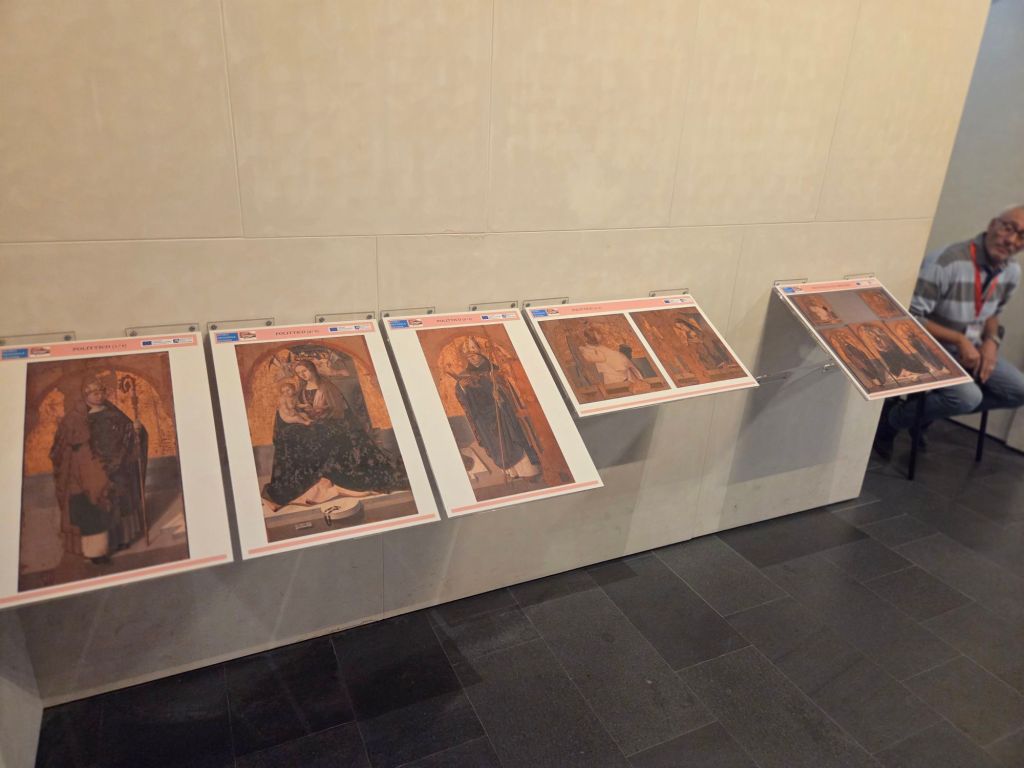
These blank, black panels sadly show the area from which four paintings by Antonello da Messina were brazenly stolen from the Accascina Regional Museum just one month before our visit. We saw da Messina’s portrait of a smiling man earlier in Cefalù.
These are reproductions of the six di Messina paintings owned by the Accascina museum. Four of them were taken by the thieves. For some reason, the thieves dropped two paintings as they scaled the museum’s fence. The museum still has those two panels but did not have them on display. One suspects that they want to first enhance their security.

Art theft of famous works, whose market values continue to rise, is a fascinating topic. Indeed,  Palermo, Sicily didn’t make our Camino itinerary because Caravaggio’s Nativity with Saint Lawrence and Saint Francis was stolen in 1969 from its spot in the Oratory and never recovered. Caravaggio’s Saint Jerome Writing had been stolen from Malta’s Co-Cathedral in 1984. A ransom was paid and the painting recovered in 1986. After damages were repaired, it was put back on display at the Co-Cathedral where we admired it less than three weeks ago (see earlier post.)

In August, just as we were preparing to embark on our Camino Caravaggio, paintings by Cezanne, Renoir and Matisse, stolen in March from a museum in the south of France were recovered.  It is not known whether a ransom was paid.

Messina marks our last stop in Sicily. In the next post, we’d will describe our crossing of the notorious Straits of Messina.
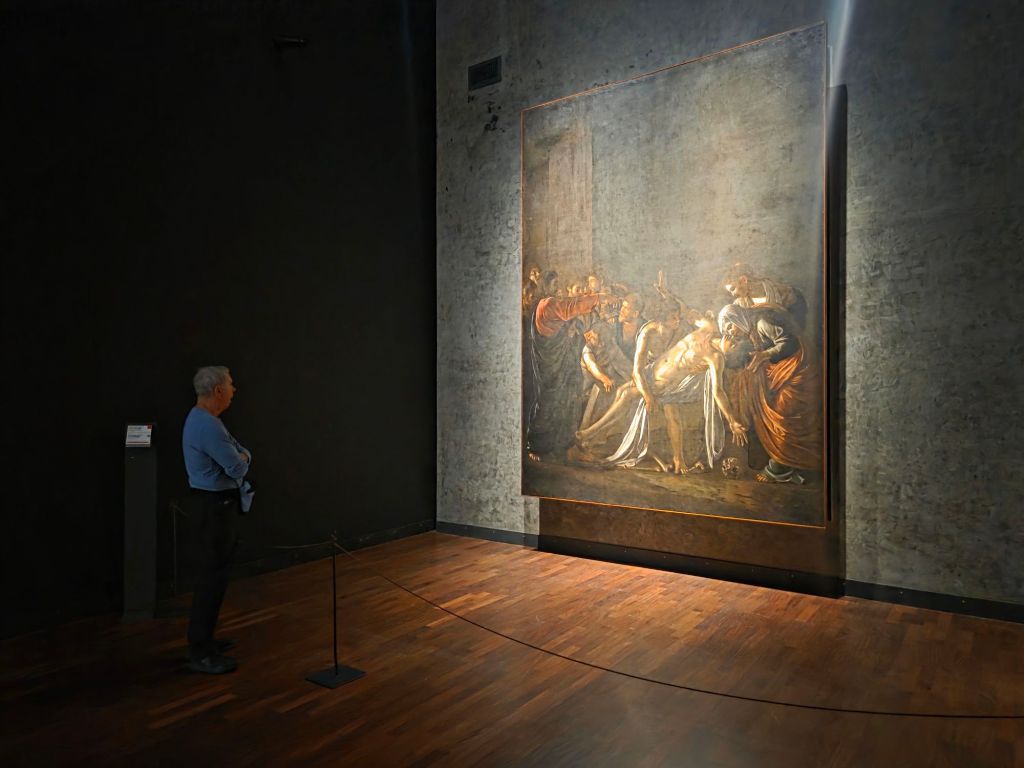
Resurection of Lazarus was intended as an enormous altarpiece
Adoration is to the right of Resurrection in a special gallery

Saint Lucy in Syracuse

A young woman named Lucia (Lucy, or “light”) resisted the attentions of a Roman soldier and for her refusal was brutally tortured and stabbed to death. As Santa Lucia she became beloved as the patron saint of Syracuse (Siracusa, an ancient port city on Sicily’s southwestern coast).

Walking up up to Santa Lucia alla Sepulcro in Syracuse, Sicily

She was buried in the catacombs below the traditional spot where she was killed, but later her remains were taken away as war spoils by Venetians. In 1509, a year before his death, Caravaggio was commissioned to paint an altarpiece for the church which had been built to commemorate her life and death as a Christian martyr.

After a two-bus, multi-hour ride from Agrigento and its Valley of the Temples to Syracuse, we discovered that, rather than waiting to the following day,  we could swiftly hike to to see the painting in the golden heat of a late Sicilian afternoon. (In fact, we were able to visit it twice.)

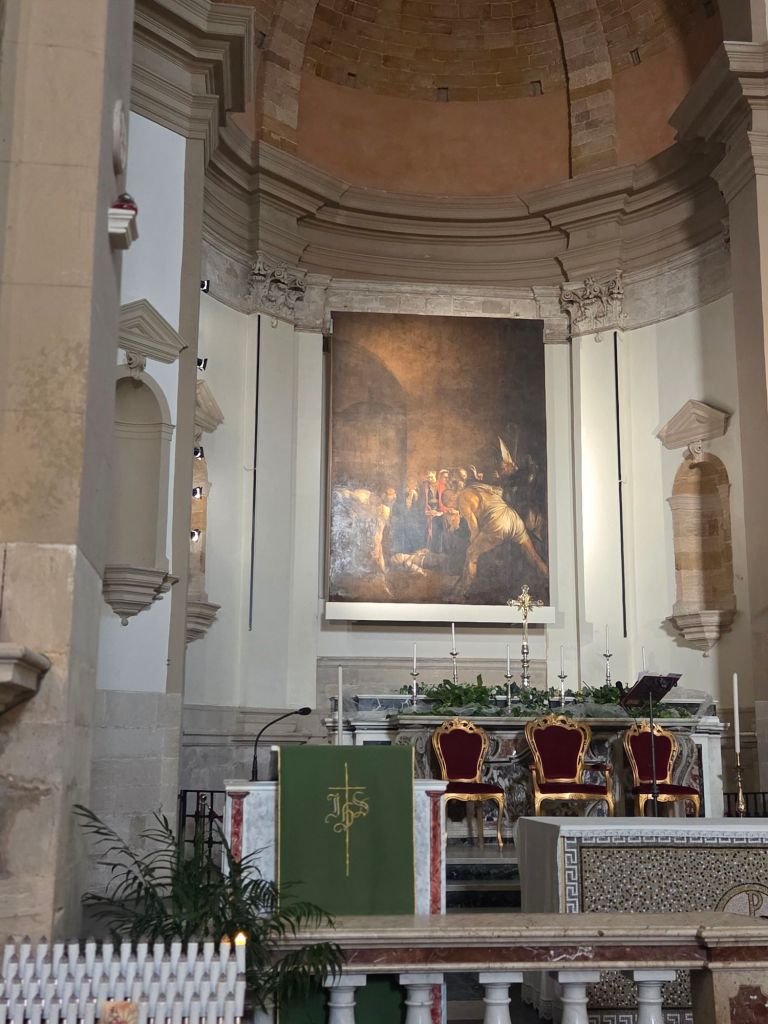
Caravaggio’s altarpiece often appears as a dark rectangle above the altar.

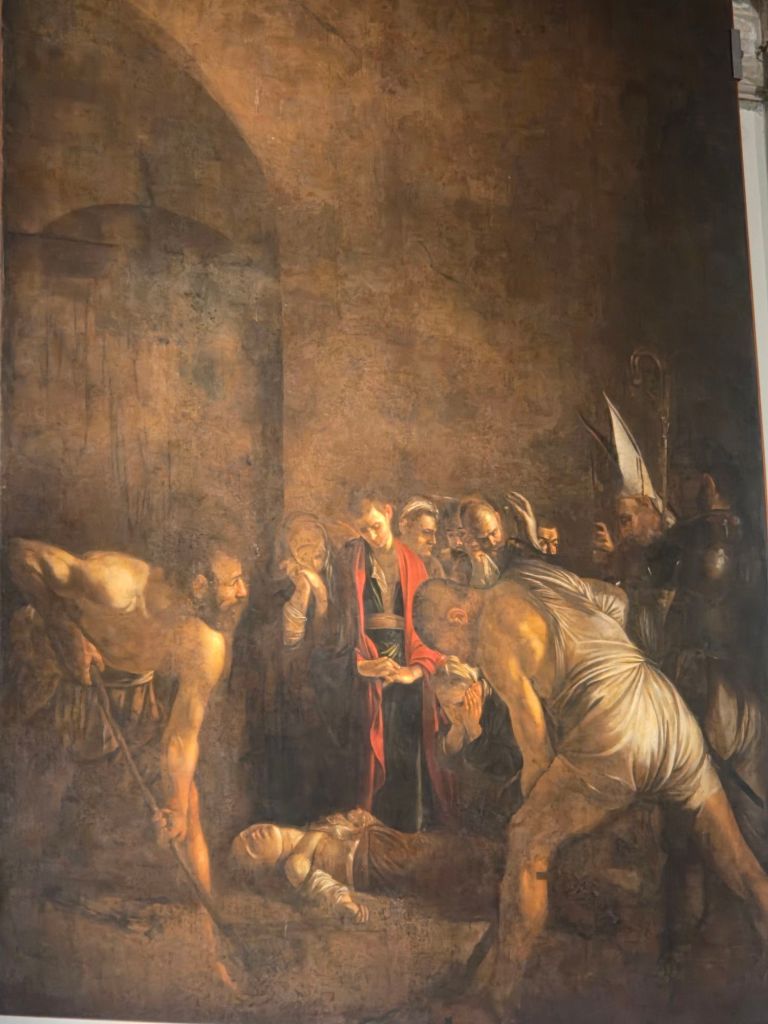
The Burial of Saint Lucy (second in size among Caravaggio’s works only to the Beheading of Saint John the Baptist that we visited in Malta) appears as a large blackish canvas behind the altar. Even though it was restored in 2020, it is impossible to make it out until one of us puts a one Euro coin into the light meter.

It takes a one euro coin to obtain illumination

Then figures and impressions begin to emerge from the gloom. The slight and pitiable girl’s body lies on a cold stone floor. Two hulking, oversized gravediggers thrust their spades repeatedly. A motley group of onlookers, includes a bishop, a young cleric, a grieving old woman and possible artist’s self portrait.

The vertical space, full of shadows, minimally suggests a stony arch in the catacombs below the place we, as viewers, stand. While the moment of death and martyrdom are more customarily depicted, this painting shows the moment of burial. Lucy is already dead. Her death is a fact.

Her death refers to all our deaths,  and to our belief in God’s gift of everlasting life. Indeed,  the left-hand gravedigger suddenly looks up from his desolate task and seems to see the gleam of light which pierces the gloom; the beginning of faith… as the saint hoped that her sacrifice would inspire in some people….?

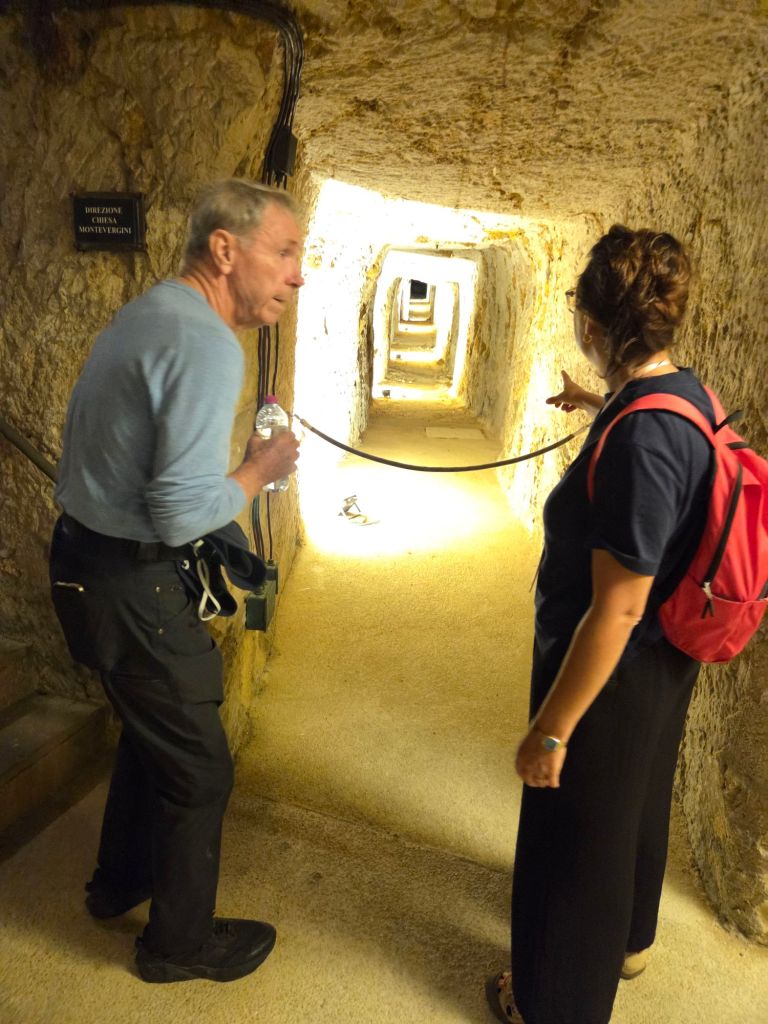
Syracuse has an extensive system of underground tunnels enhanced and used by successive inhabitants over centuries. Our guide, Valentina, who met us in Agrigento and in Syracuse, chats with Ed.
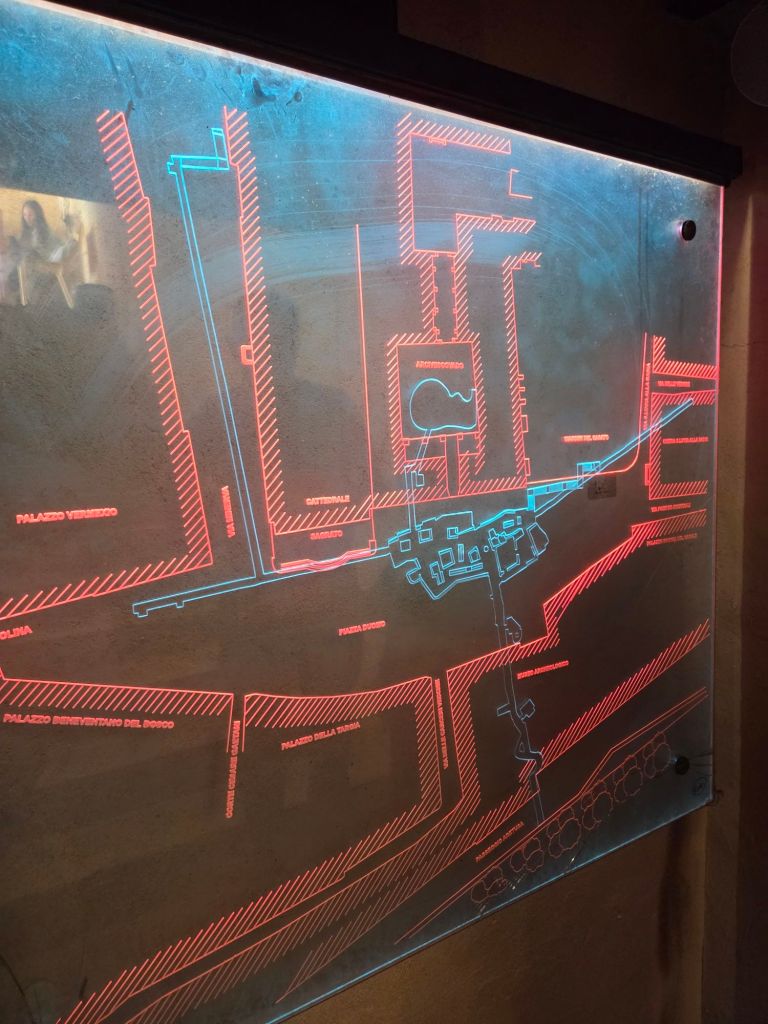
Red lines denote the Cathedral, walls and other structures while blue lines indicate underground tunnels.
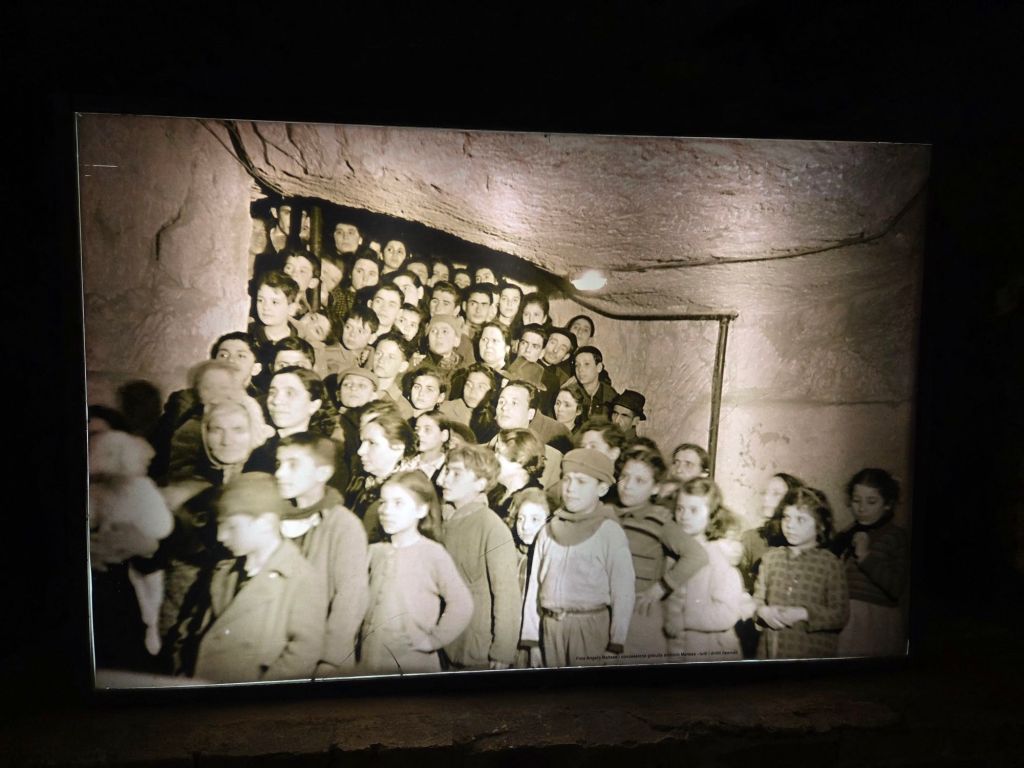
Children and some women sheltered from bombardment during WW II in the ancient tunnel system.

Weather has been sunny and warm every day so far. We’ve enjoyed wonderful cuisine, including bountiful seafood and local produce, prepared simply but with imagination. Tomorrow we will travel by two trains to our next stop on the far, north side of the island,  Cefalù.

Dublin: Our first Caravaggio

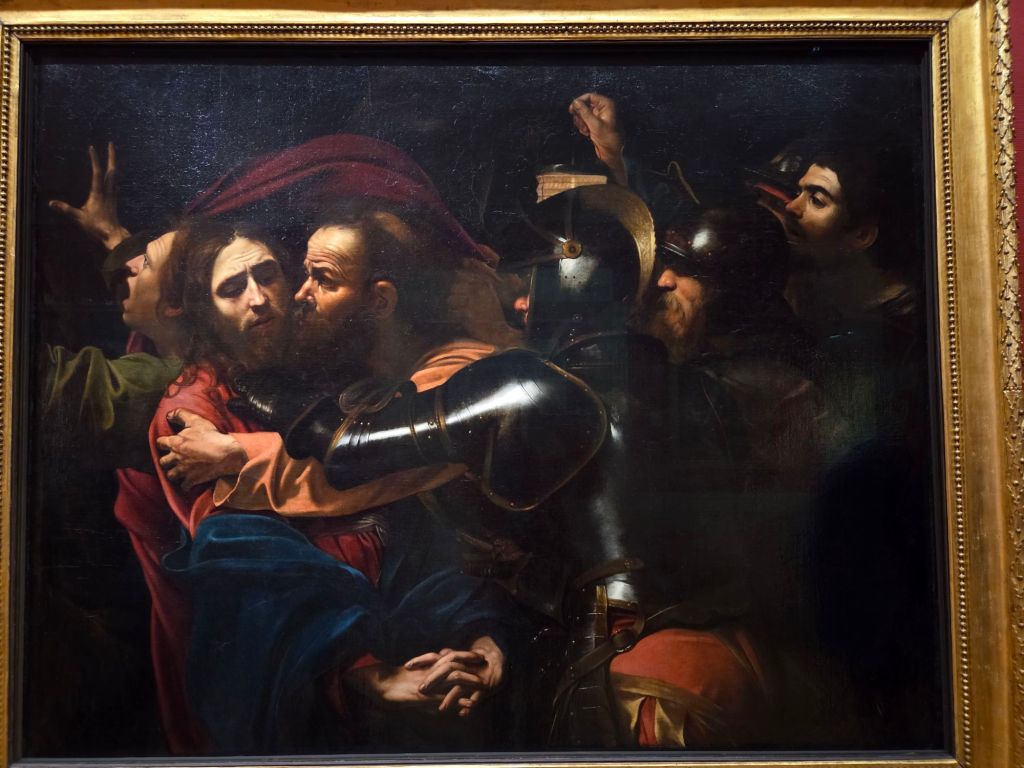
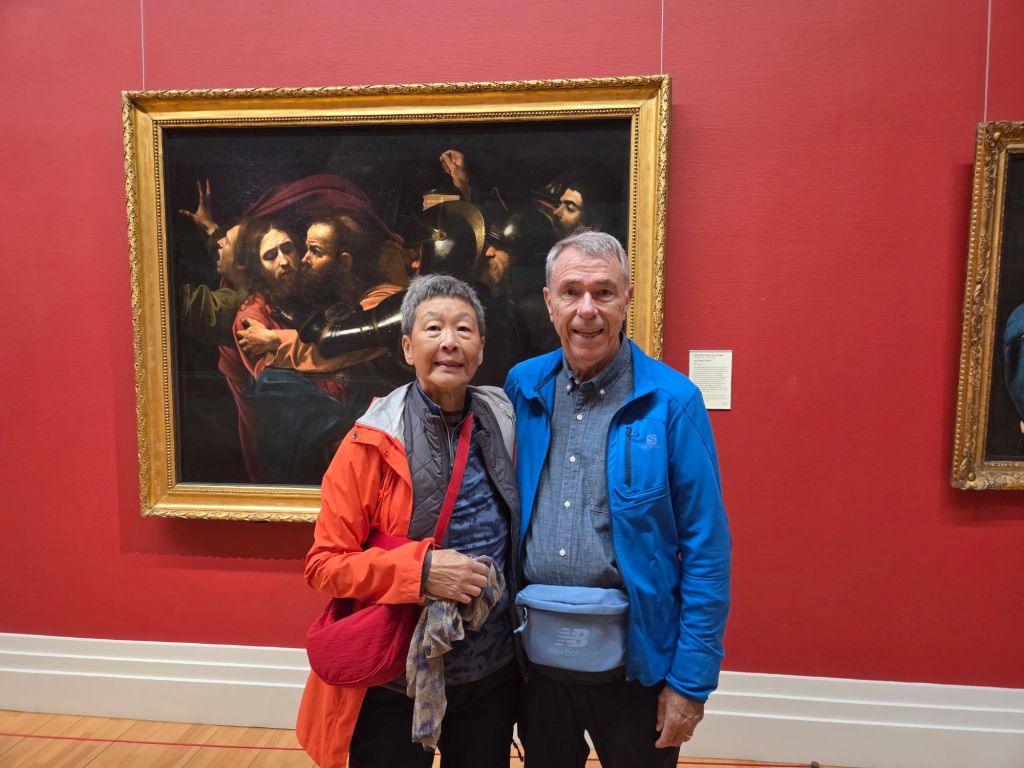
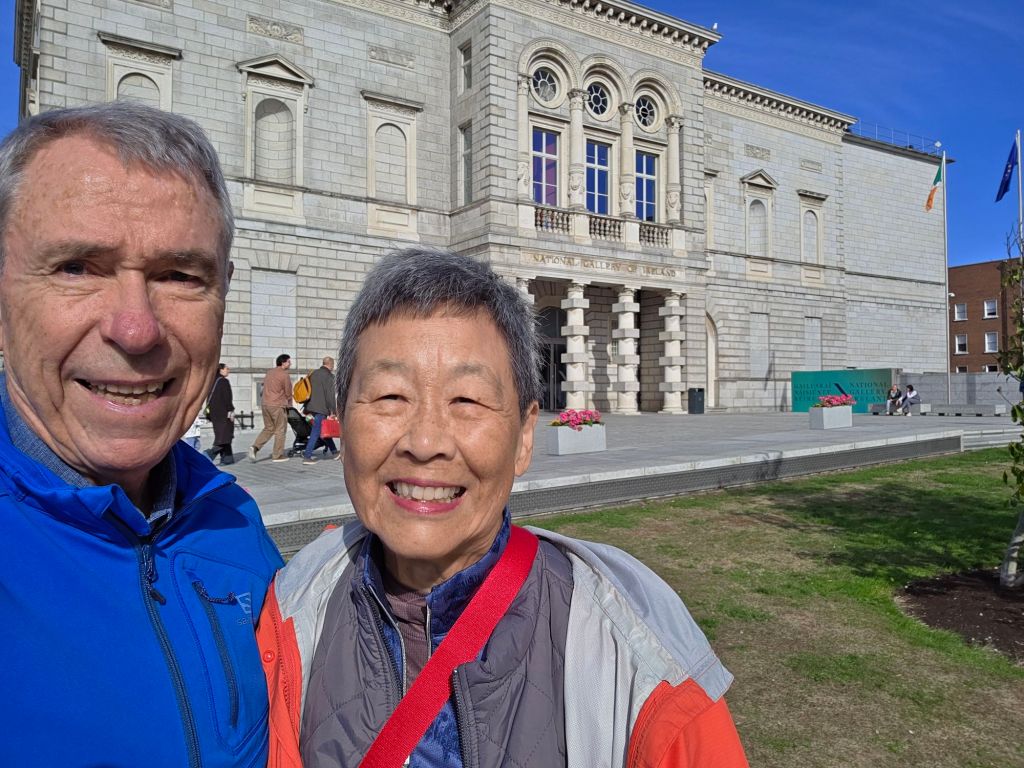
On a mostly sunny but cool Sunday morning we set out from our Dublin hotel across St Stephen’s  Green to the National Gallery of Ireland, which holds Caravaggio’s The Taking of Christ (1610).

Walking through St. Stephen’s Green, Dublin on the way to our first Caravaggio of this Camino.

Never before have we “opened” a museum by being the first through the doors as they were unlocked in the morning at 11 am. We had a limited time window before catching a flight to Malta so we were ready to step through the doors when they opened. We were fixed on our mission. It was exciting and focused at the same time.

And there it was: near the corner of a large gallery of 17th century paintings from various parts of Europe.

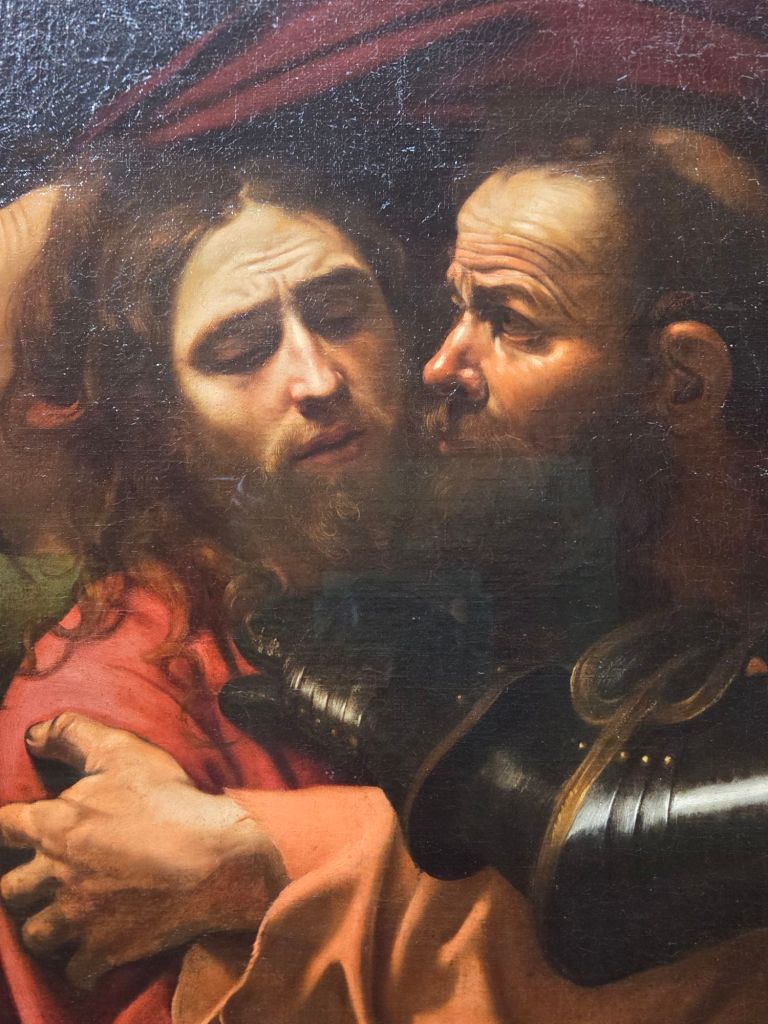
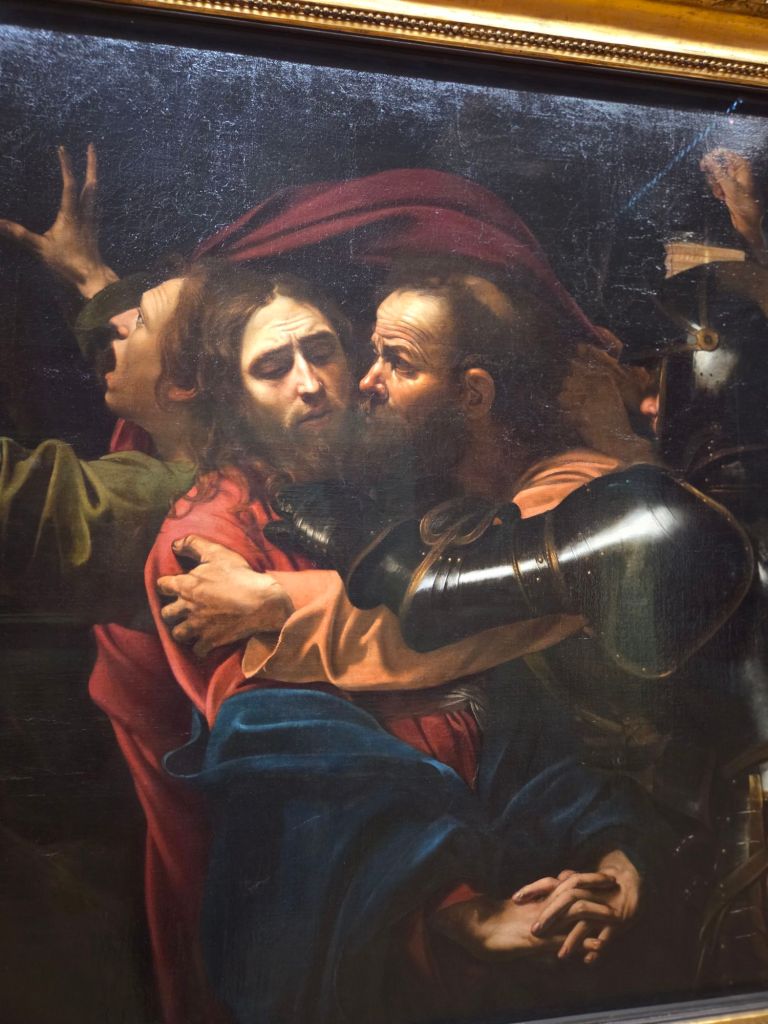
For money, Judas has betrayed Jesus to the authorities by revealing His presence in the garden and identifying him with a kiss. Jesus’ face shows immense sadness and his hands, clasped sideways, portray submission and more. Judas grabs at Jesus with dirty fingers while his face shows greed, insincerity and insecurity. Judas’ robe is an indeterminate color, like his motivations.

Two soldiers crowd in with brutal efficiency. The beetle-black armored arm of the first soldier aims like a pincer at Jesus’ undefended throat.

On the left the apostle John bolts away with a shriek of horror. On the right, a self portrait of Carravaggio holds a lantern that paradoxically sheds almost no light. The light instead seems to come from the viewers’ side of the painting, from somewhere at the bottom left. It lies across the armored arm of the soldier in a beam that seems modern in its mechanical coldness.

This painting has a very interesting story of how it came to the National Gallery of Ireland. It was commissioned in 1602 for a powerful wealthy Roman named Ciriaco Mattei, brother of a cardinal, but in passing through the generations since that time it was at some point misattributed to a Dutch artist and eventually landed with a Scottish art dealer. In about 1924 an Irish Catholic woman named Marie Lea-Perkins bought the painting and in the 1930’s she gave it to the Jesuit Fathers in Dublin in thanks for their help and counseling during the grief she suffered after her husband, an English Protestant officer in the British Army, was murdered by the Irish Republican Army.

Marie used the settlement she received for her husband’s death to pay for medical school, becoming one of only three women in her class. As a pediatrician, she became a prominent practitioner but her career was marked by serious controversy over alleged malpractice.

Meanwhile,  the painting,  darkening with age,  hung for sixty years on the dining room wall of the Jesuit Fathers in Dublin until one day the Fathers requested an assessment of their art. A senior conservator from the National Gallery spied it as a long-lost Caravaggio and it was unveiled as such to the public in 1993. It now on permanent loan by the Fathers to the Gallery so it may be enjoyed by the Irish public and people of the world.

The end of our visit

How fortunate we feel to have spent time studying and meditating before this stunning depiction of a world- and life-changing moment. The genius of the artist is a gift from God. It can illumine His goodness and nature for us.

Next, we are headed to Malta to see two Caravaggios in St John’s Co-Cathedral.

Outside the National Gallery of Ireland, Dublin

Itinerary for Camino Caravaggio

Dateline: 17 September 2026, Derry, Northern Ireland.

We left Washington, DC two days ago and are enjoying cool and breezy weather in Derry, County Derry, Northern Ireland with warm hospitality from cousins Mary and Tony Furey.

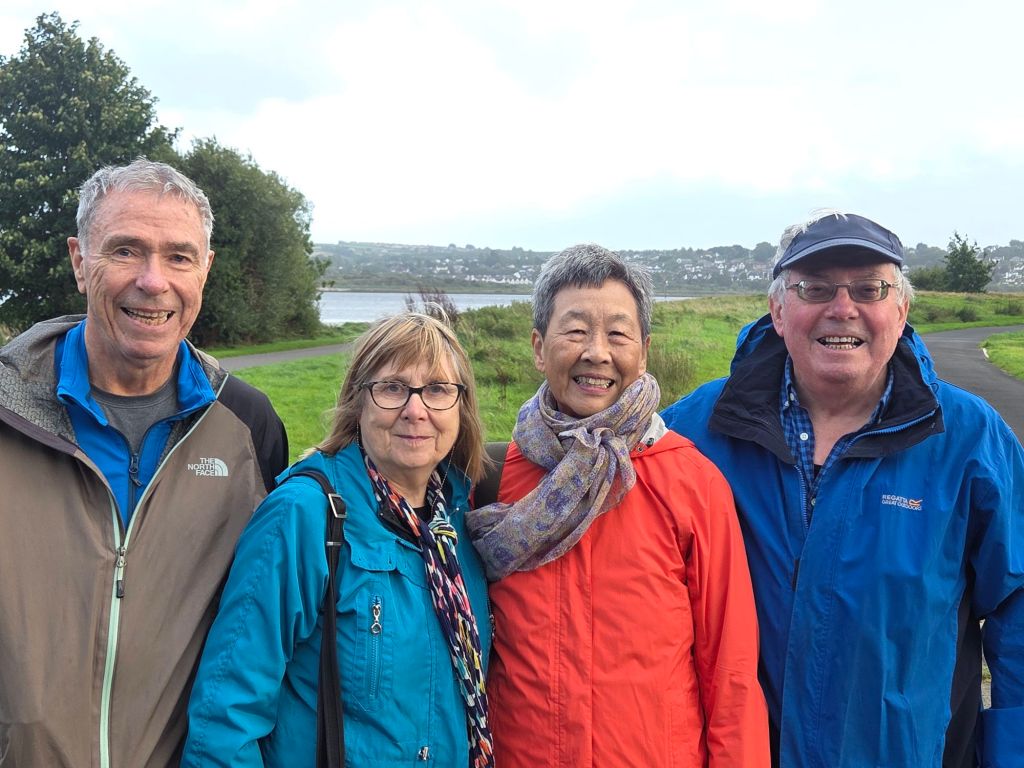
Walking today along River Foyle in Derry with Mary and Tony. A fresh and windy day, much cooler than Washington, DC.

We will take this opportunity to describe to you an overview of our Caravaggio itinerary for the coming month.

Note that this is a simplified itinerary that doesn’t show travel days, train, bus or plane details or intermediate stops (and there are many). Bold italics designate paintings by Caravaggio that we hope to see.

16 – 19 Sept. Derry, Northern Ireland: family visit.

20 Sept. Dublin, Ireland: National Gallery of Ireland, The Taking of Christ 1602

21-22 Sept. Malta: St John Co-Cathedral, Saint Jerome Writing 1607-8; Beheading of Saint John the Baptist 1608

24-25 Agrigento, Sicily: Valley of the Temples, an amazing array of ancient Greek temples

27-29 Siracusa, Sicily: Santa Lucia alla Badia, Burial of Saint Lucy 1608

30 Sept Cefalú, Sicily: Mosaic of Christ in the Arab-Norman-Byzantine Duomo (cathedral)

1 Oct Messina, Sicily: Museo Regionale, Resurrection of Lazarus 1609; Adoration of the Shepherds 1609

2-3 Oct Naples, Italy: Museo di Capodimonte, Flagelation of Christ 1607; Palazzo Zevallos, Saint Ursula 1610; Pio Monte della Misericordia, Seven Works of Mercy 1607

4-11 Oct Rome, Italy: San Luigi dei Francesi, The Calling of Saint Matthew 1599-1600; The Martyrdom of Saint Matthew 1599-1600; Saint Matthew and the Angel 1602; Sant’ Agostino, Madonna of Loreto 1604-6; Galleria Dorii Pamphilj, Rest on the Flight to Egypt 1597; Penitent Mary Magdalene 1597; Palazzo Barberini, Judith Beheading Holofernes 1598-9; Saint Francis in Prayer 1606; Narcissus 1599; Monsignor Maffeo Barberini 1598; Museo Capitolini, The Fortune Teller 1594; John the Baptist 1602; Santa Maria del Popolo, Conversion of Saint Paul 1601; Crucifixion of Saint Peter 1601; Pinacoteca Vaticana, Entombment of Christ 1603-4; Galleria Borghese, Boy with a Basket of Fruit 1593-4; Young Sick Bacchus 1593; Saint John the Baptist 1604; David with the Head of Goliath 1609-10; Saint Jerome Writing 1605-6; Madonna and Child with Saint Anne 1605-6.

12-14 Oct Sligo, Ireland: family visit

15 Oct Return to Washington, DC

Michaelangelo Merisi di Caravaggio was born in Caravaggio, not far from Milan, in 1571 and died in Porto Ercole in 1610 at the age of 39. Our itinerary includes 30 of the approximately 65 to 70 extant works wordwide that are generally accepted as attributable to him.

The earliest of his works we will see is Young Sick Bacchus 1693, painted at age 22. The latest painting we will see is Saint Ursula 1610, the year of the end of his short and violently turbulent life.

We look forward to that which we may learn from this Camino.

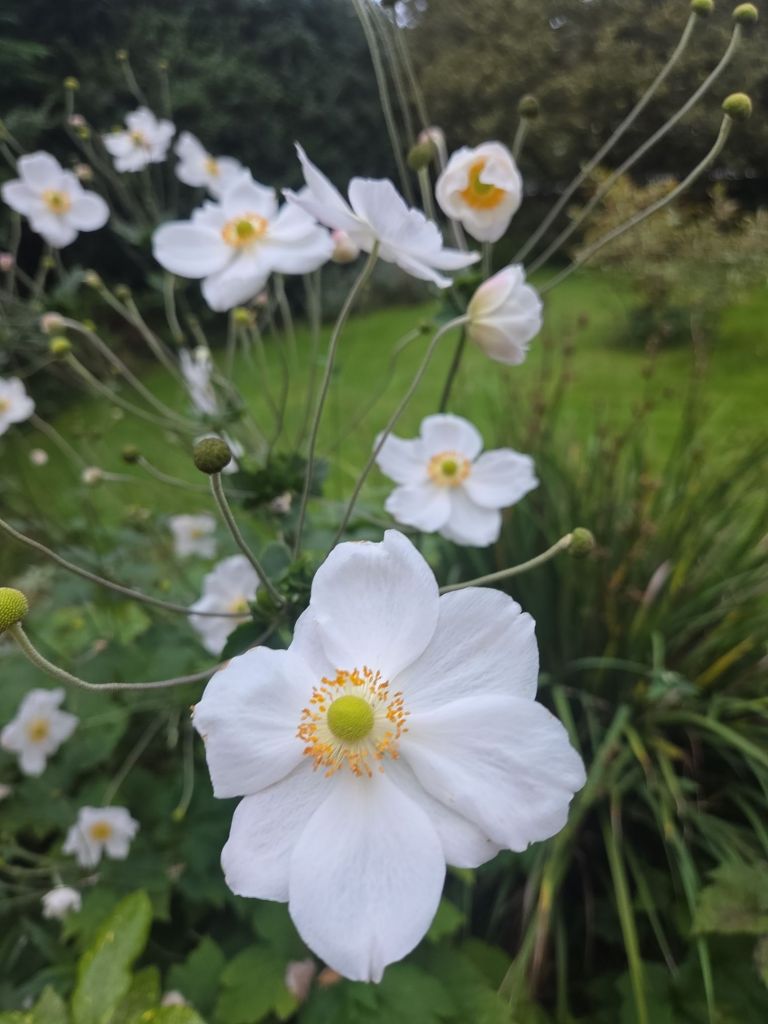
September blooms in Mary and Tony’s lovely Irish garden.

Introducing our Camino Caravaggio 2026

Dear Friends: September 2026 greetings! We are preparing to embark on what Ed has dubbed our “Camino Caravaggio”! But first, let us express our warmest gratitude to friends and family who have brightened our world in 2026, the 80th year since Ed’s birth on March 7, 1946.

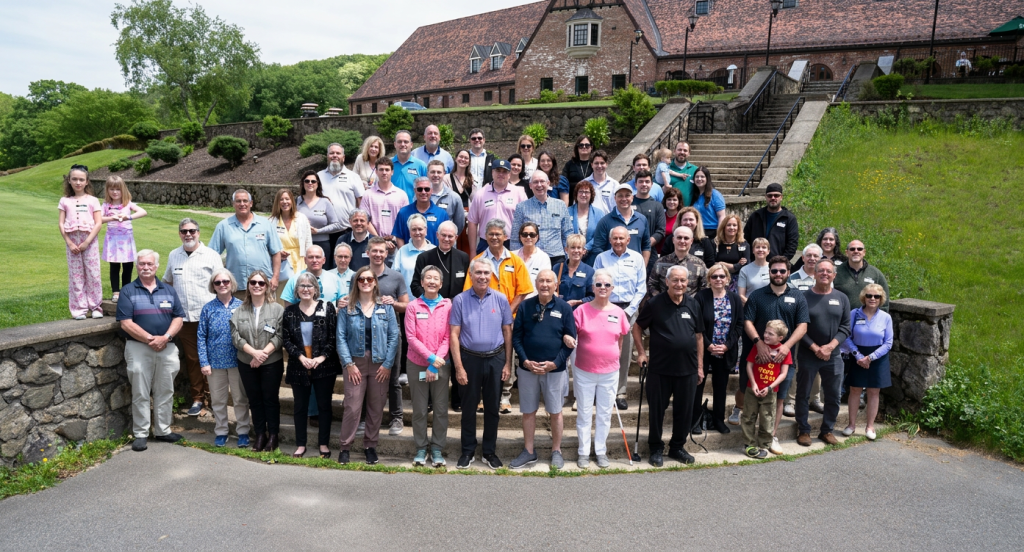
Ed, front row center, purple shirt, turned 80, with family and friends at Historic George Wright Golf Course.

Thanks to 65 friends and family who gathered for birthday cake and golf at the Historic George Wright Golf Course in Hyde Park (Boston), Massachusetts on May 31, 2026. This public course was part of FDR’s Works Projects Administration (WPA) to enable the country to begin to recover from the Great Depression and is only a mile or so from Ed’s boyhood home in the Roslindale section of Boston.

Siblings: from left,  John,  Tom, Ed himself,  Arthur, Sara. 

Five of the ten Muldoon siblings were present. Gone on ahead and always in our hearts: Leo, Margie, Mary, Dorothy, Bill.

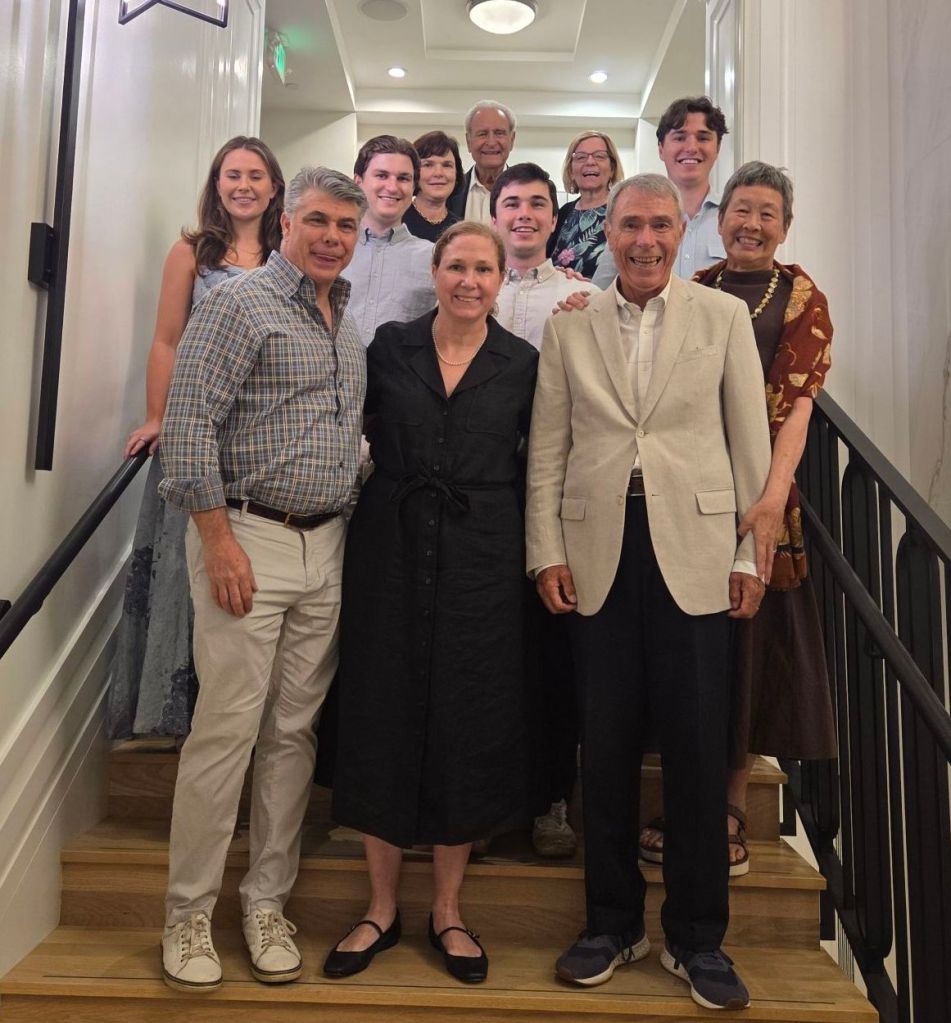
Ed also celebrated in Florida in March with (front to back, left to right) Bob, Lara, Ed; Chloe, Ryan, Owen, Anne; Molly, Tom, Donna, Jack

It’s been 12 years since Ed and Anne first walked the Camino de Santiago de Campostela. We started in St Jean Pied du Port in France, walked over the Pyrenees and 500 miles across northern Spain. We learned about this ancient pilgrim journey thanks to our friend,  Father Tom Ryan (who is in the big group photo, above). Since then we have walked the Camino Portugúes, the Camino del Norte, which we started in Lourdes, the Camino San Francesco (Way of St. Francis of Assisi) through the Appenines and the Via Francigena (the last two in Italy). In 2024 a Camino was cut short due to Anne’s knee injury and in 2025 we walked an abbreviated two-week Camino before traveling to Ravenna, Dubrovnik and Budapest.  You are invited to delve into the Archives on this blog to read about those experiences.

Challenges with Anne’s right hip (now replaced) and left knee have convinced them to reduce the walking-and-carrying aspect — but not to give up the searching-and-contemplating aspect of their travels. As a result, we embark on a different sort of Camino (“camino” means “way” or “road”), what Ed has called, the “Camino Caravaggio.”

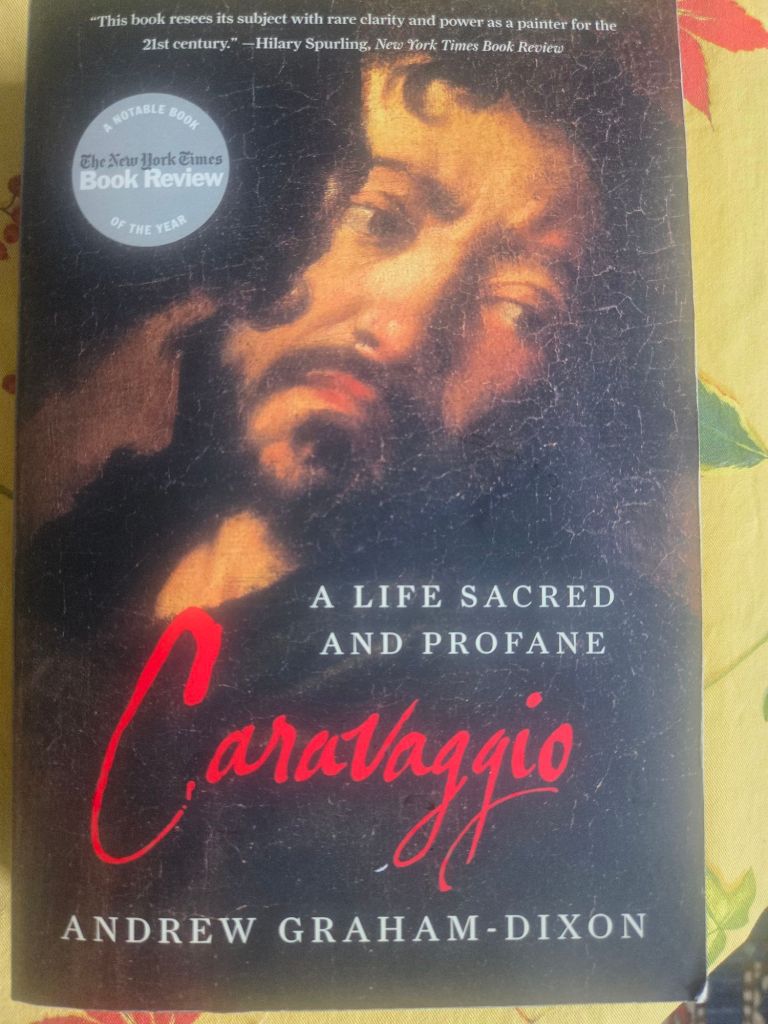
Our inspiration is a visit last year to Rome’s Galleria Borghese, which houses six (6) works by the artist in a single room! What a revelation! When we returned to the US we read Andrew Graham-Dixon’s 2020 biography, and the inspiration of this camino was settled.

Stay tuned for our detailed itinerary and adventures along the way. We begin on September 15, 2026 with an Aer Lingus flight from Dulles to Dublin.

Know that we carry your love and friendship in our hearts.