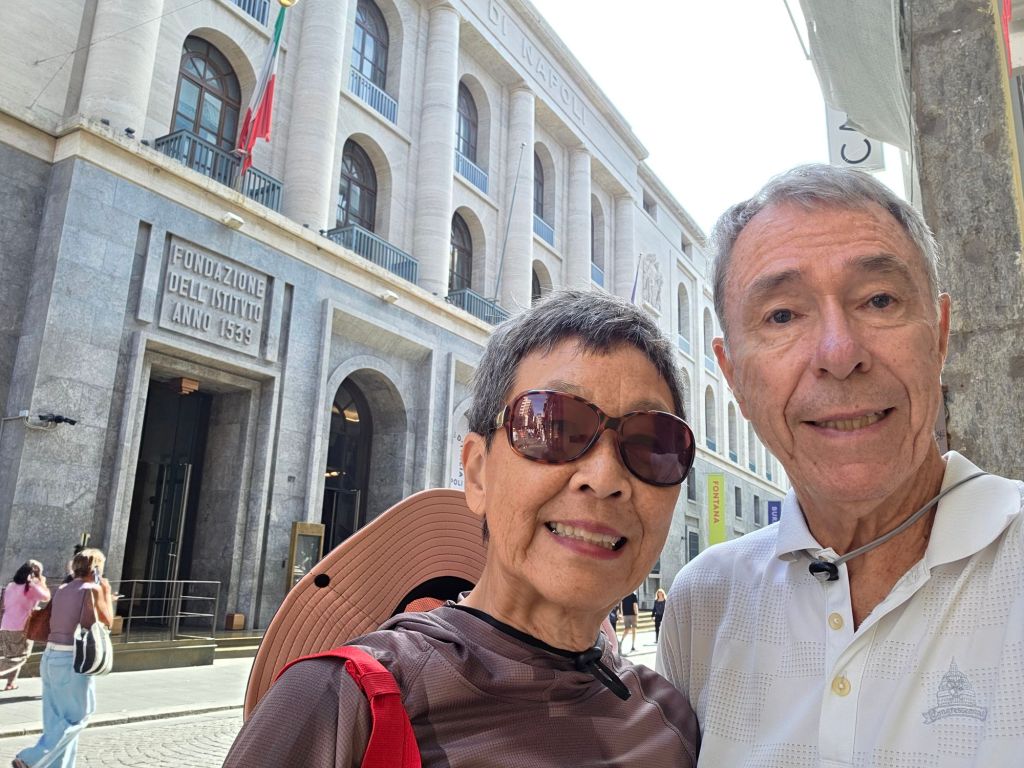
It’s a good thing that Ed scheduled 8 days in Rome for us at the end of our Camino Caravaggio. Not only is it among our favorite cities in the world, but in her can be found the largest number of Carravaggios open to public view: 20 paintings in 8 venues. We walk to most of our destinations. Walking in Rome is full of excitement and challenge, rewarding each step with unparalleled sights and the pleasure of surviving to reach the goal!
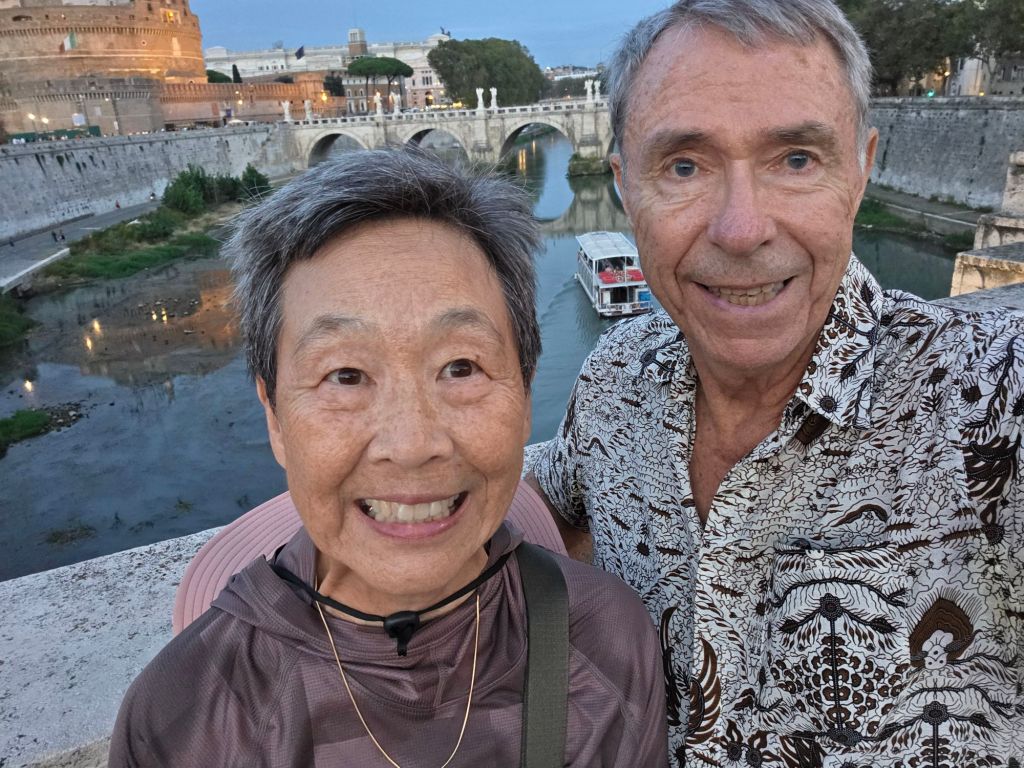
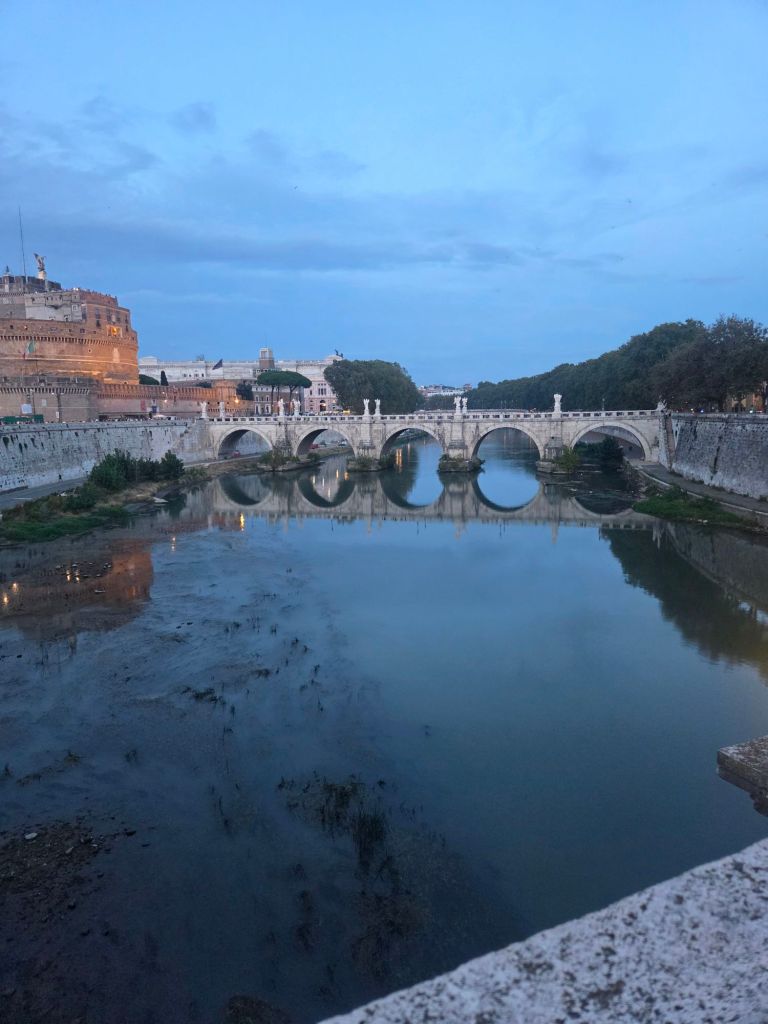
Crossing the Tiber towards Saint PetersA Roman view approaching dusk
Galleria Borghese, thanks to its voracious owner/collector, Cardinal Scipione Borghese, nephew to Pope Paul V, has 6 Caravaggios. Other state and private galleries in Rome each have one to three. Three churches still display works that were created for them 400 years ago, in their original locations.
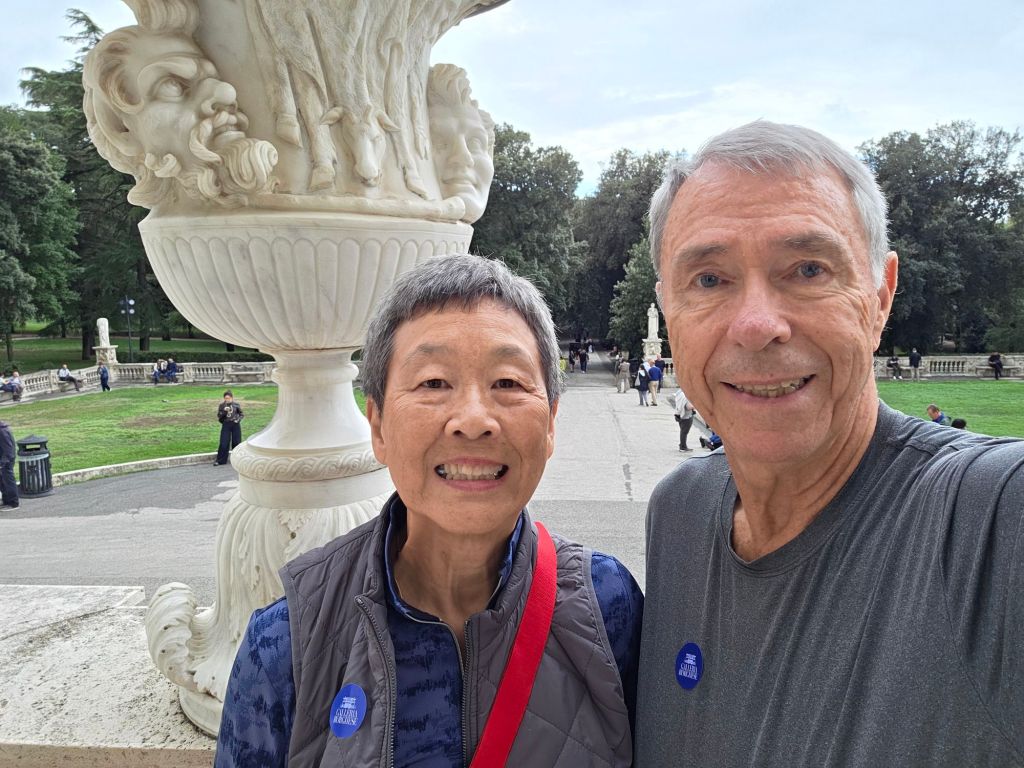
From the Borghese’s front balcony, looking out over its gardens
We save the Borghese for our last Saturday because we visited it two years ago. It was that visit that first ignited our interest in Caravaggio. Our first investigation this time will be Galleria Doria Pamphilj and its masterpieces of stunning beauty.
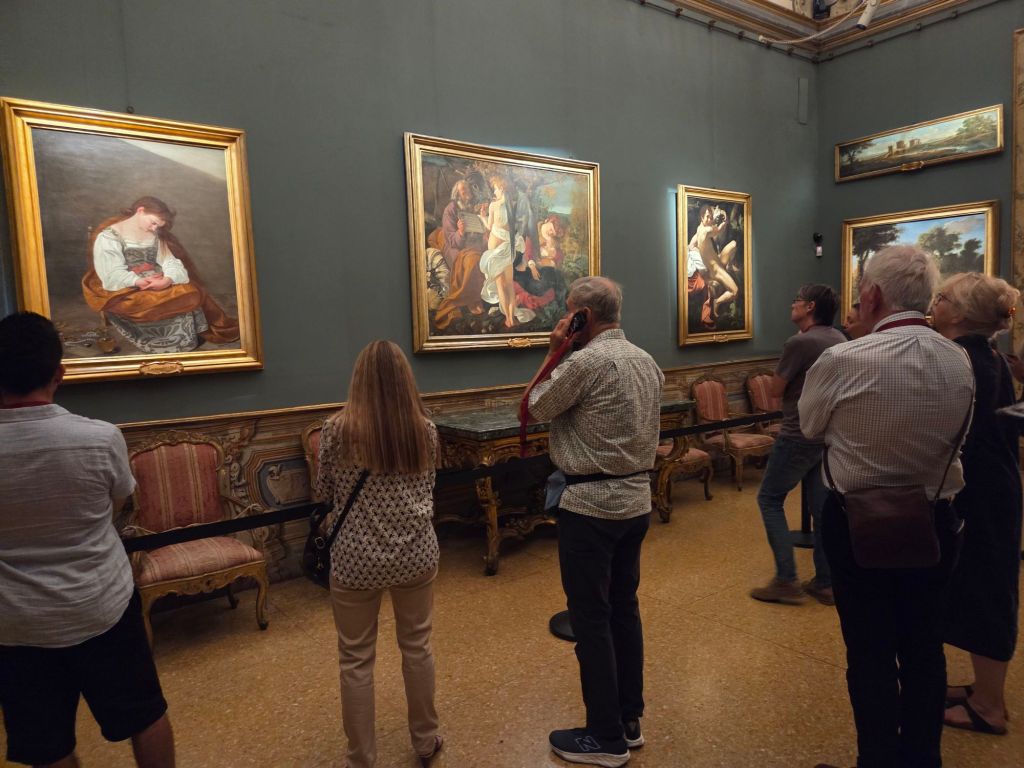
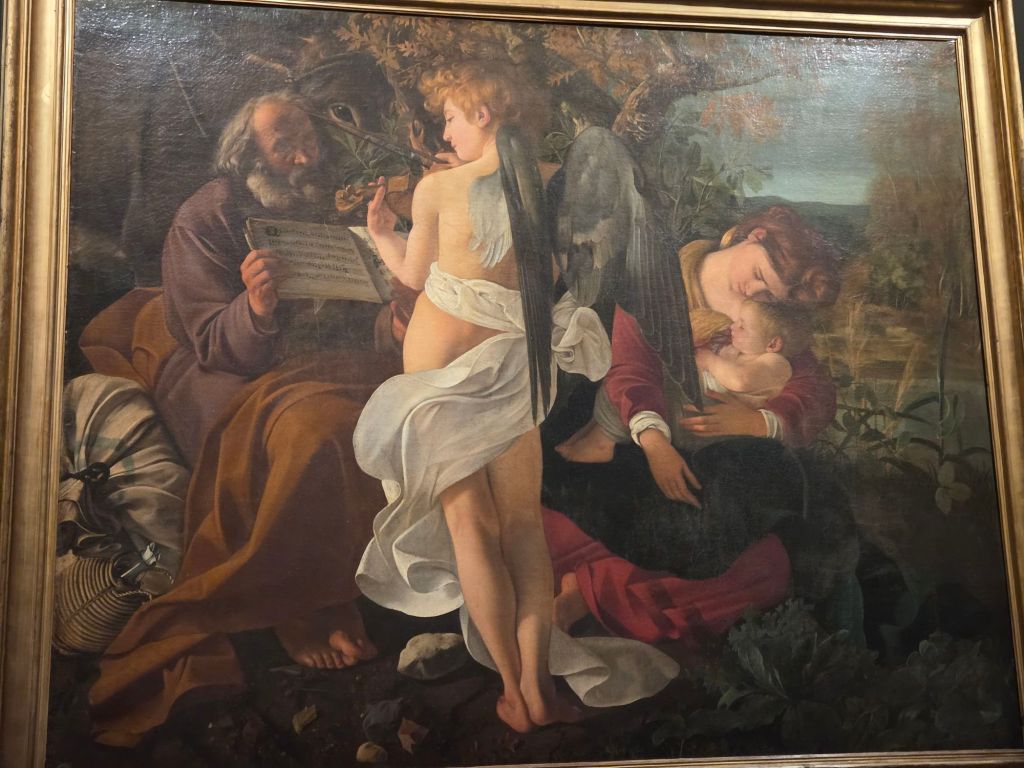
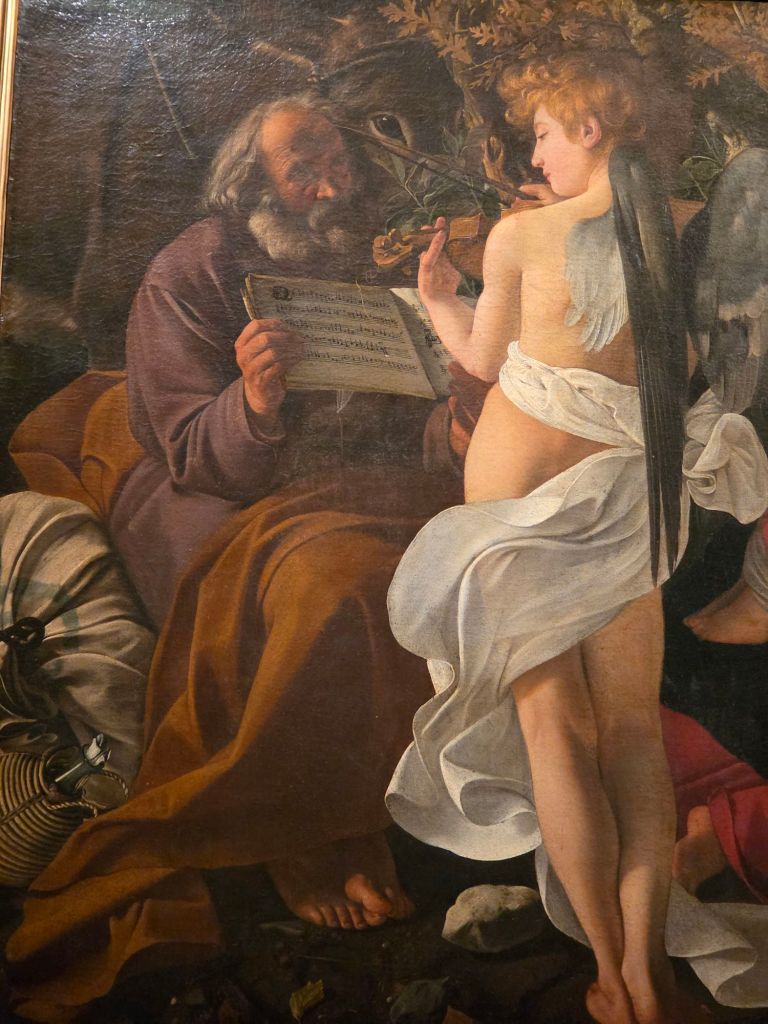
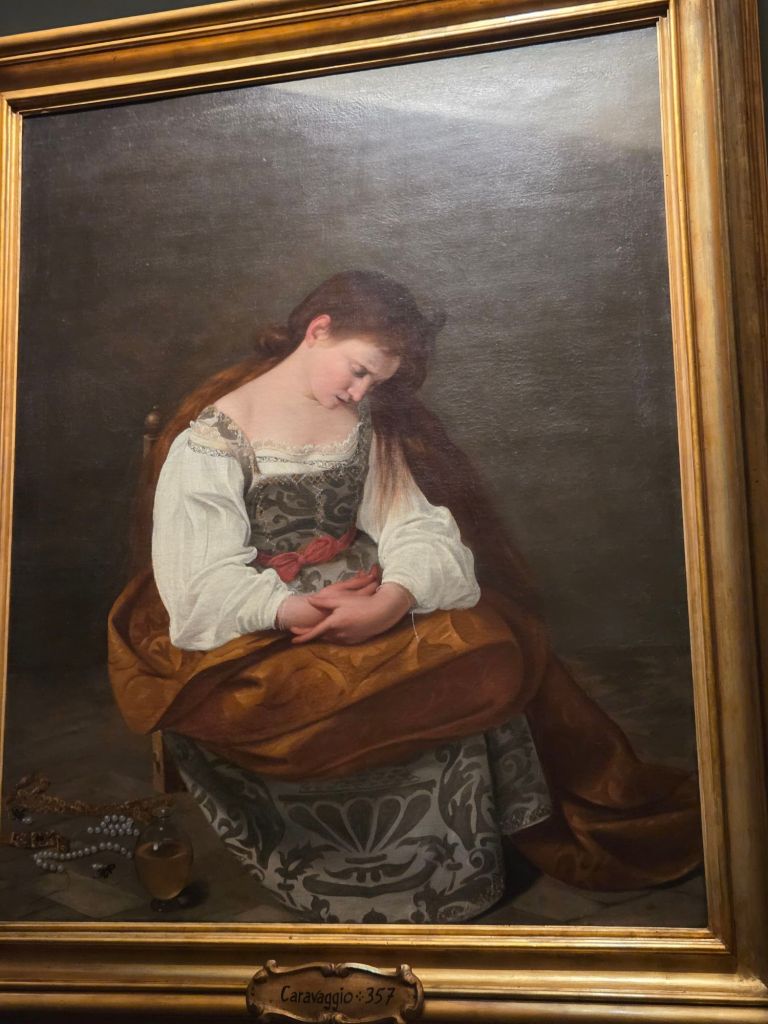
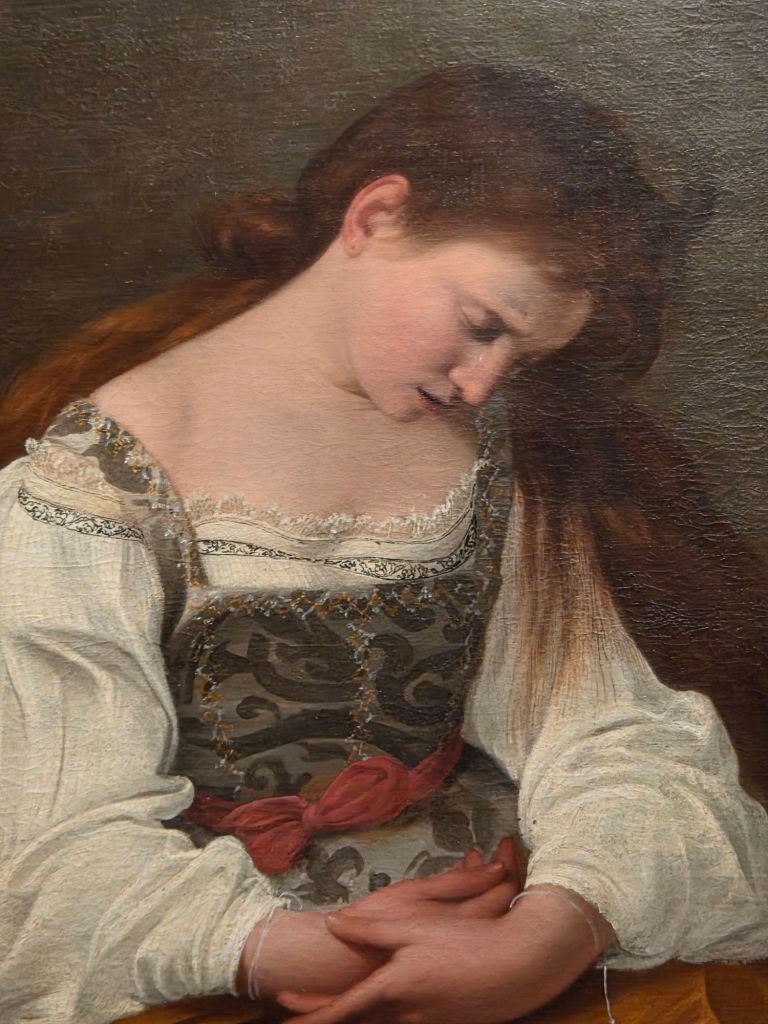
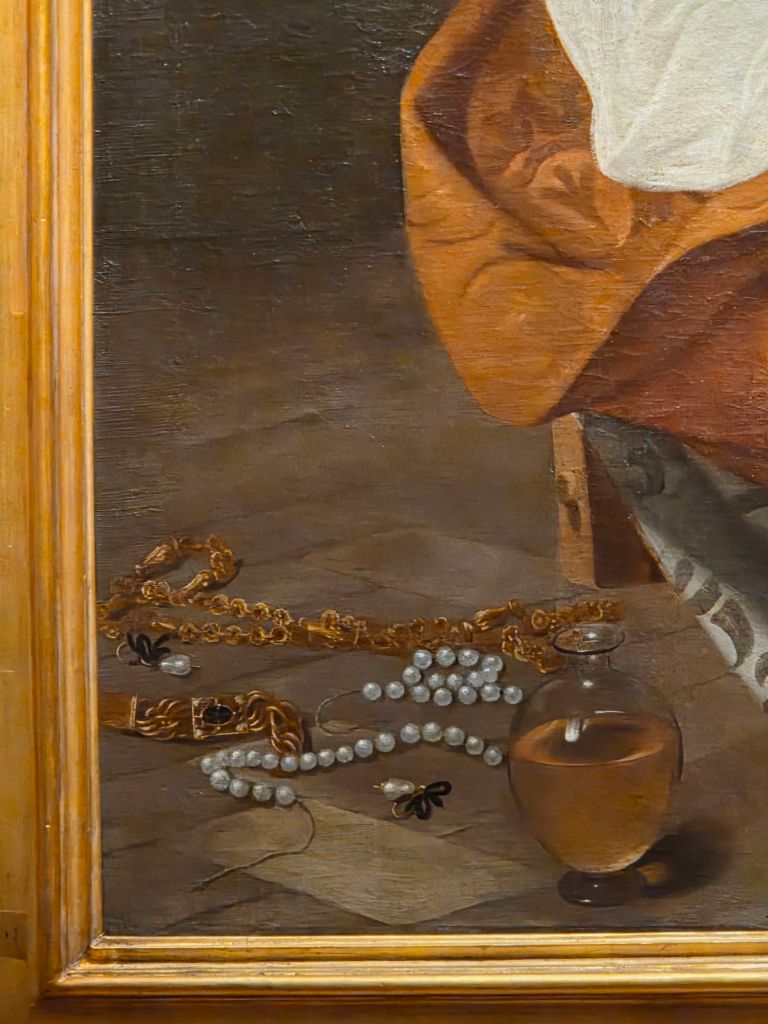
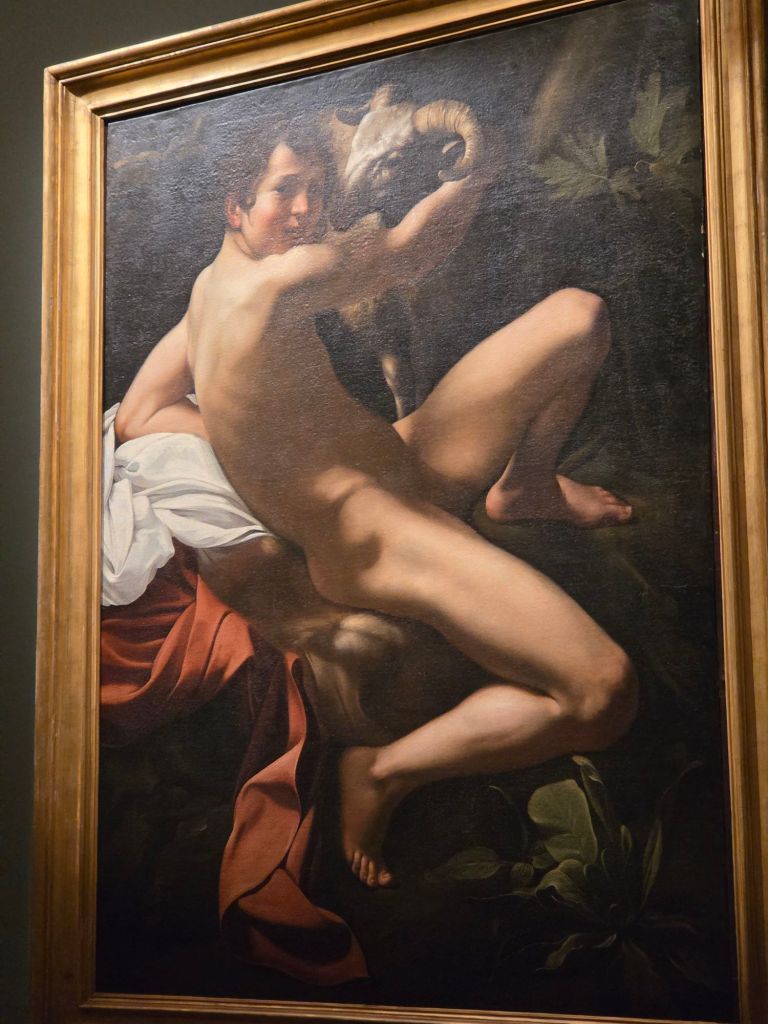
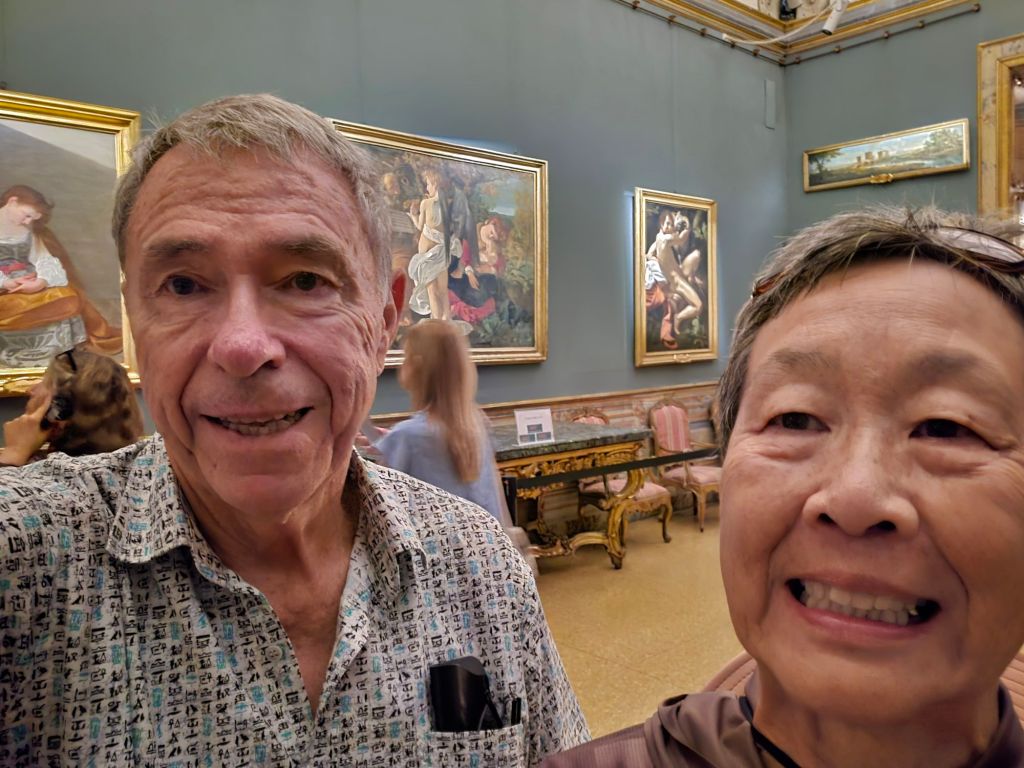
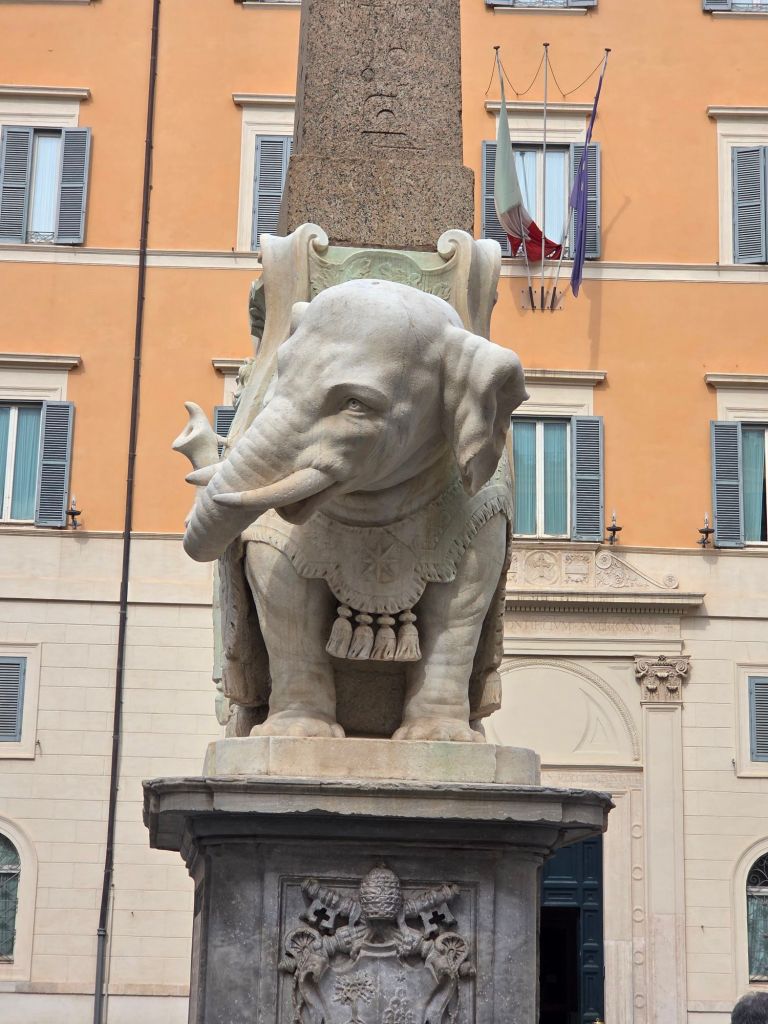
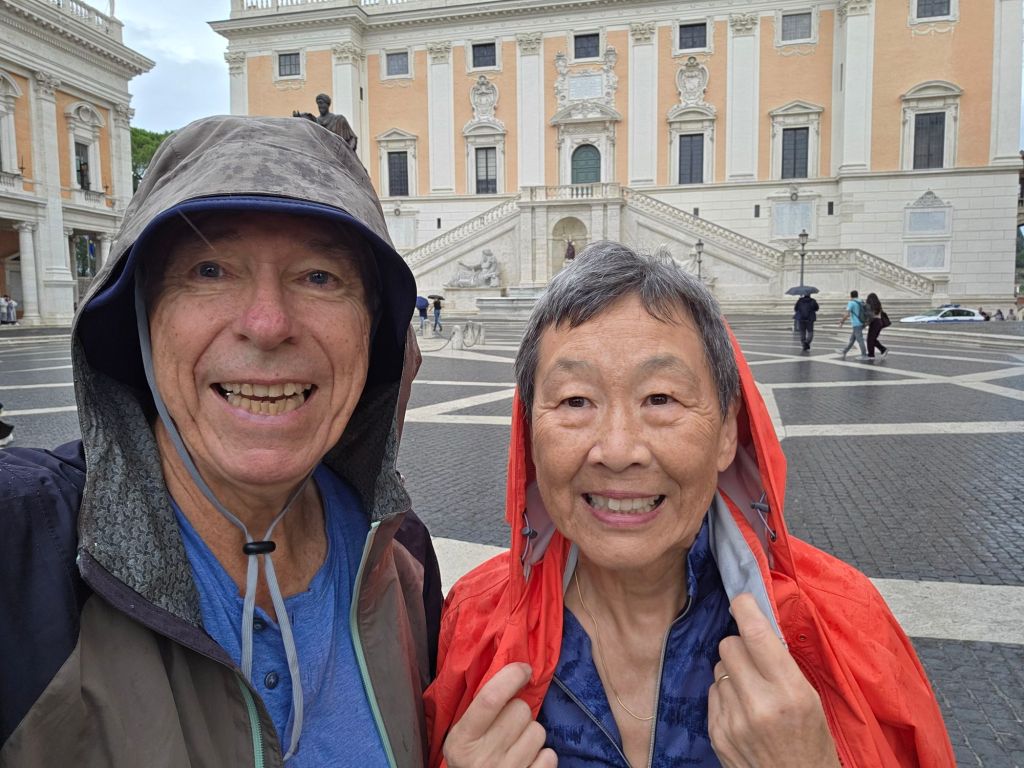
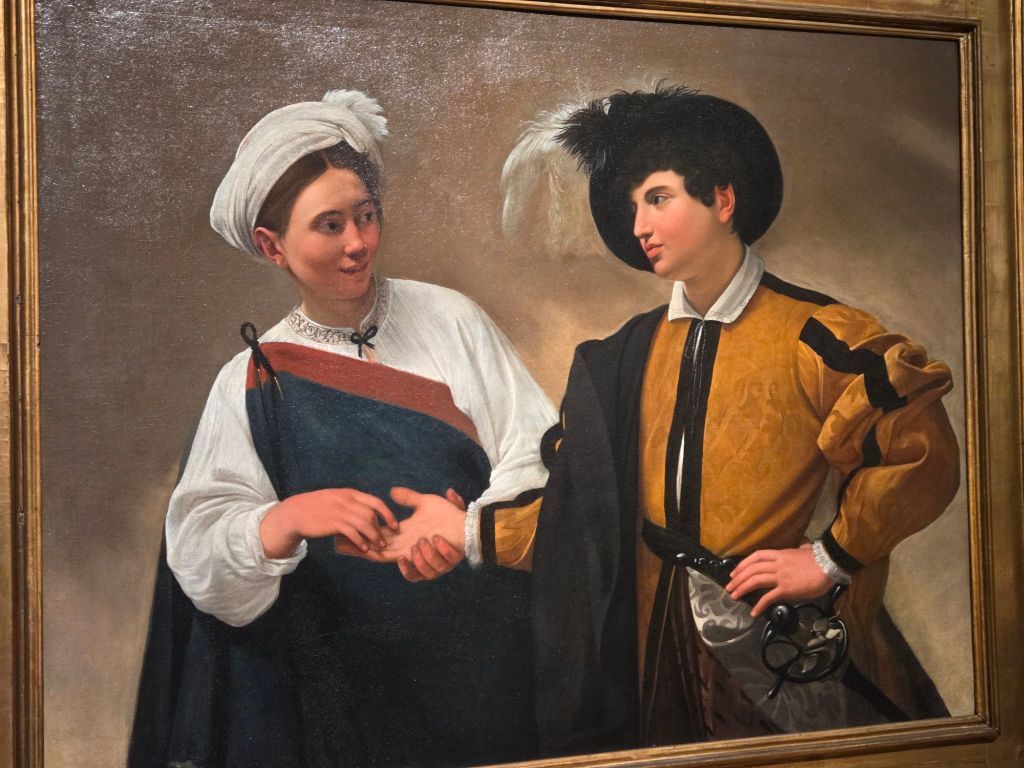
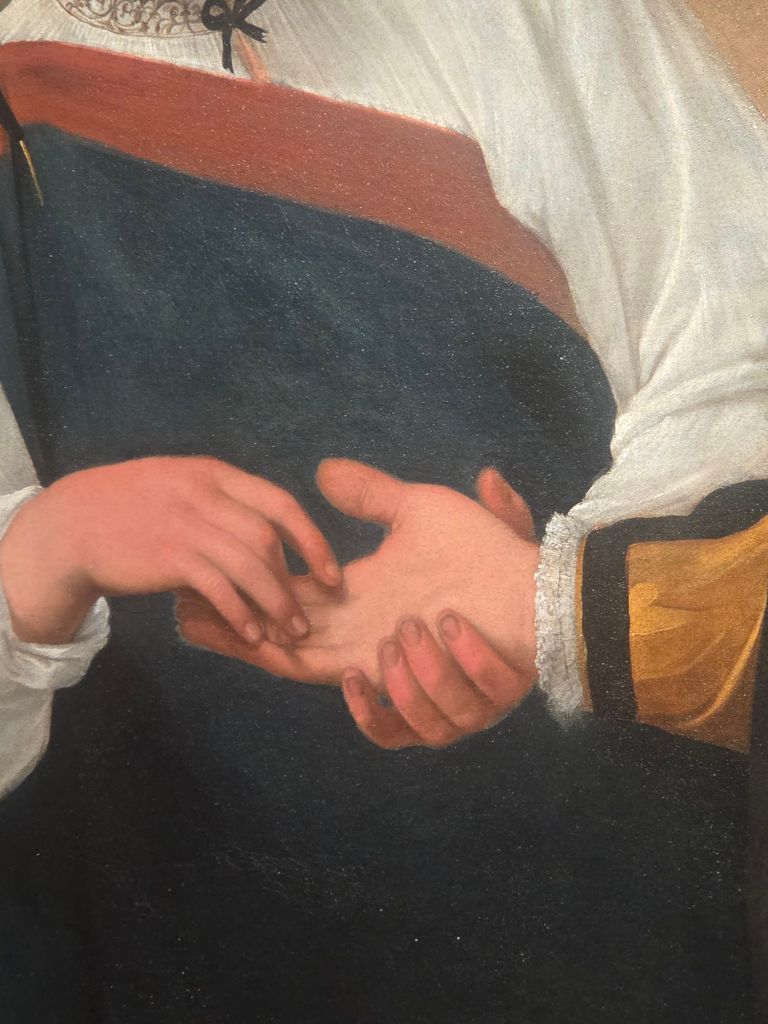
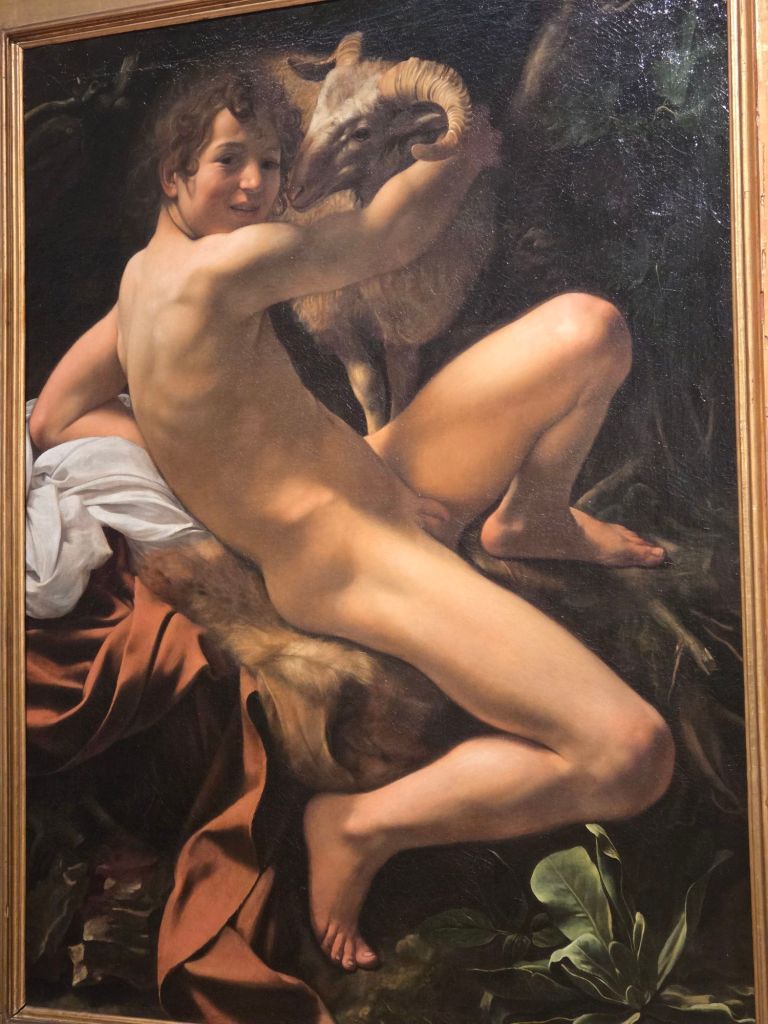
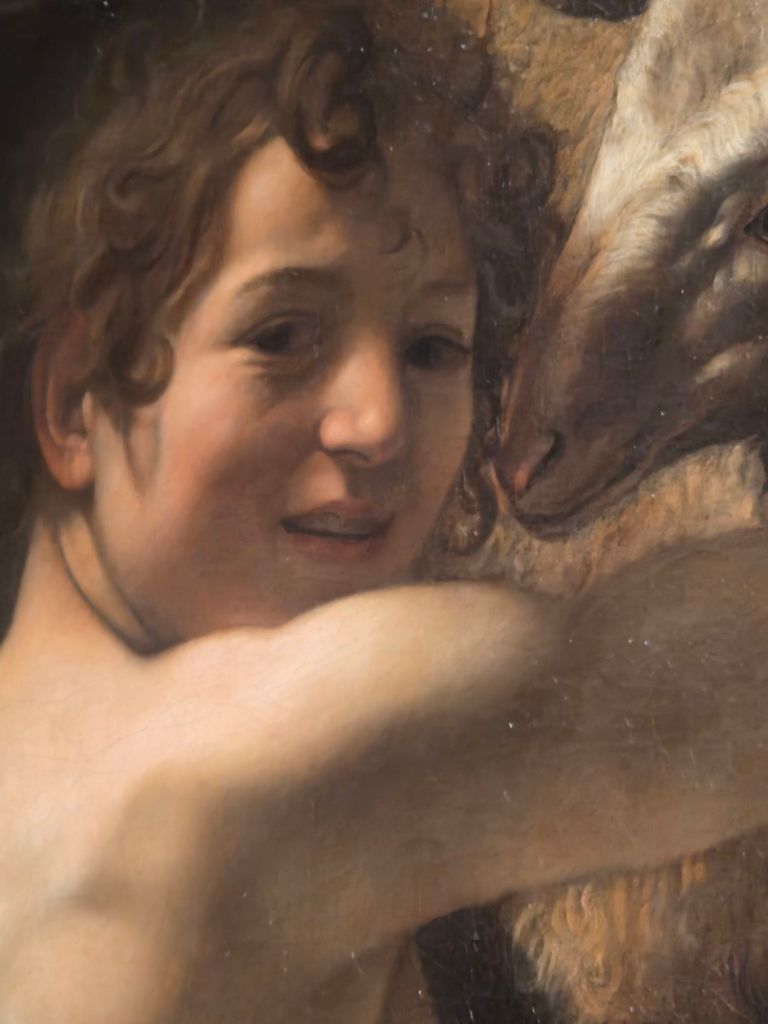
On left, Penitent MaryMagdalene (1597); center, Rest on the Flight to Egypt (1597); far right, a John the Baptist (1602), of possible attribution to CaravaggioRest on the Way to Egypt is unusually and vertically divided in two by the dark, folded wing of the musical angel. Exhausted from the journey and the worry, Mary rests with the Child on the right side. On the left side, Joseph holds the musical score for the violin-playing angelPenitent Mary Magdalene uses the same model as Mary in the previous paintingThe jewels discarded by the Magdalene are artefacts of her prior, worldly preoccupations. The flask of precious unguent refers to the anointing of Jesus’ feet carried out by an (unnamed) woman, conflated with the Magdalene. Caravaggio’s talent for still life is shown, which matches his remarkable genius for depicting people, emotion and complex content.This delightful, youthful John the Baptist, a repeated theme of Caravaggio’s, is labeled by the Gallerie Dora Pamphilij as “attributed to Caravaggio” so it’s not universally accepted as his work. Three masterpieces on one wall behind usOne of Anne’s favorite Roman scuptures, the elephant can be found near the Galleria Dora Pamphilj and the PantheonOur next stop is the Capitoline Museum. We climbed the Campodoglio on a rainy afternoon, our first rain of the trip and a presage of autumnAn early painting, The Gypsy Fortuneteller (1595) is a tour-de-force of story telling and personality.The clever and vivacious young woman steals the young fop’s ring while pretending to read his palm.John the Baptist (1602). Compare this to the Dora Pamphilij’s on the previous stop.Who wouldn’t love this face?
After two (2) tries when we found two churches locked tight although expected to be open, we struck gold on our third attempt.
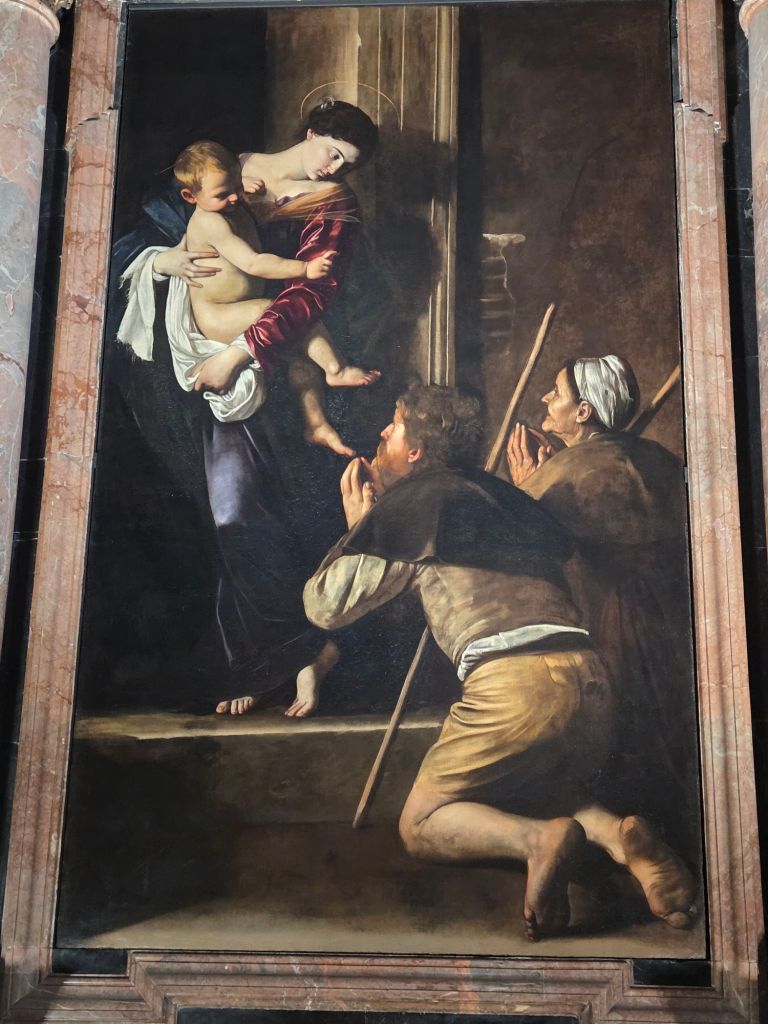
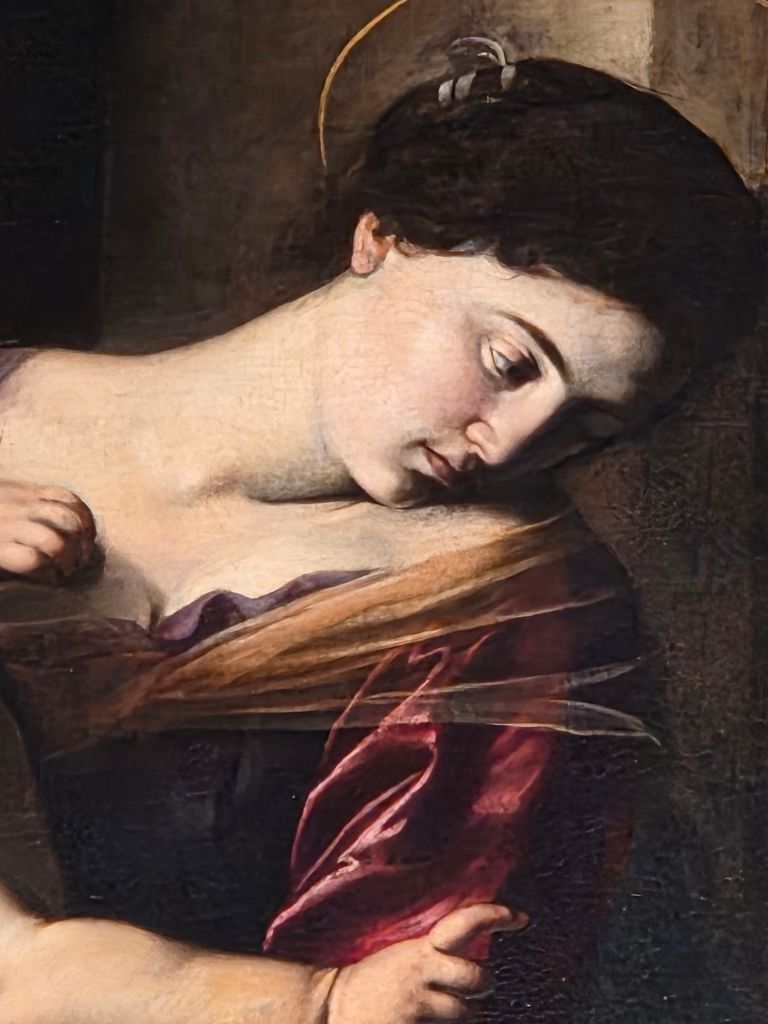
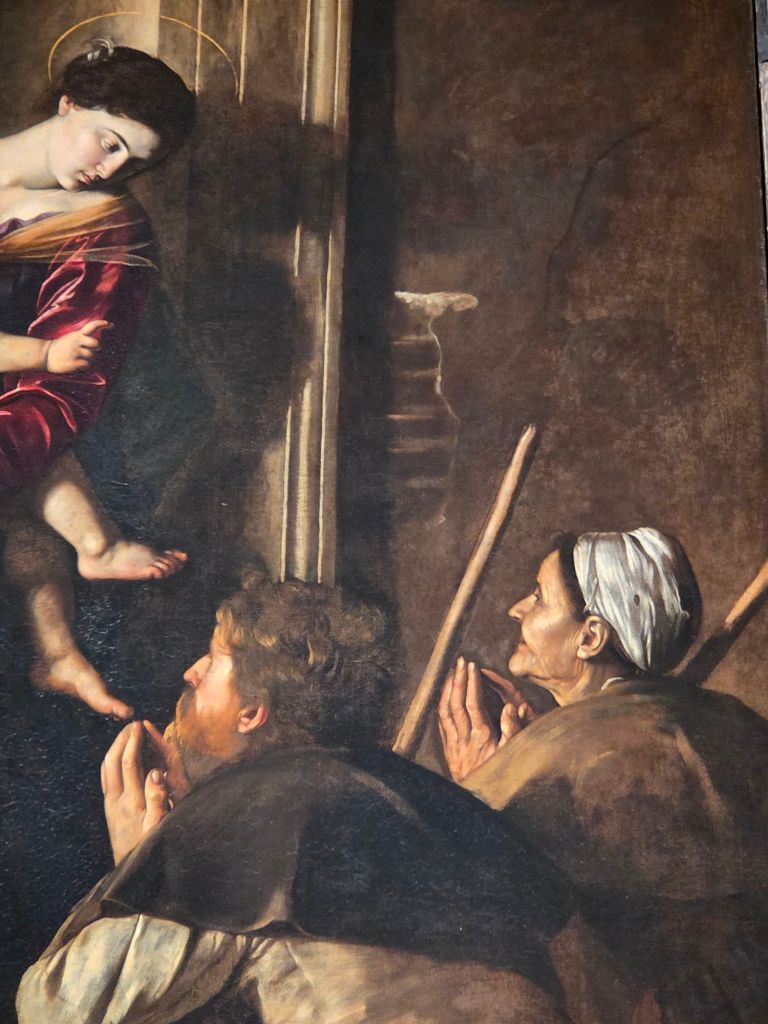
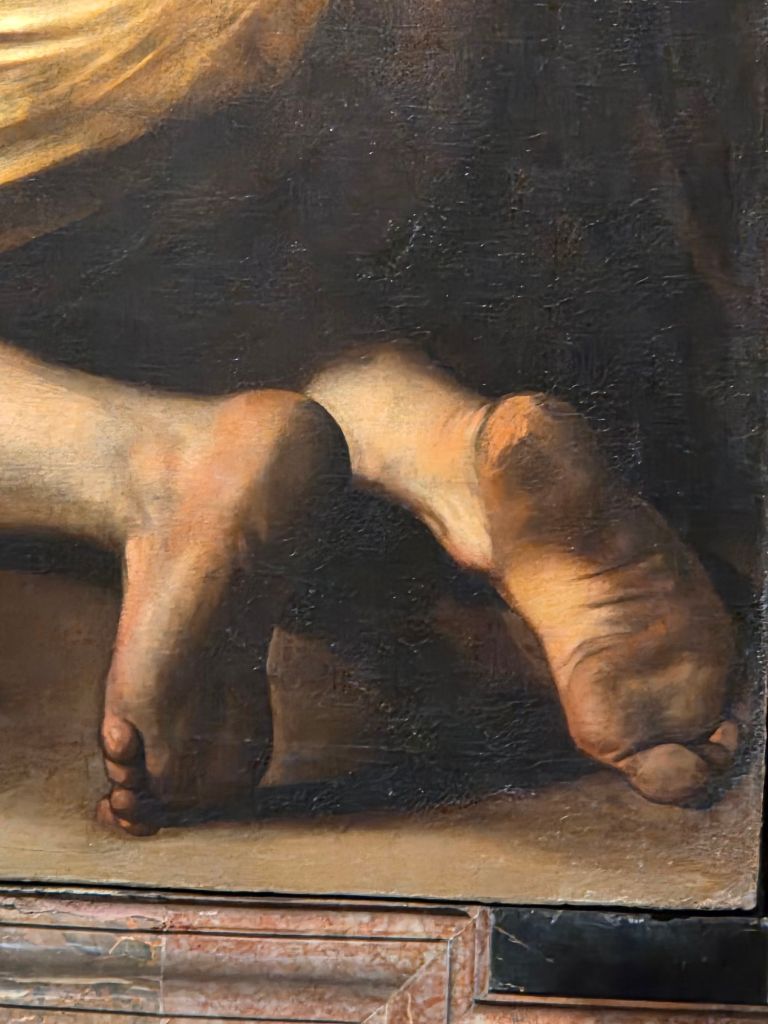
In the church of San Agostino (Saint Augustine), near the Pantheon, the touching picture, Madonna of the Pilgrims or Madonnaof Loreto (1604-6). Humble and ordinary, a couple have trudged many miles in pilgrimage to the Holy House of Loreto, believed in the Middle Ages to be Jesus’ childhood home miraculously transported from the Holy Land to Italy. They are rewarded with the presence of Mary and Child, themselves.As pilgrims who walked the Camino de Santiago de Campostela and several other Caminos, Ed and Anne respond viscerally to the sight of the walking sticks of the pilgrims (sticks are essential) and their dirty and battered feet.
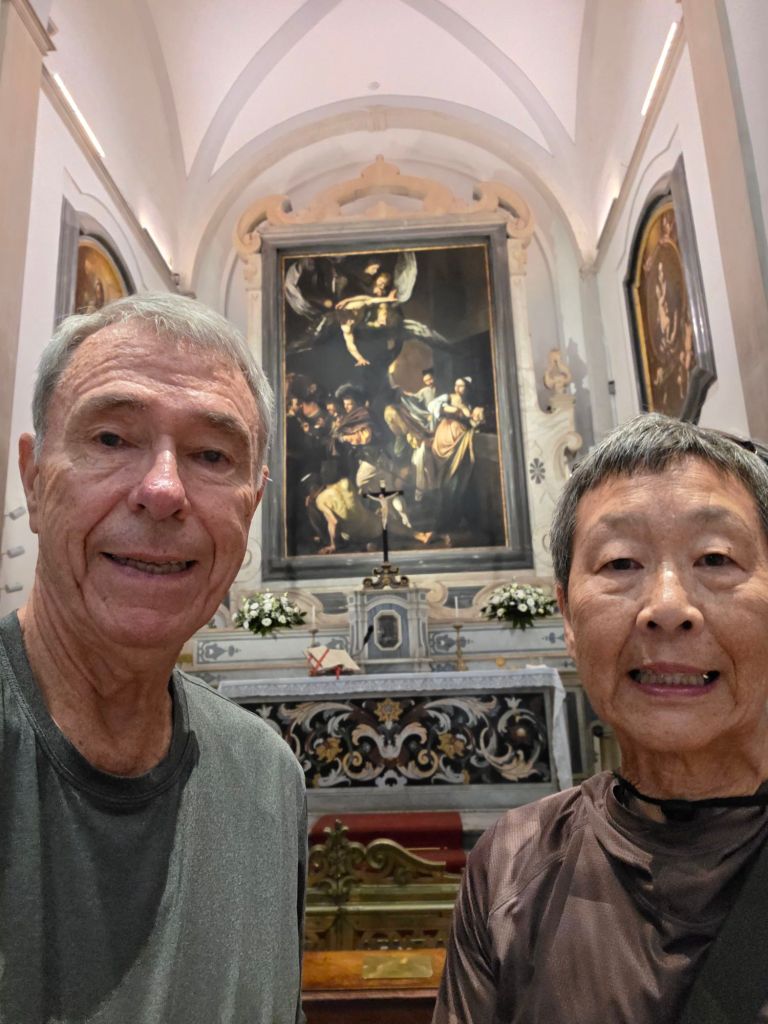
On the third try, too, we were able to enter the Church of San Luigi dei Francesi, the French national church in the next piazza to San Agostino. San Luigi is home to three masterpieces.
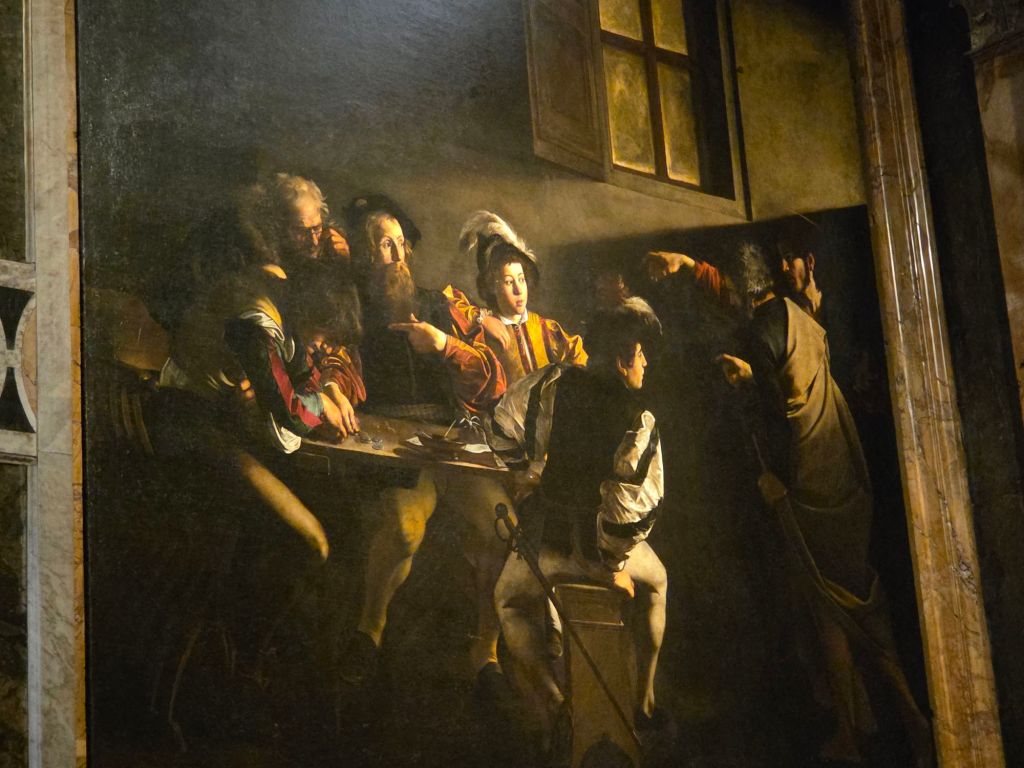
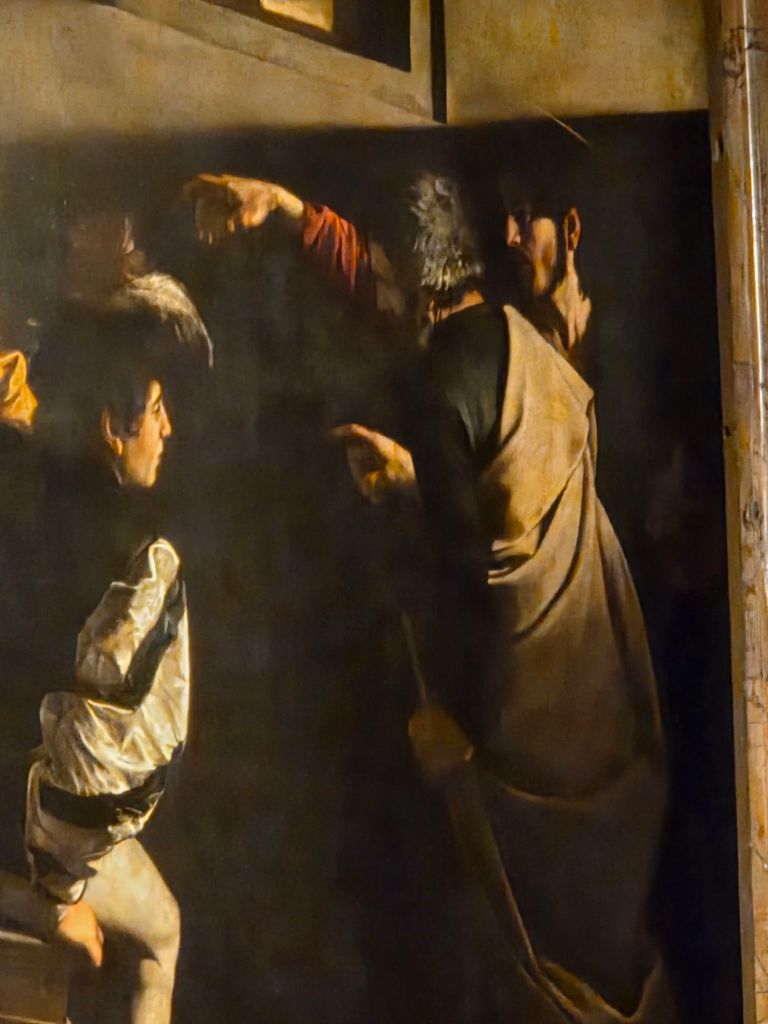
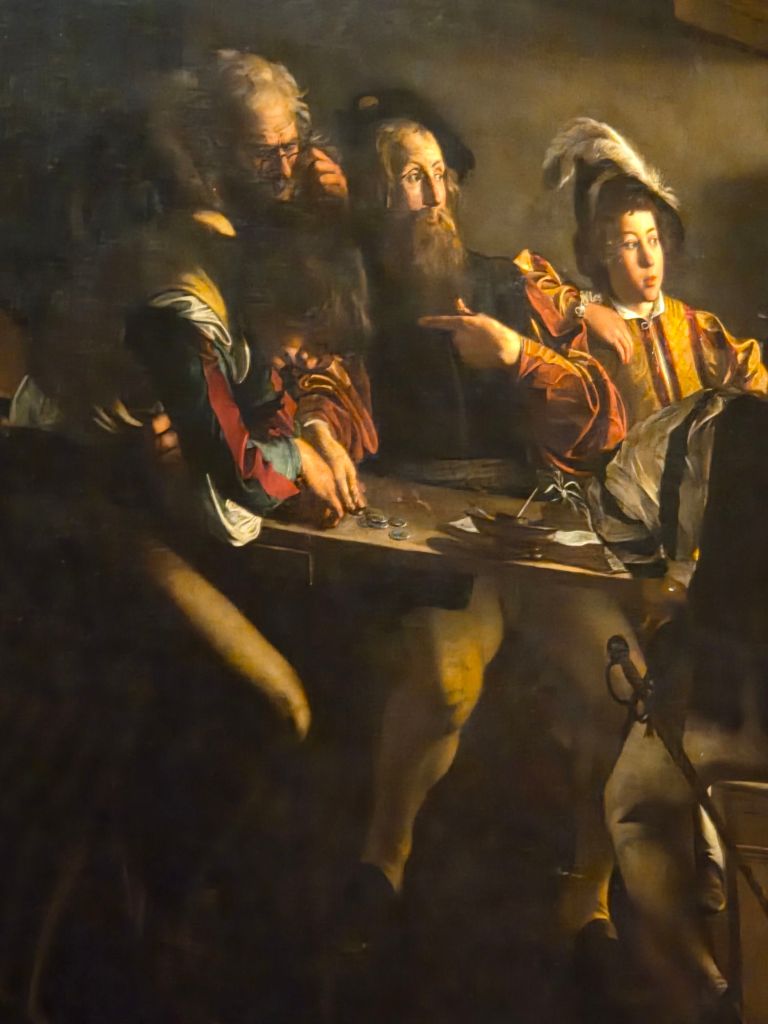
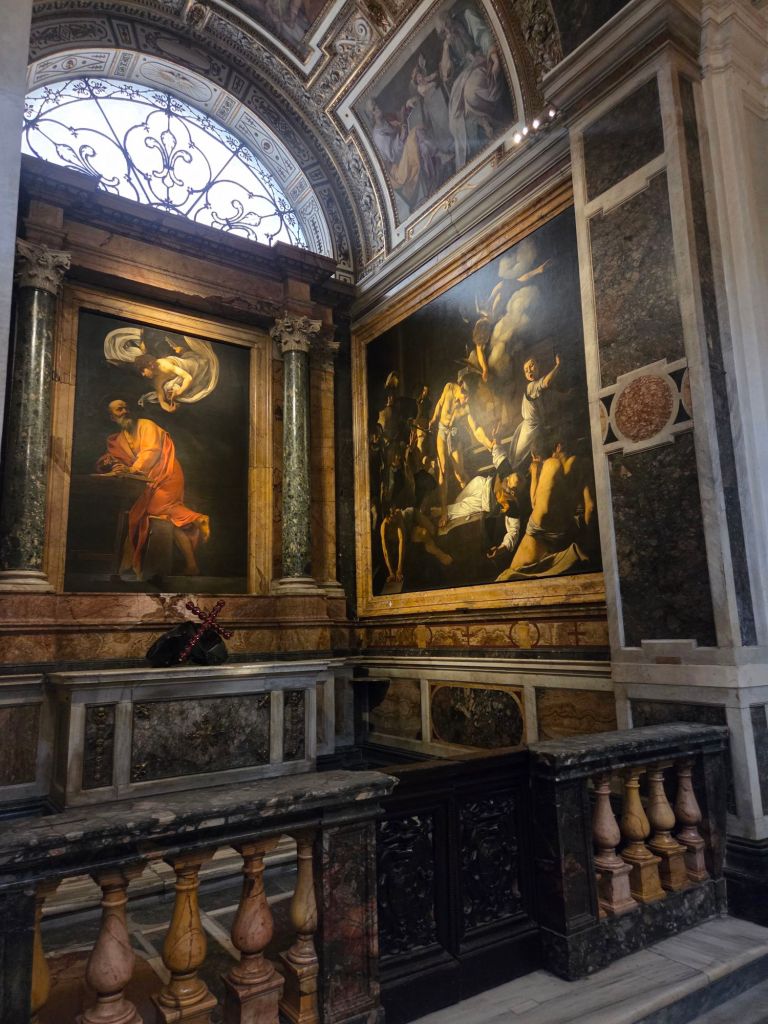
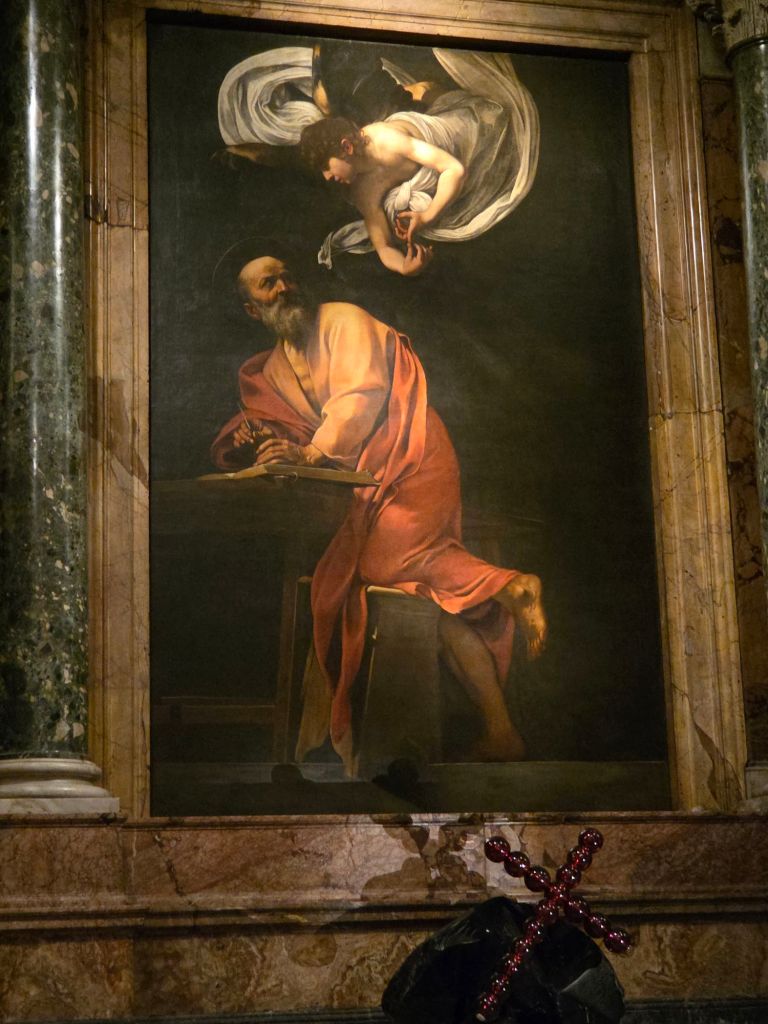
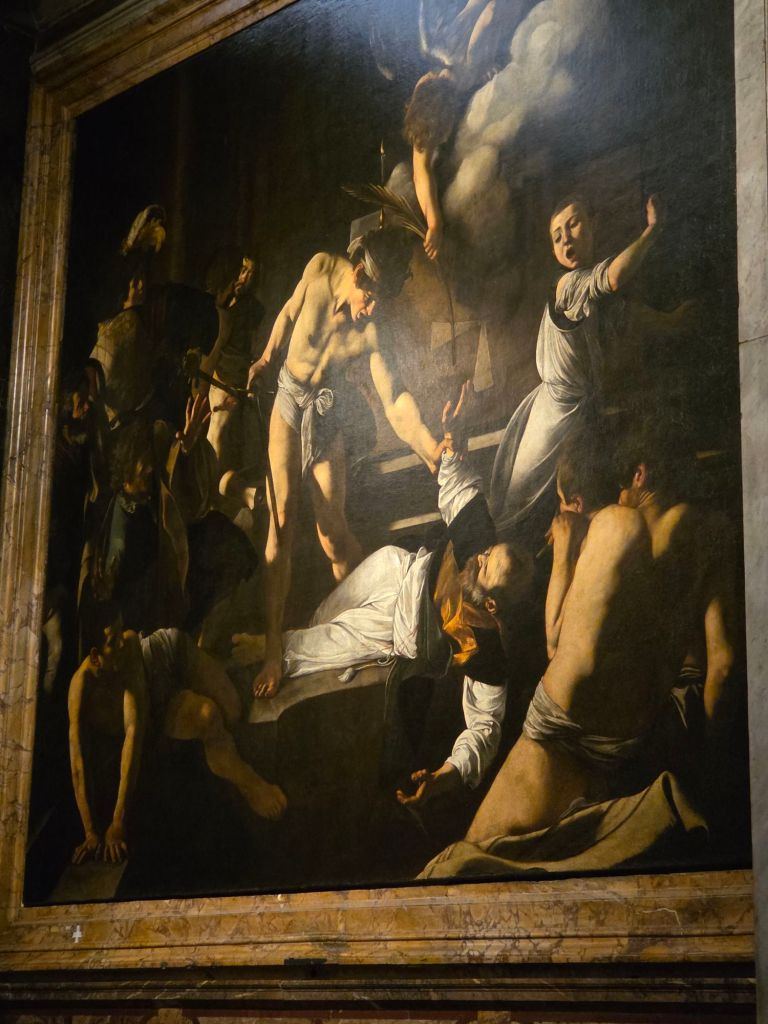
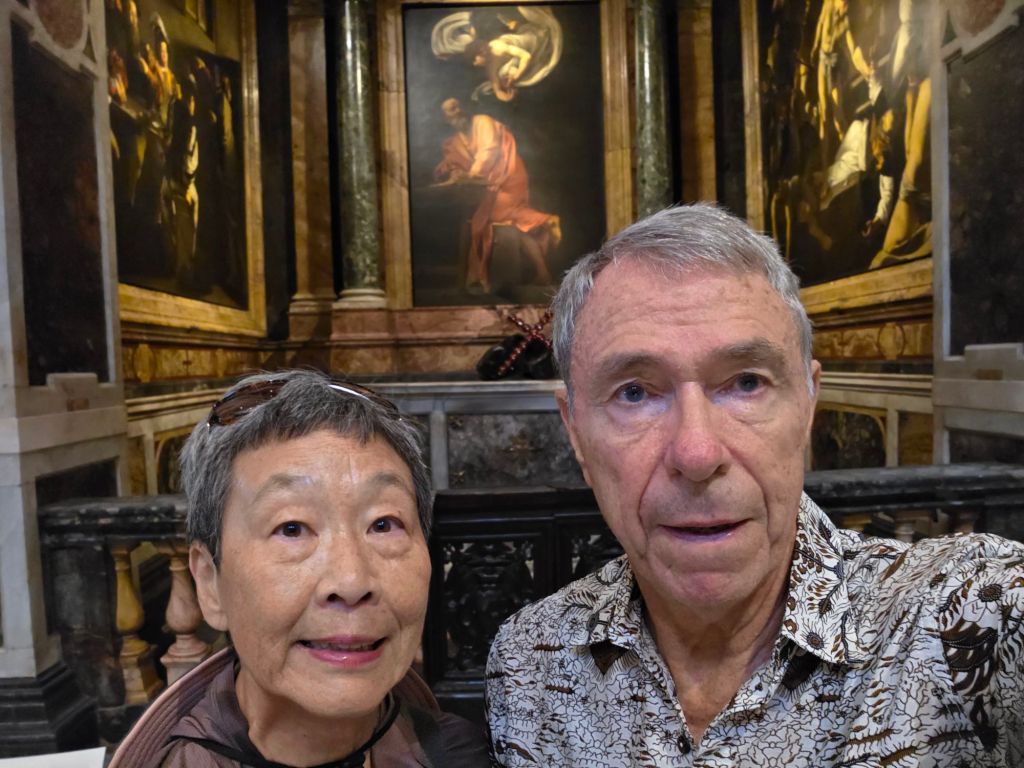
Thr Calling of Saint Matthew (1599-1600) was reputedly Pope Francis’ favorite painting. Jesus, in a simple red robe on the right, accompanied by Saint Peter in a brown robe, raises his arm to point at Matthew. He is summoning Matthew to “Follow me.”Jesus and Peter (who was the first to be called as an Apostle)Matthew, a tax collecter, that is, a venal man working for the hated Roman oppressors, points to his own chest, as if to say, “Who, me? You want me?” Under the table we can see that Matthew is already tensing his legs to stand and go with JesusSharing the three walls of the compact Contarelli Chapel with the Calling are Saint Matthew and the Angel (1602) and The Martyrdom of Saint Matthew (1599-1600)Saint Matthew is receiving divine dictation from an angel in order to write the Gospel named for him. The Angel is counting “One” on his fingers, as if to say, “Chapter One, Verse One…”The Martyrdom of Saint Matthew centers on the Apostle who had been struck down by an assassin wearing only a loincloth. The killing apparently takes place while Matthew is baptizing some of his many converts. Onlookers flee in horror, among them, the artist.Today we can only view the two side paintings from a cramped angle, as you see behind us. Self-portrait of the artist witnessing but fleeing the scene of Matthew’s martyrdom (apologies for reflection)
Both churches, San Agostino and San Luigi, were the precise locations for which the four paintings were commissioned, created and installed 400 years ago. We feel that trying three times to get inside has been well rewarded!
In the next post we will continue to reap the rich harvest of Carravaggio in Rome.
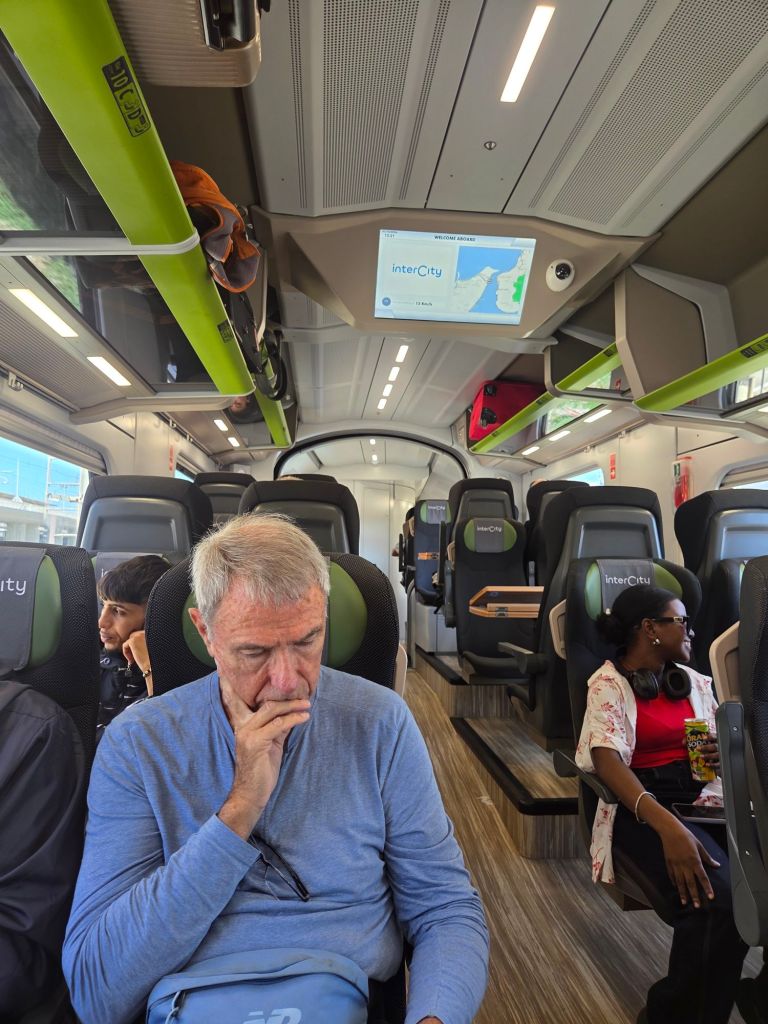
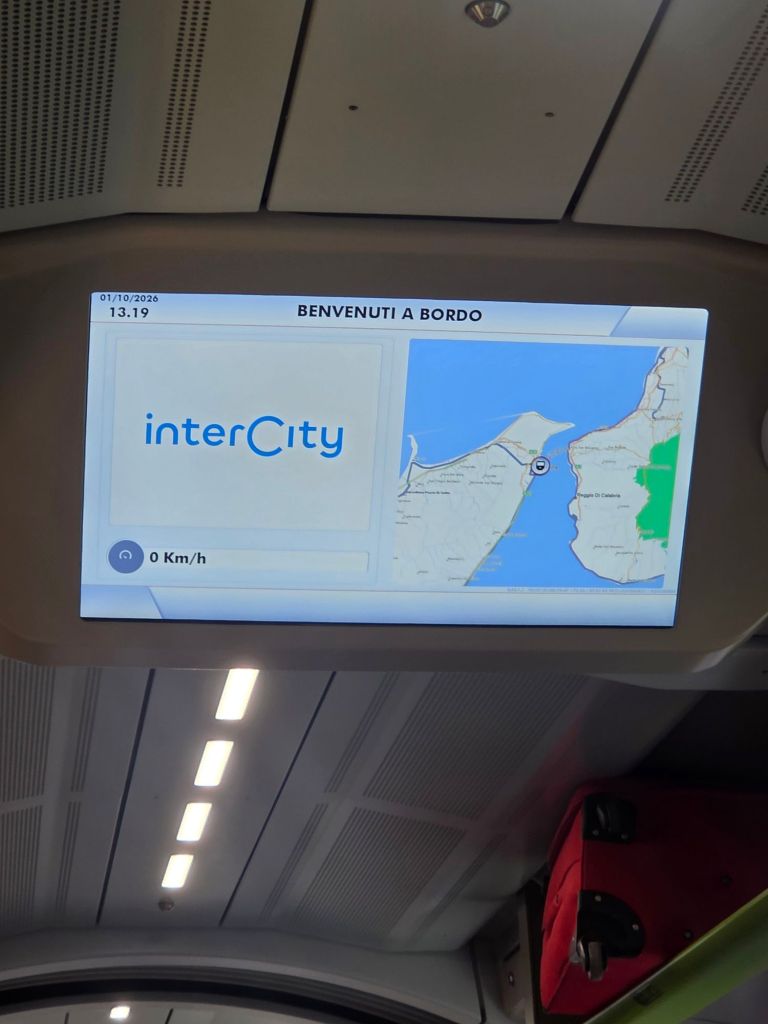
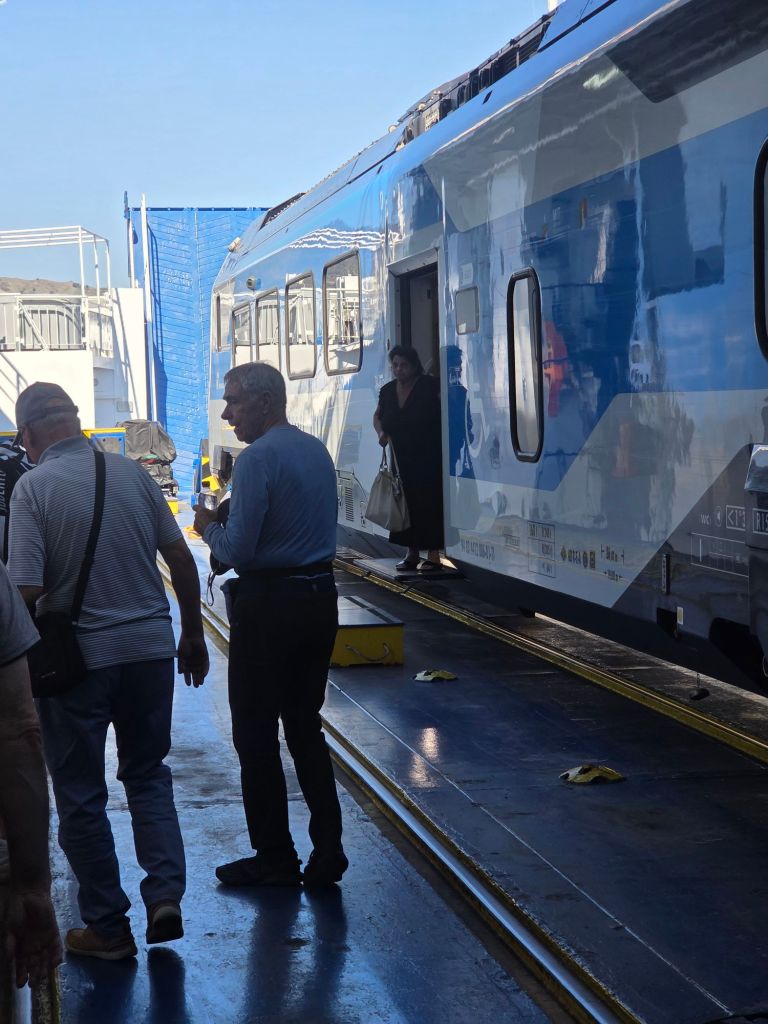
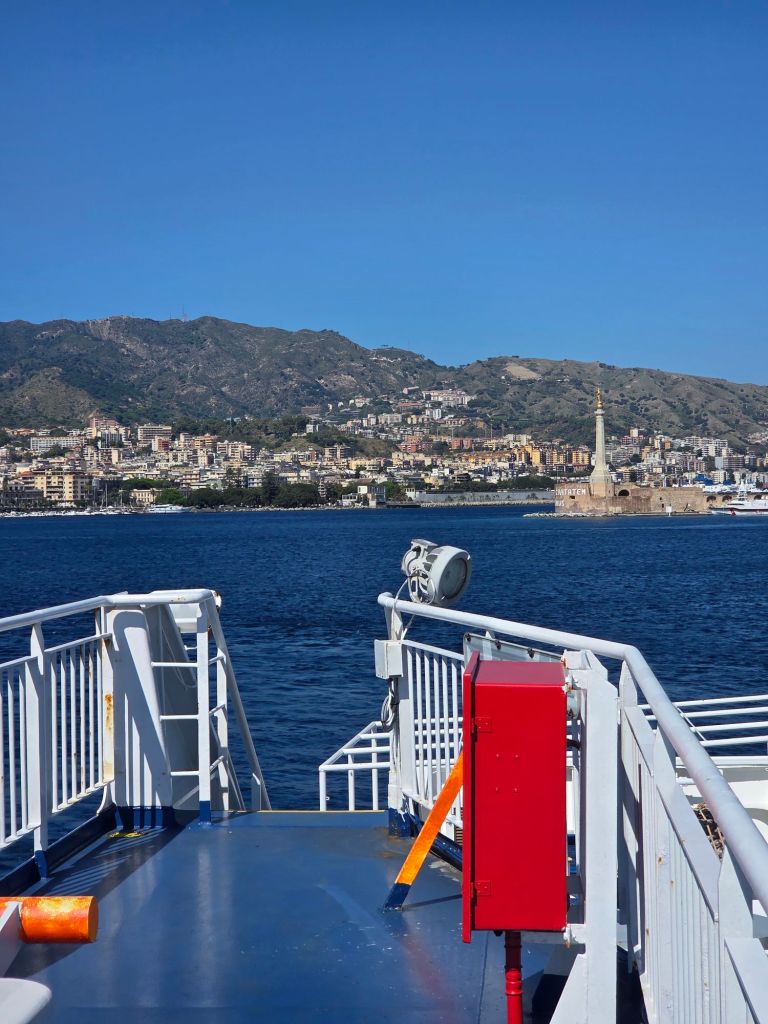
In the last post we promised to tell you why our crossing of the Straits of Messina from Sicily to the mainland of Italy was so exciting. As a master of fact, everyone who travels this route by train gets a treat: the entire train, carriages and passengers, is shunted into a giant ferry boat and taken on a five mile-long cruise.
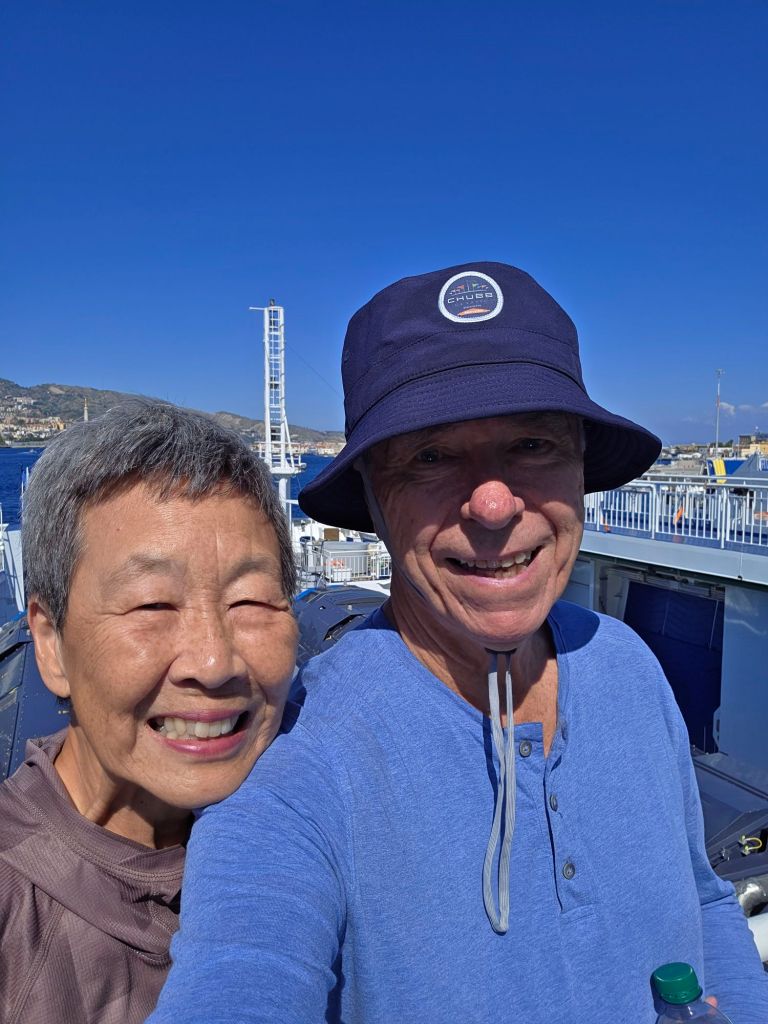
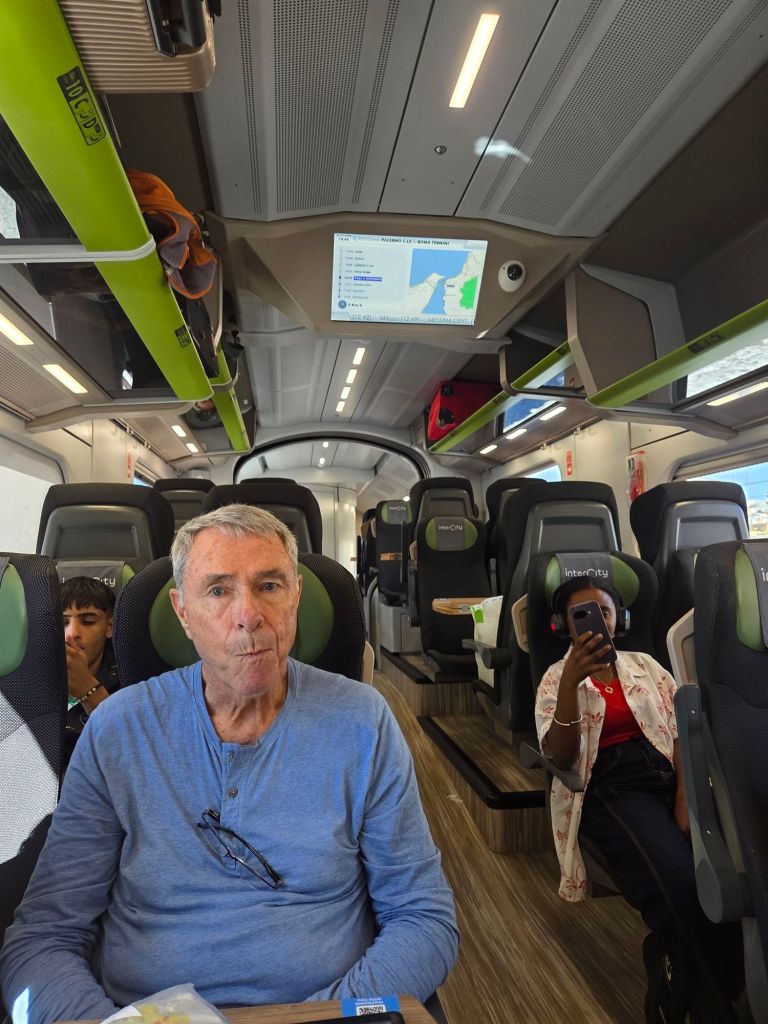
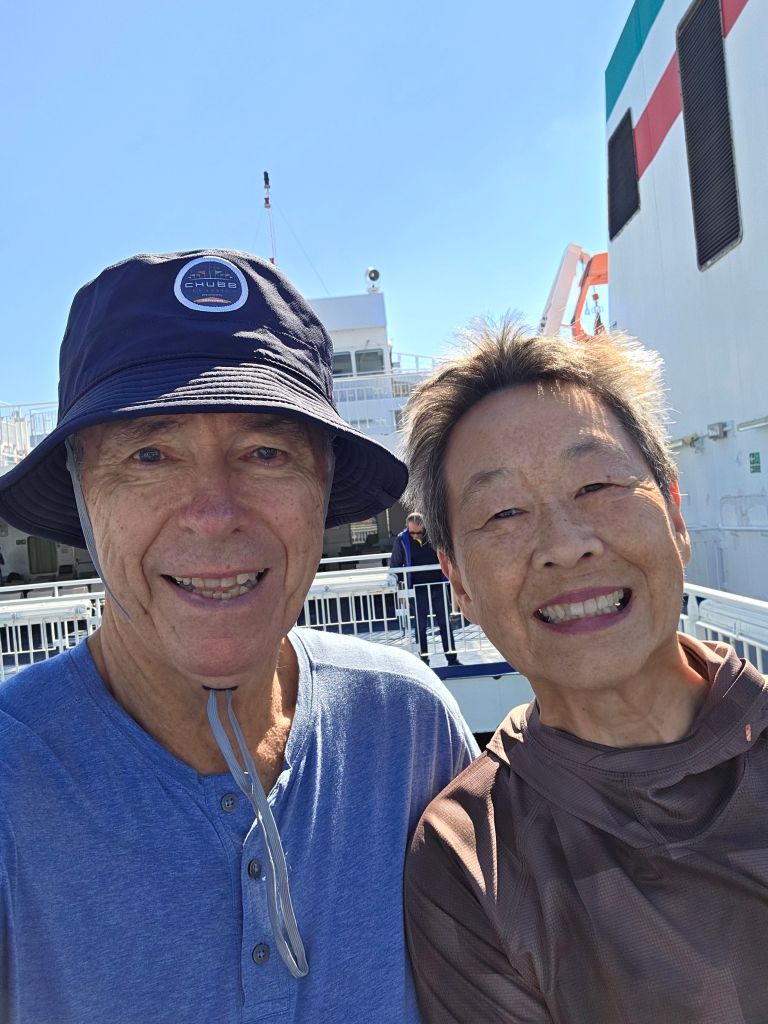
Inside the train, the monitor shows a black “X” where the tracks end on the Sicily side of the Straits of MessinaOnce our train carriage is driven on board the ferry, passengers are allowed to exit their trail car and climb up on deck to enjoy the sea crossing in the fresh air. We had a sunny day with calm seas for our crossing. The whole process, although only five miles on the water, took about 80 minutes with loading and unloading the train cars on and off the ferry.We’ve telemed to our train seats. The monitor now shows the train is now on the mainland of Italy.
For decades through to today there have been promises to build a bridge over the Straits as an impetus to economic development for Sicily and southern Italy. It would be the longest bridge in the world and the latest proposed project, announced by the politicians in 2025, is budgeted for 13 billion euros. We are not holding our breaths for project completion. Meanwhile, Trenitalia operates the last remaining passenger train ferry in Eutope, providing us with slow passage and great fun.
Our first stop on the mainland is Naples, the beautiful, energetic, crowded, noisy city overshadowed by Vesuvius on the far side of its blue bay.
Caravaggio wanted to stay in Rome, the center of power, influence and the wealth to support artists, but was forced to leave to avoid prison for murder. Naples is one of the places he went and today three major works can still be found in the city.
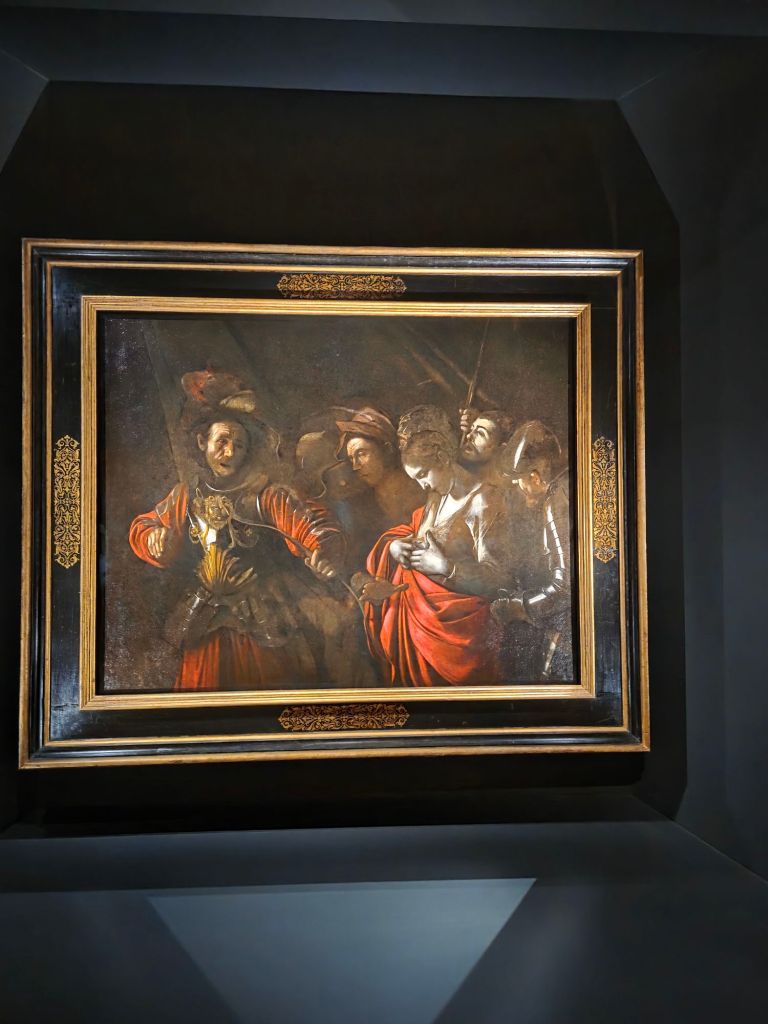
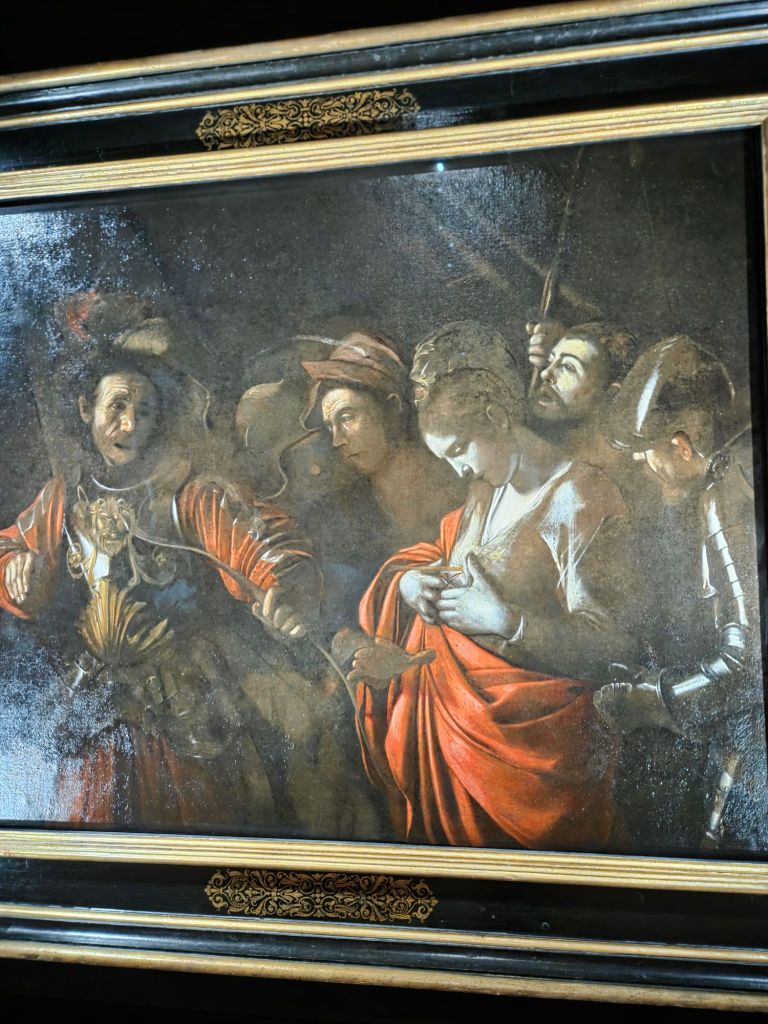
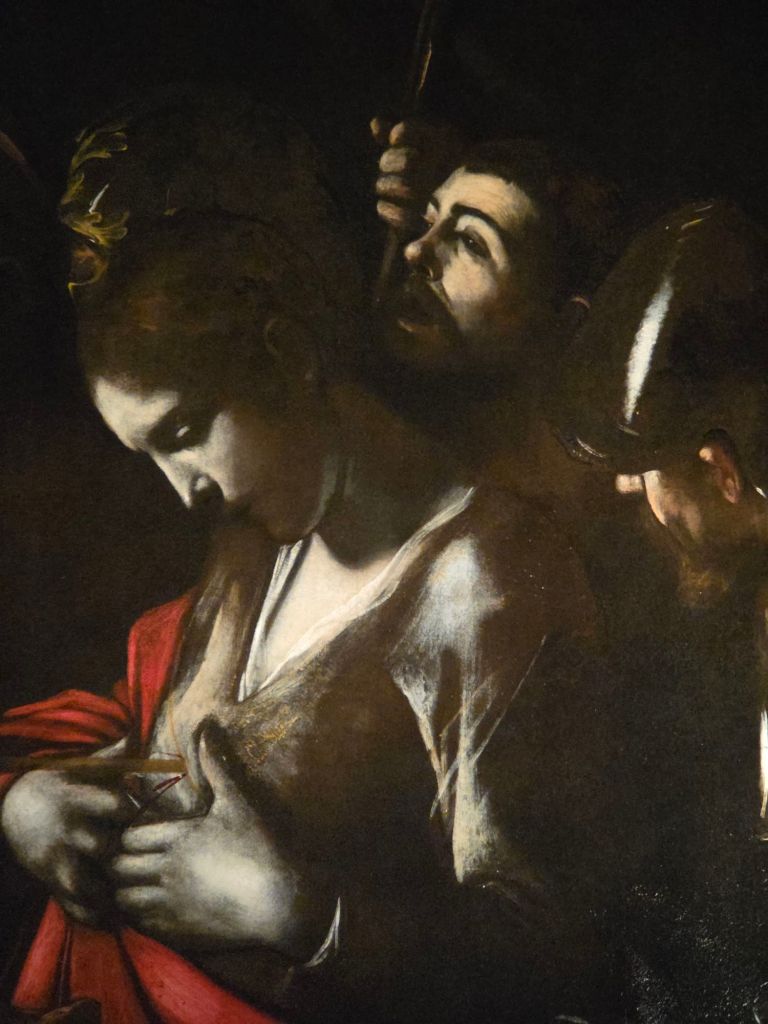
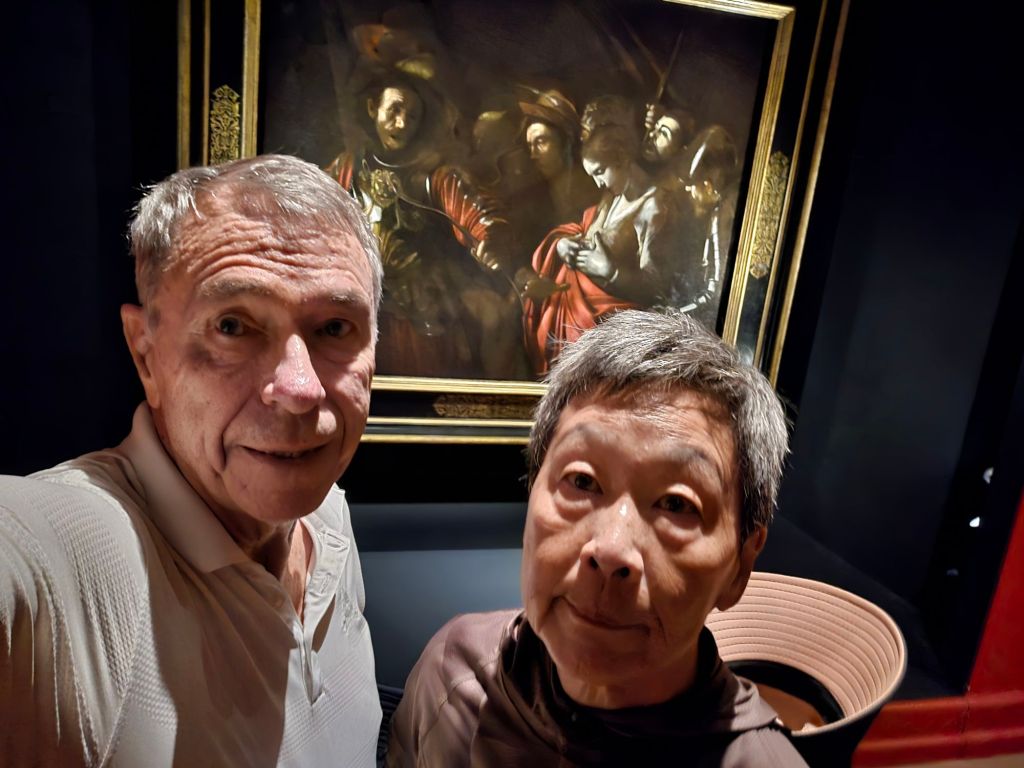
In the Galerie d’Italia Palazzo Zevallos can be found the very last work ever painted by Caravaggio, The Martyrdom of Saint Ursula (1610).
Saint Ursula led a large group of virgins on a pilgrimage. Unfortunately they ran into Huns who slaughtered all the women except UrsulaUrsula was offered marriage to the Hunnish leader. When she refused him, he shot her in the stomach with bow and arrow at point blank range. The perpetrator is at the far left.Ursula looks at the arrow piercing her body. Behind her, standing so close that only his head can be seen, groaning as though HE had been shot, is (yet another) self-portrait of the artist.
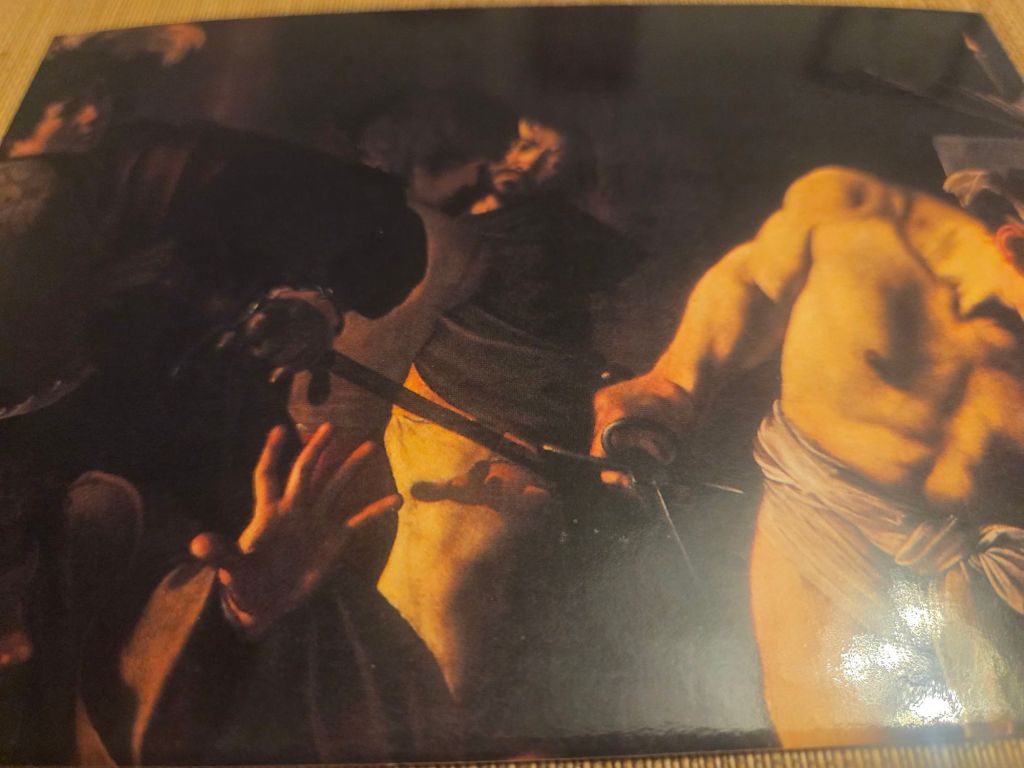
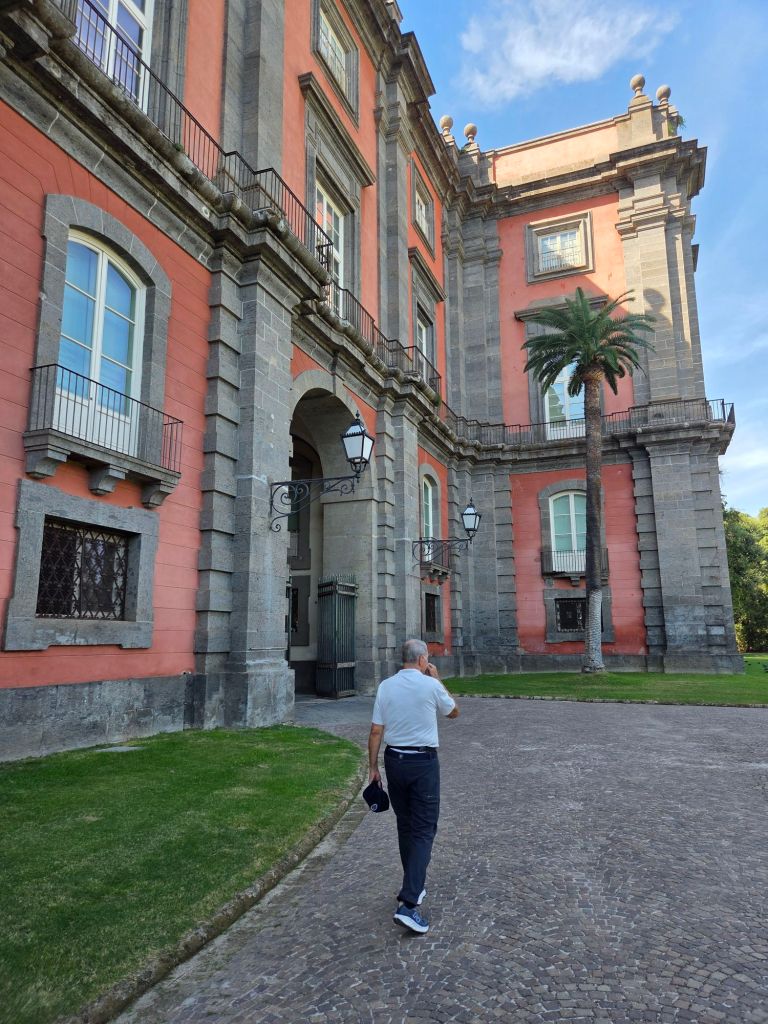
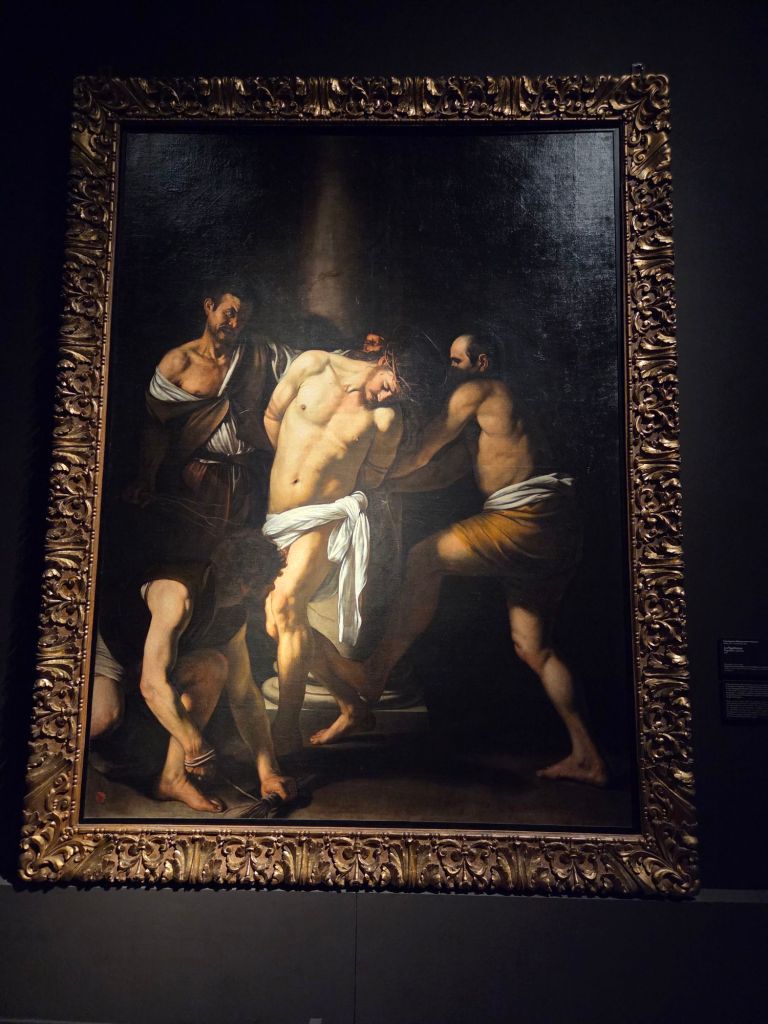
In the opposite direction, on the north side of Naples, an hour’s bus ride brought us to the Museo Real di Capodimonte, a former royal palace and garden which form a beautiful and spacious green space. There we found the stunning Flagellation of Christ.
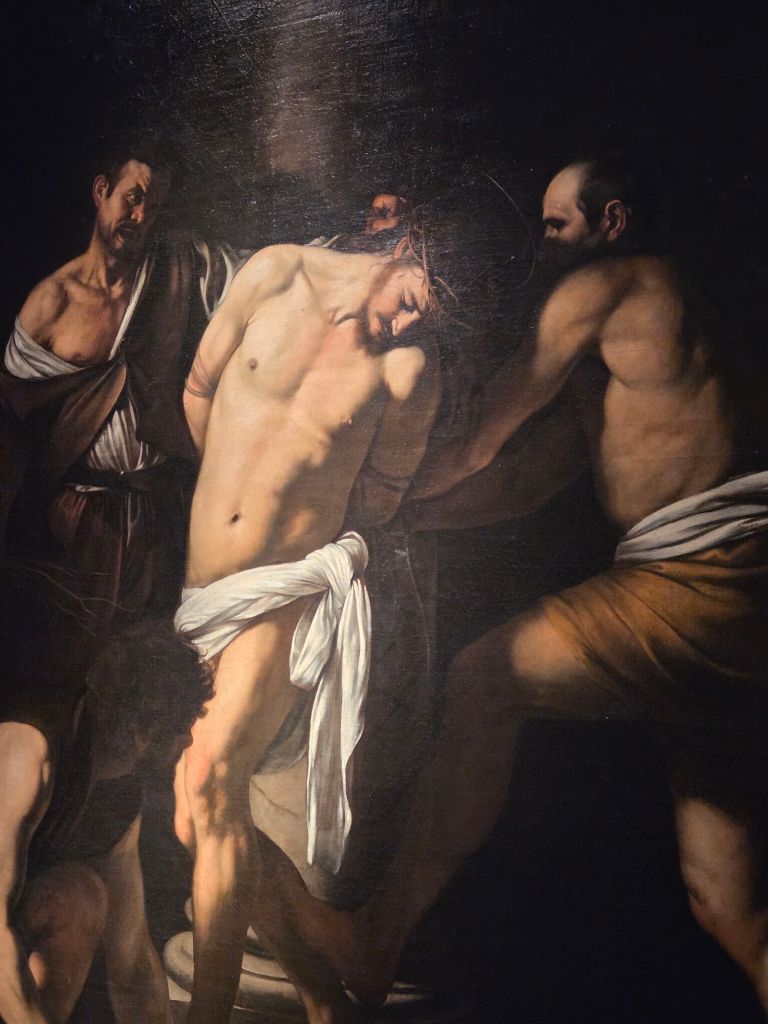
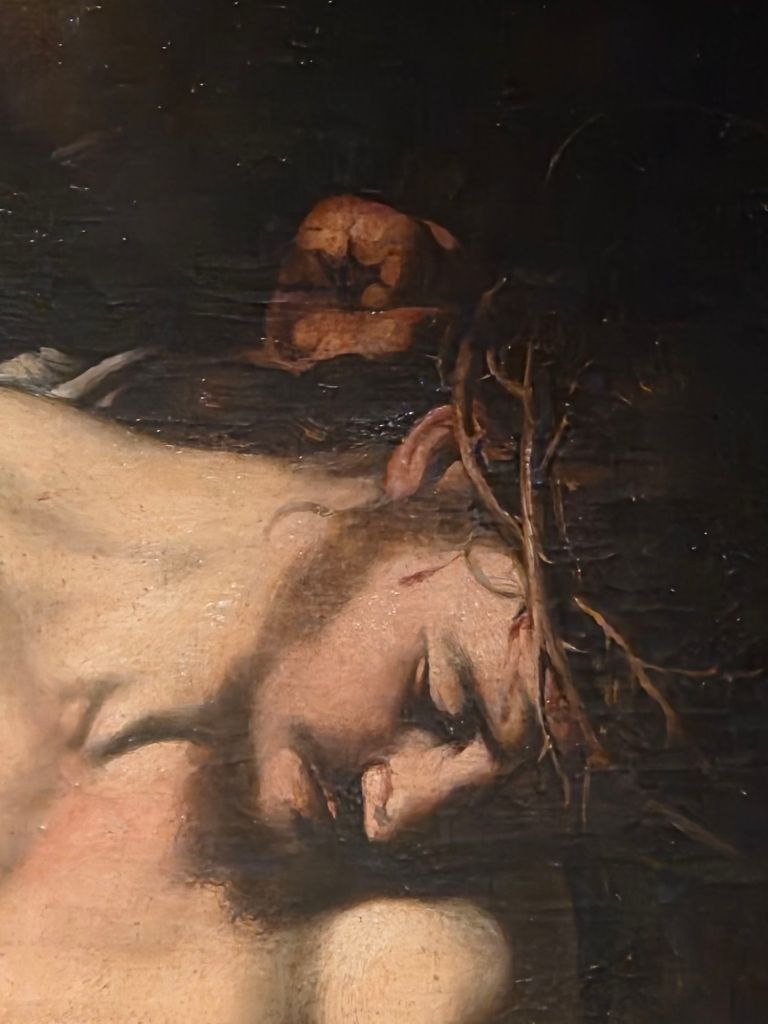
Ed walks up to the Museo’s entranceChrist, tortured and exhausted, is surrounded by three henchmen binding him in order to flog him. The pillar to which he is being tied forms a light, vertical beam rising upward.The torturer on the left grasps Christ ‘s hair to jerk his head back. Drops of blood fall from the thorns thrust onto His scalp. We cannot look into His eyes.
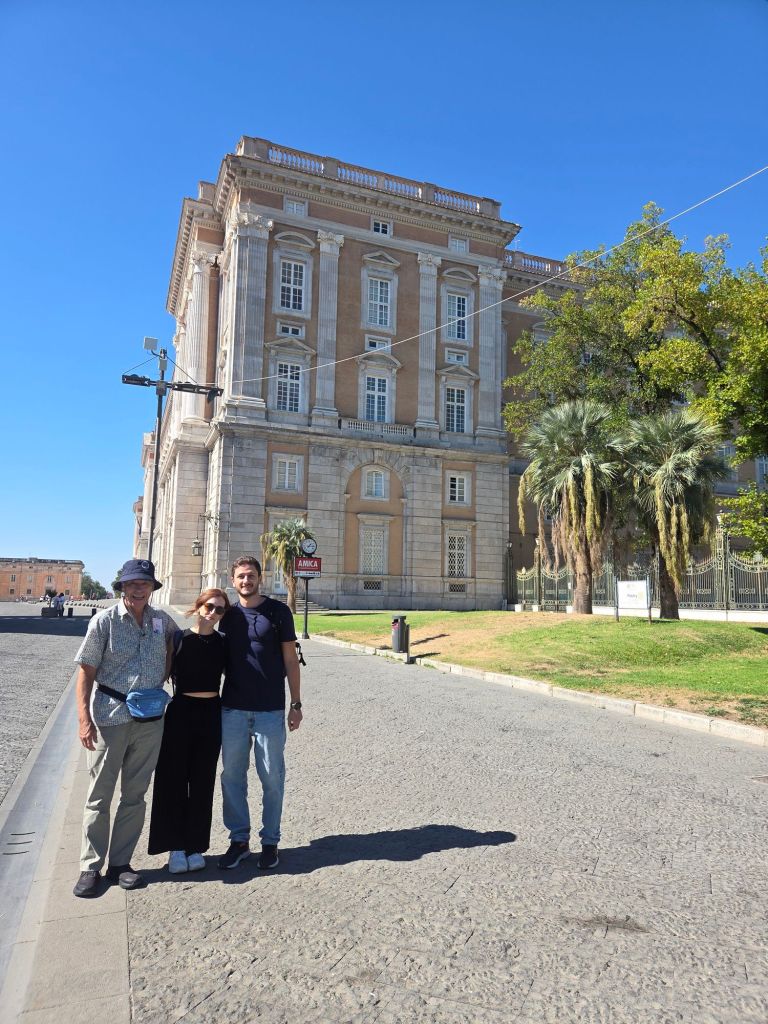
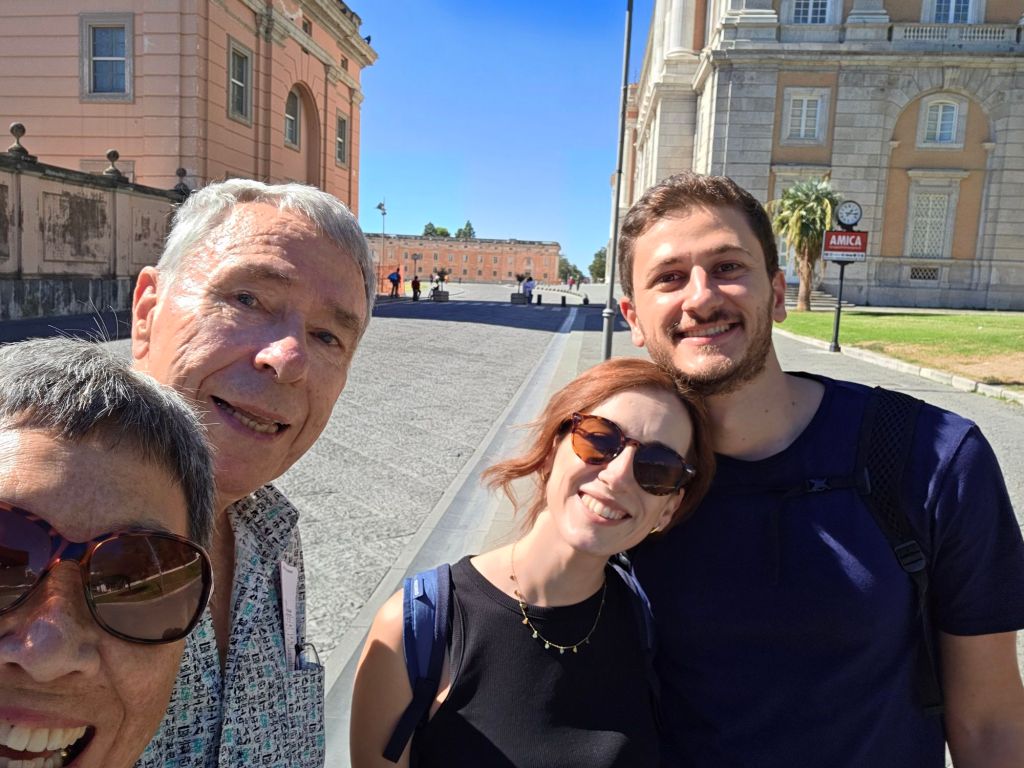
On our second of three days in Naples we gave ourselves a special treat: we took a detour off the Caravaggio path to get together with our friends, Enrico and Carla, who live and work in Naples. Together we investigated the Royal Palace of Caserta, a short train ride outside Naples.
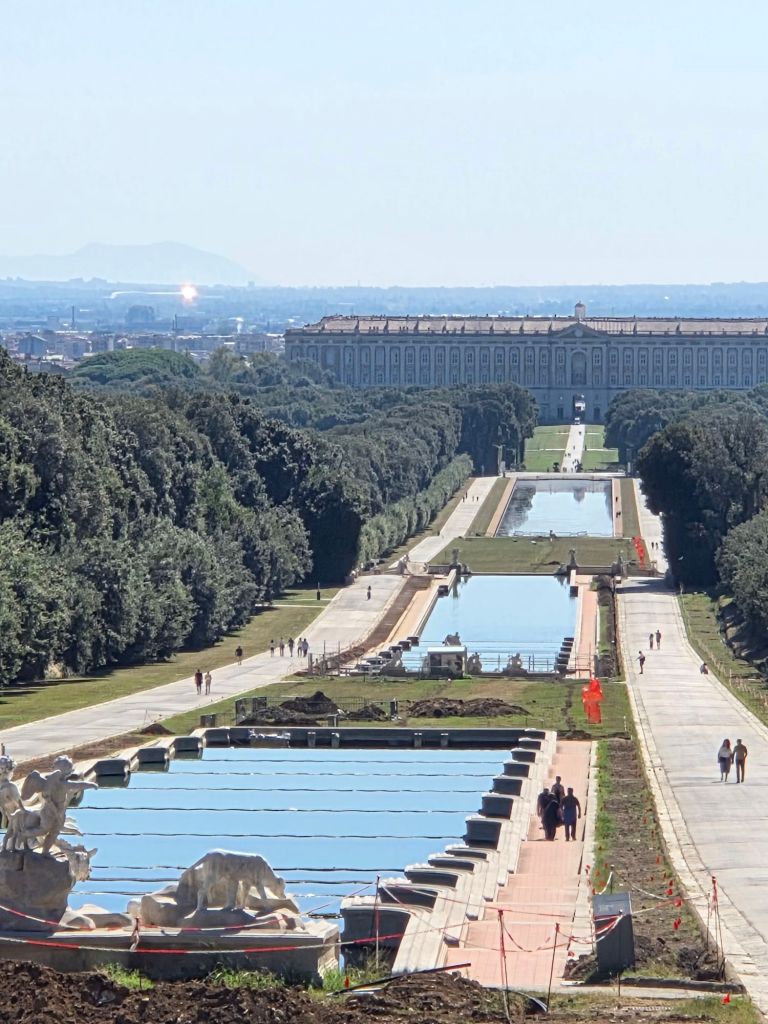
Built in there 18th century by Carlos II and the House of Bourbon it was the palace of the Kingdom of the Two Sicilies, the largest in Europe.
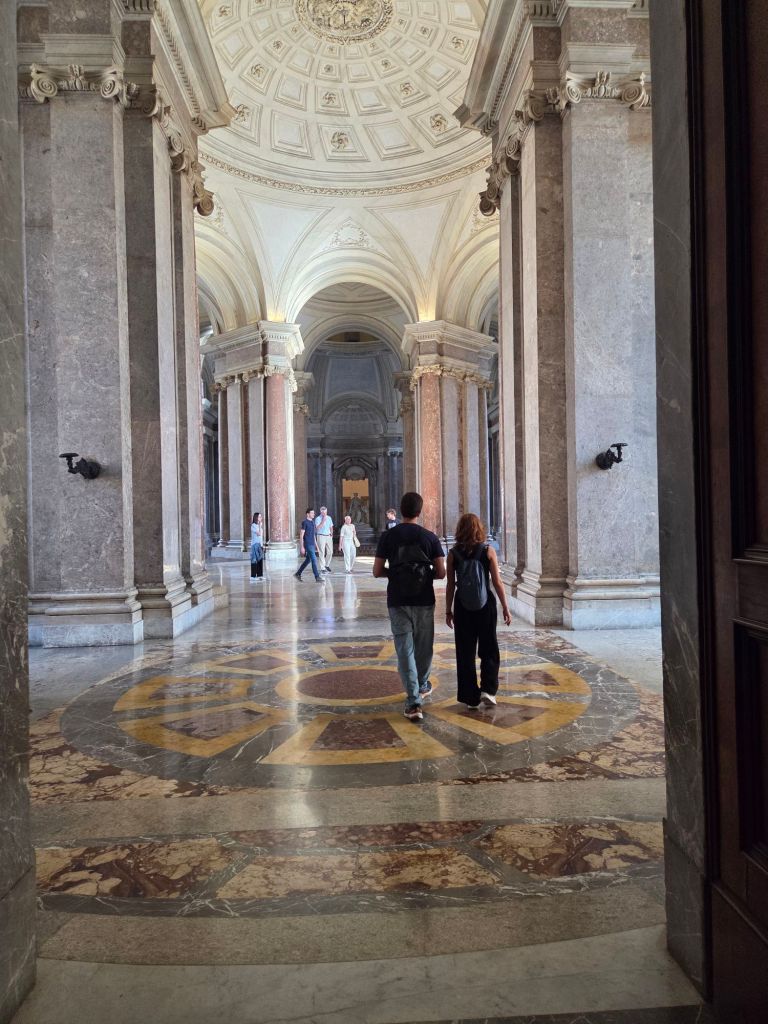
The enormous Palace can be seen in the distance at the foot of a huge water feature fed from distant mountains by special aqueduct. (There might be a bit of algae in the pools…)Enrico and Carla stroll through the Palace.
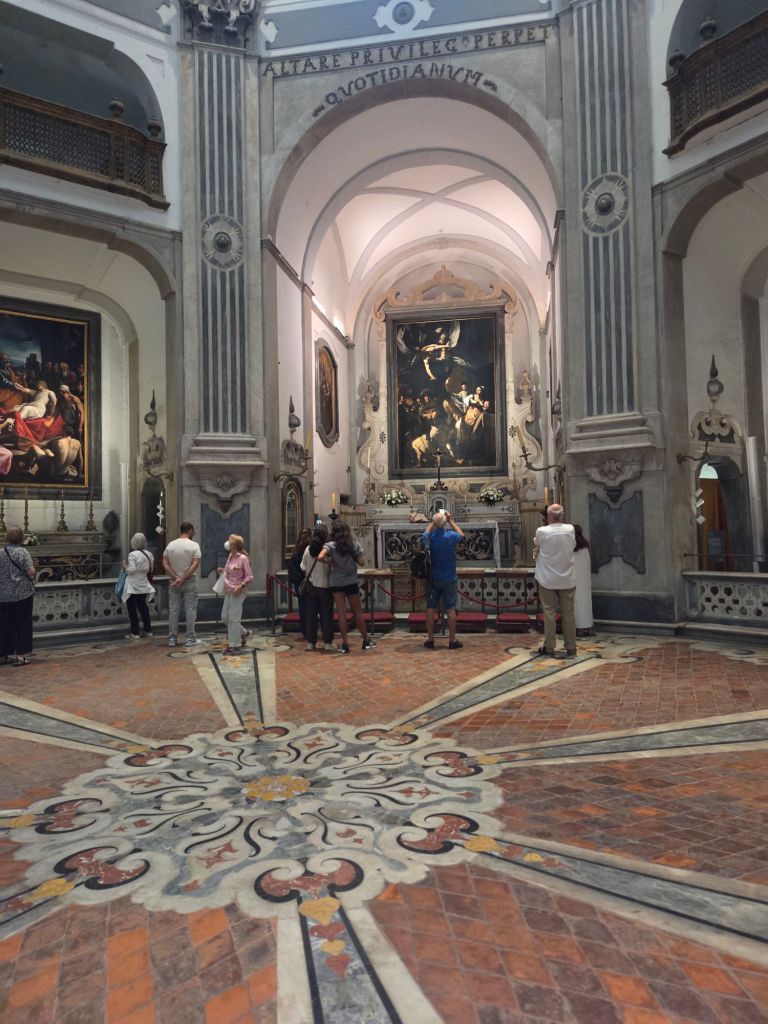
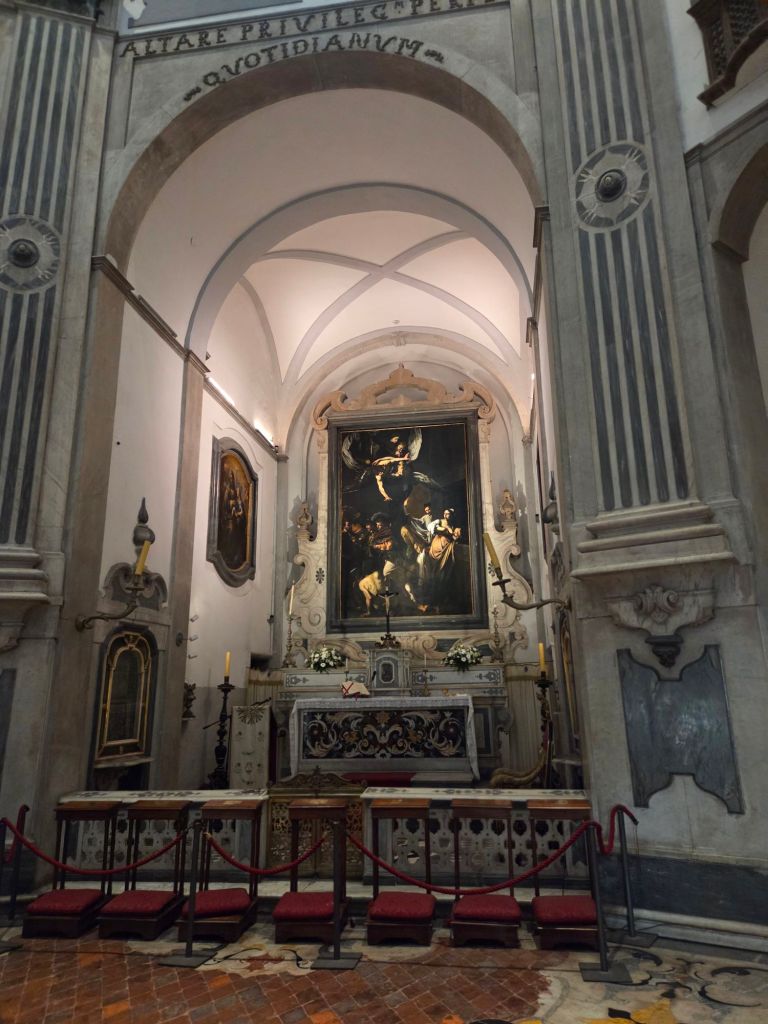
On our last day before leaving Naples for Rome, we visited the Pio Monte della Misericordia. This small chapel was the headquarters of a group of young seventeenth century noblemen who committed themselves to social and charitable action, as called by their Christian faith. Wonderfully, they are still active today, helping the poor and needy.
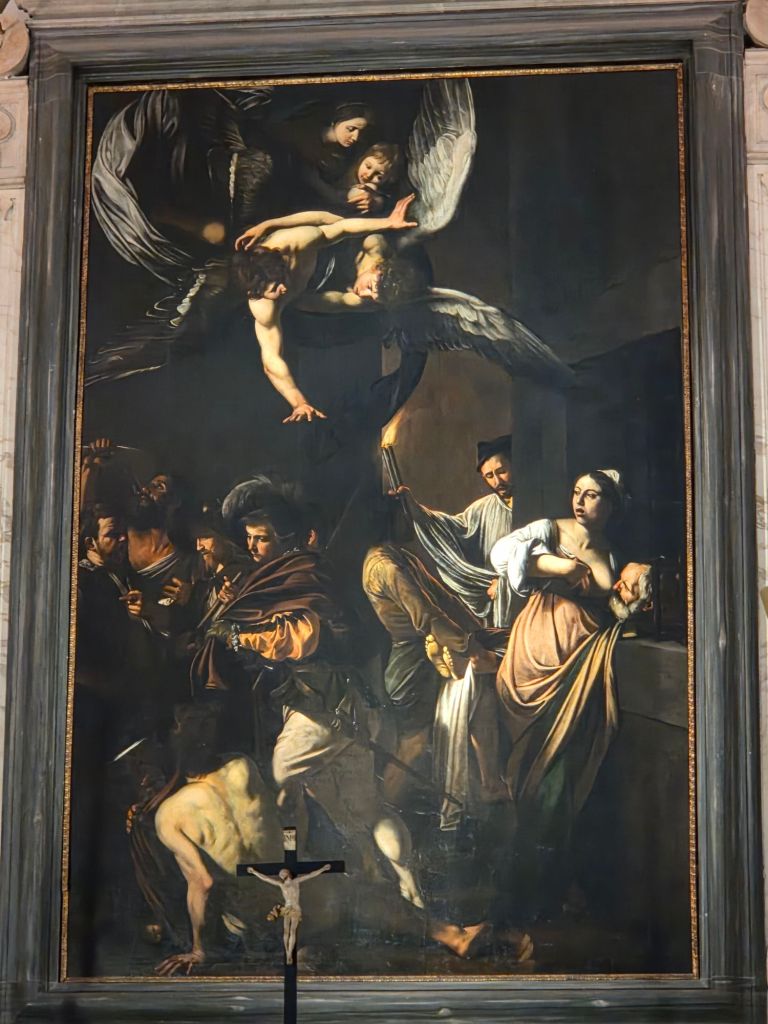
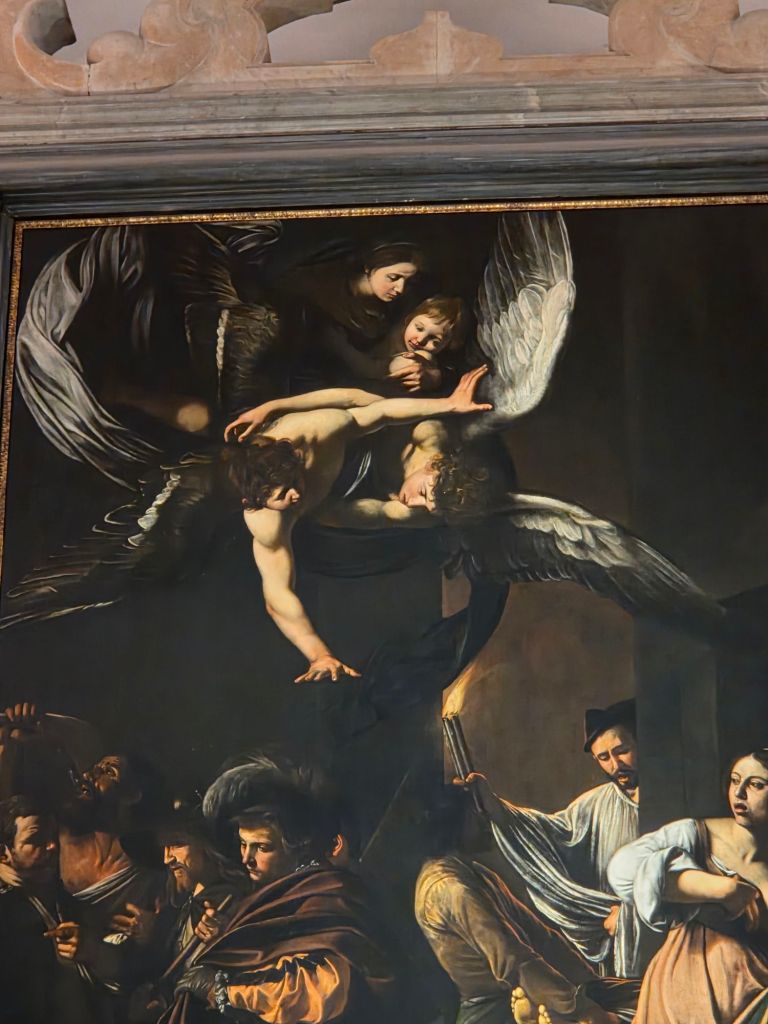
Interior of the Pio Monte della Misericordia in the Centro Storico (historical center) of NaplesThe Seven Works of Mercy (1607) by Caravaggio The Seven Works — Feeding the hungry, Giving drink to the thirsty, Caring for the sick, Clothing the naked, Visiting prisoners, Giving alms to the poor and Burying the dead — are depicted by a swarm of historical people in a crowded Naples alleyway in the dead of night. From above, tenderly compassionate Madonna and Child, borne by a whirling swirl of two young angels, enable the humans to engage in the works of mercy. Note there young Nan wearing a large hat at bottom left. He is Saint Martin of Tours dressed as a pilgrim of Santiago de Campostela (which we first walked in 2015). The Santiago scallop shell is on his hat.Ed finds the Seven Works of Mercy the most compelling of the 30 paintngs of our Camino.
From Naples we move to Rome, the city which presents the largest number of Carravaggios (20) in the world.
It turns out that the Camino Caravaggio, for which we believe we are the pioneers, involves a crossing of straits, that is, a narrow but sometimes hazardous strip of ocean separating two land masses. “Straits” are in the news currently; in our case, we are thinking about the passage known as the Straits of Messina, a legendary waterway between the northeast corner of Sicily and the Italian mainland (near the toe of the “boot.”)
Crossing the Straits of Messina was even more exciting than we expected
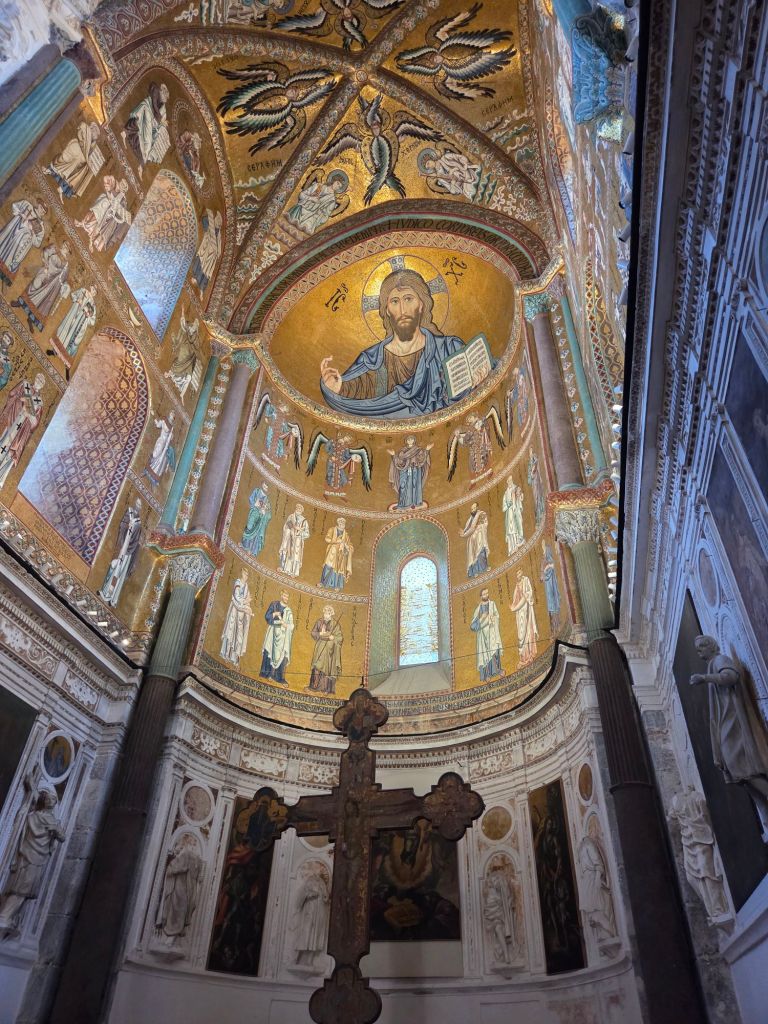
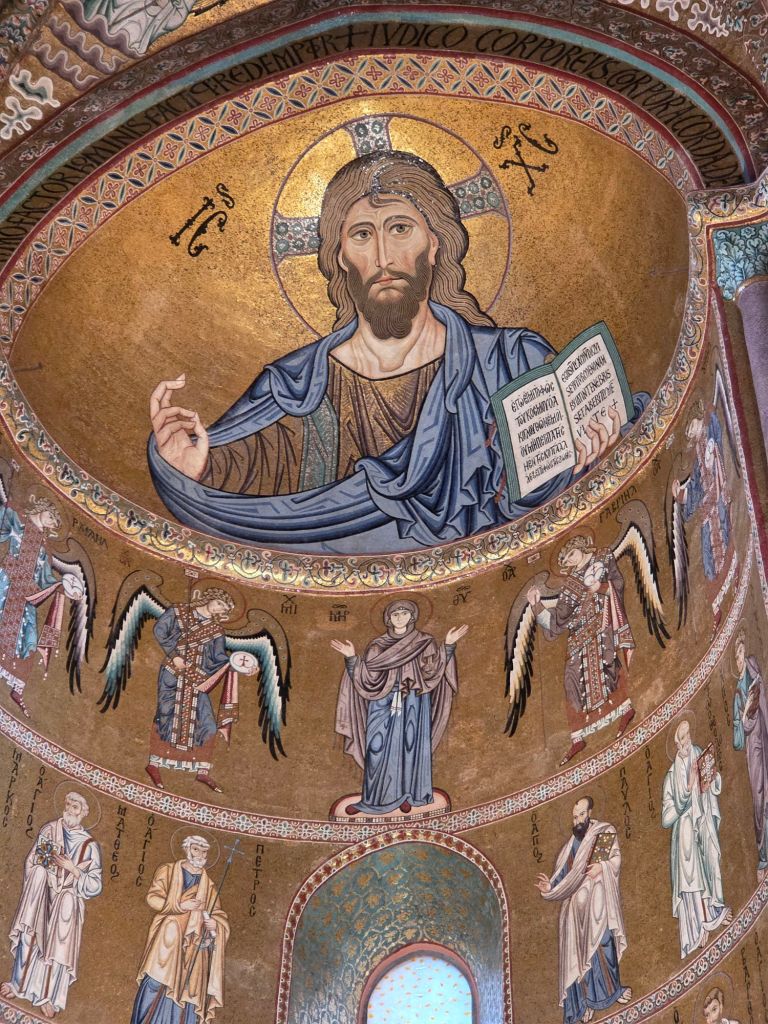
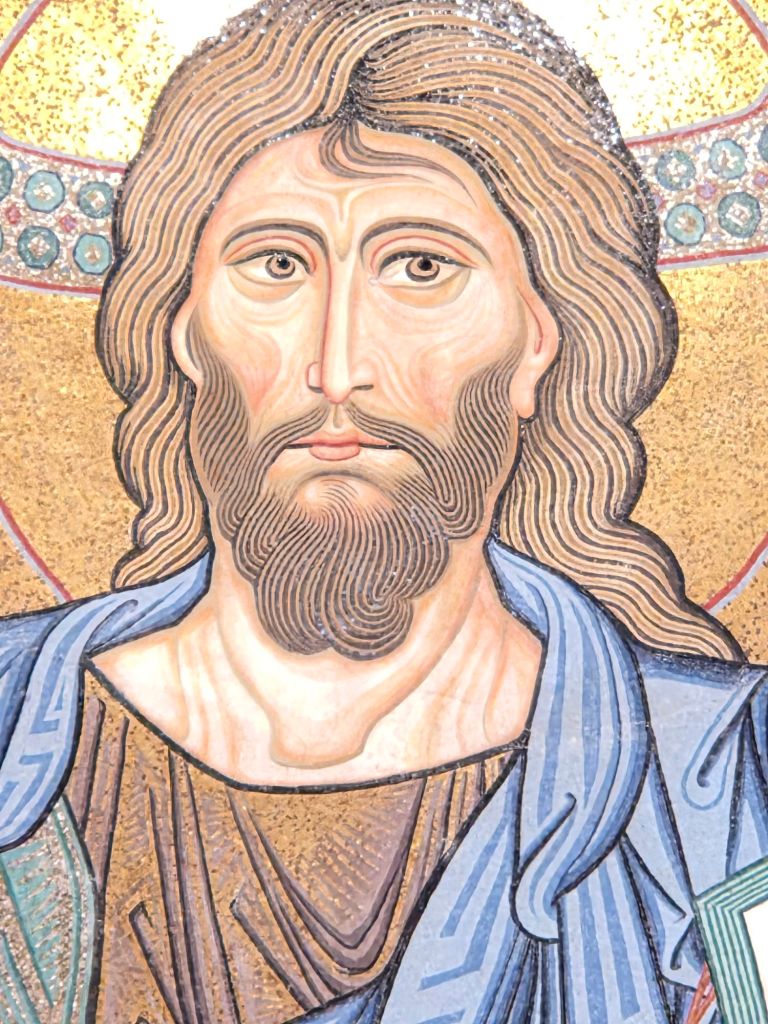
Before facing the Straits, we visited the Great Norman cathedral at Cefalù, not far from Palermo. We wanted to see the Byzantine-influenced mosaic of Christ Pantocrator — all-knowing, all-powerful, all-merciful.
His gaze is piercing and tender.
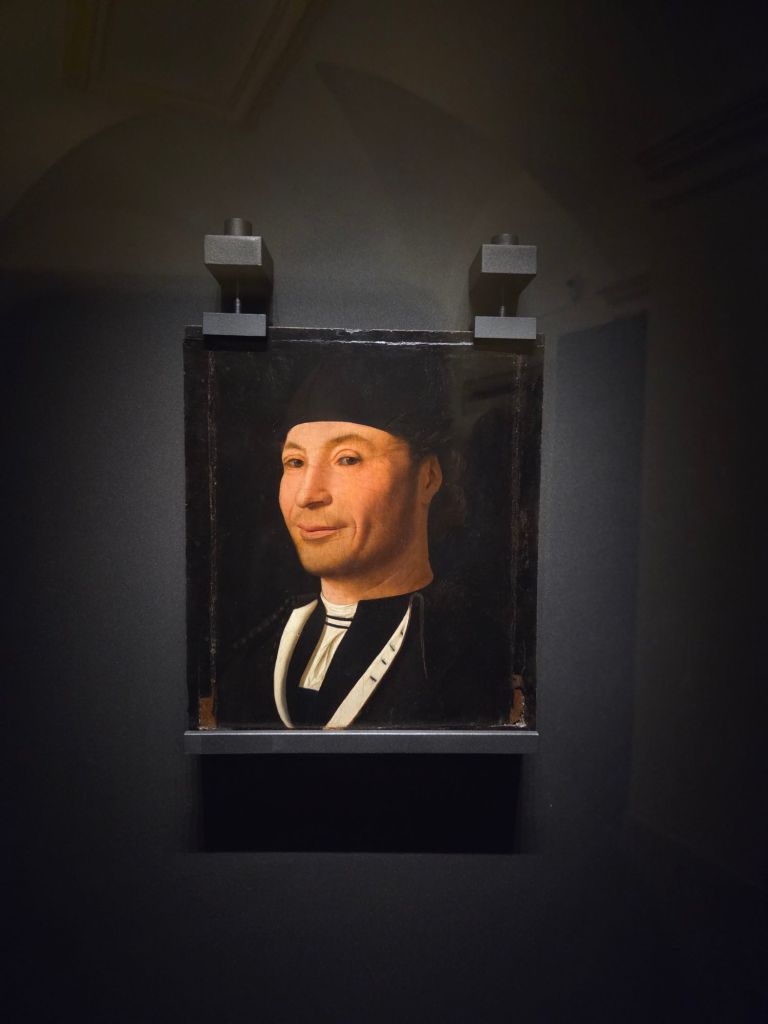
Near the Cathedral we found the quirky Museo Mandralisca. Our interest was in the Sicilian artist of the Renaissance, Antonello da Messina.
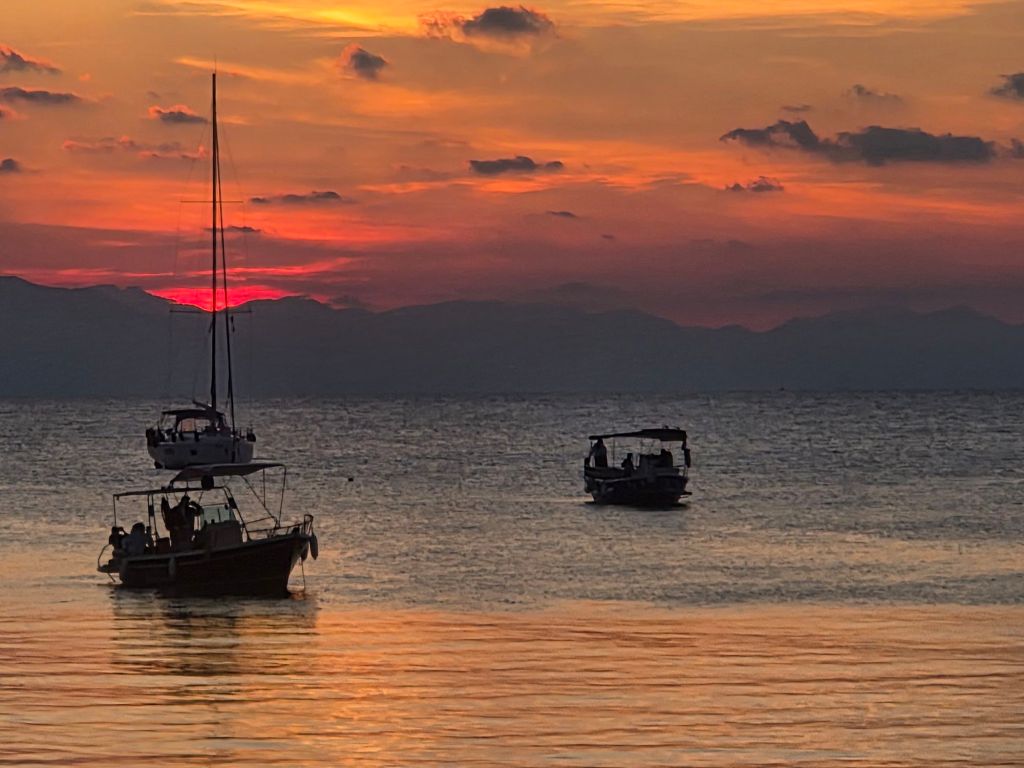
Antonello da Messina painted this portrait with a famously enigmatic smile. He is also famous for another reason, explained below.Cefalù is a popular beach resort. We enjoyed the sunset while eating Mediterranean seafood.
Next day we trained westward along Sicily’s north coast to Messina to view two Caravaggios at the Acascina Regional Museum in its excellent new building.
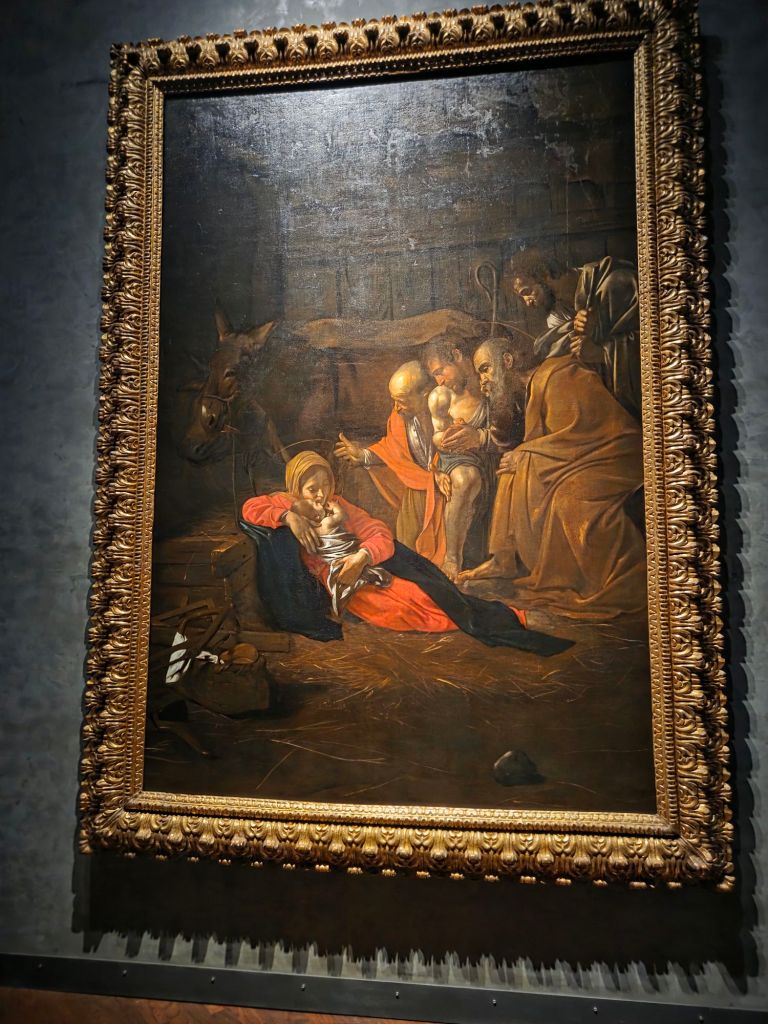
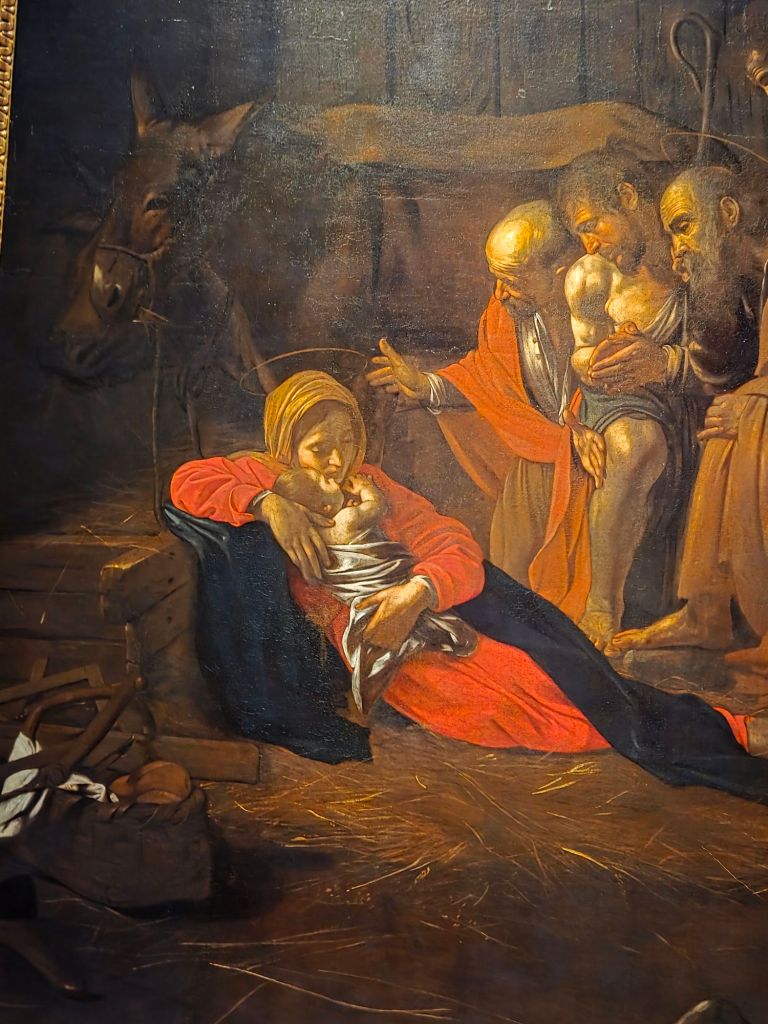
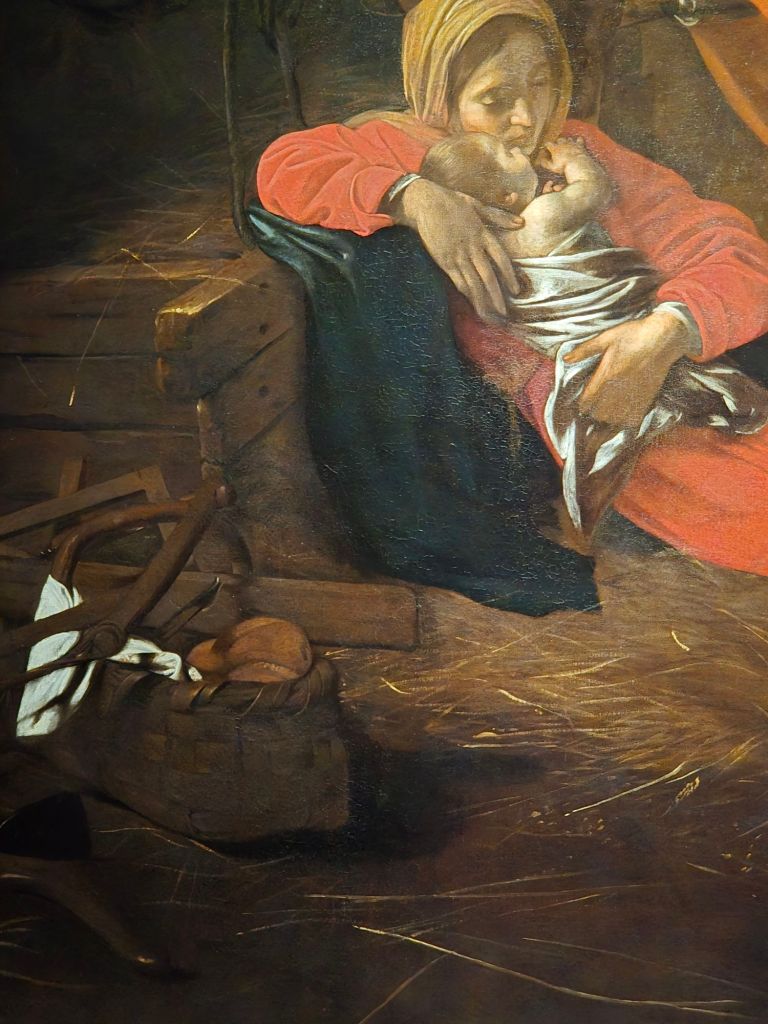
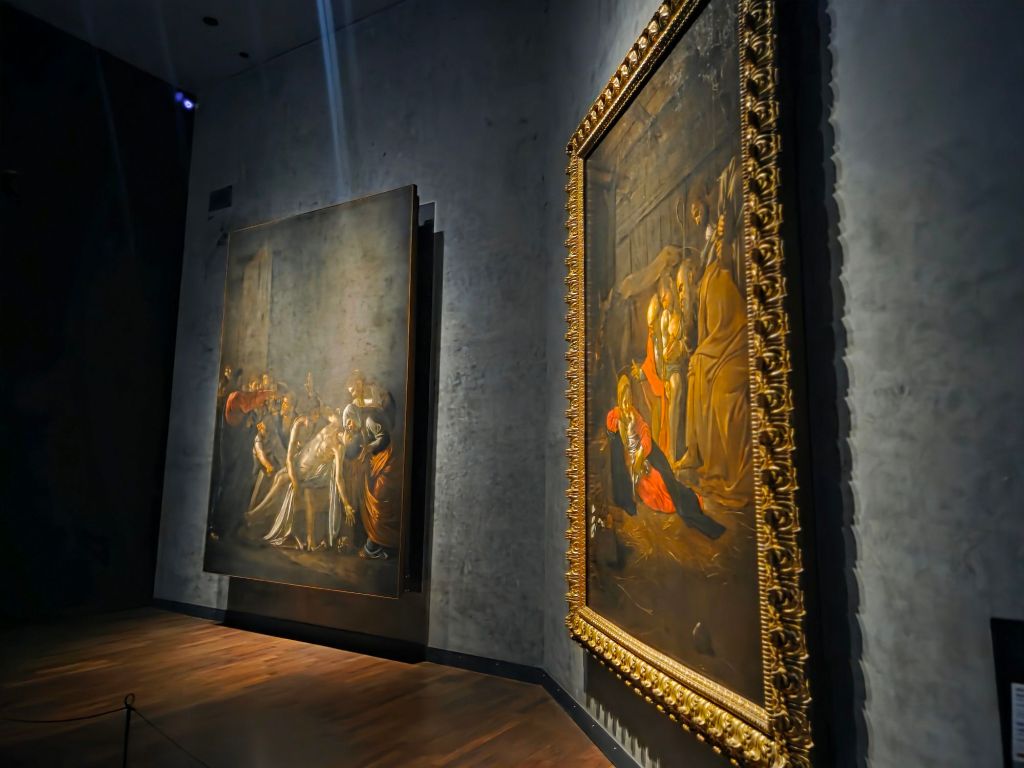
Adoration of the Shepherds was painted in Messina by Caravaggio in 1609
Andrew Graham-Dixon, author of Caravaggio: A Life Sacred and Profane, points out the extreme sadness and poignancy of the scene. The new mother, exhausted, holding her infant to her face, is separated from the men, Joseph and two shepherds. They are essentially helpless to assist. She is alone, with her Child.
Caravaggio is also alone in the world at this time. His violent nature led him to be was disgraced before the Knights of Malta and he had fled to Sicily to avoid imprisonment, trial and punishment. In a year he would be dead.
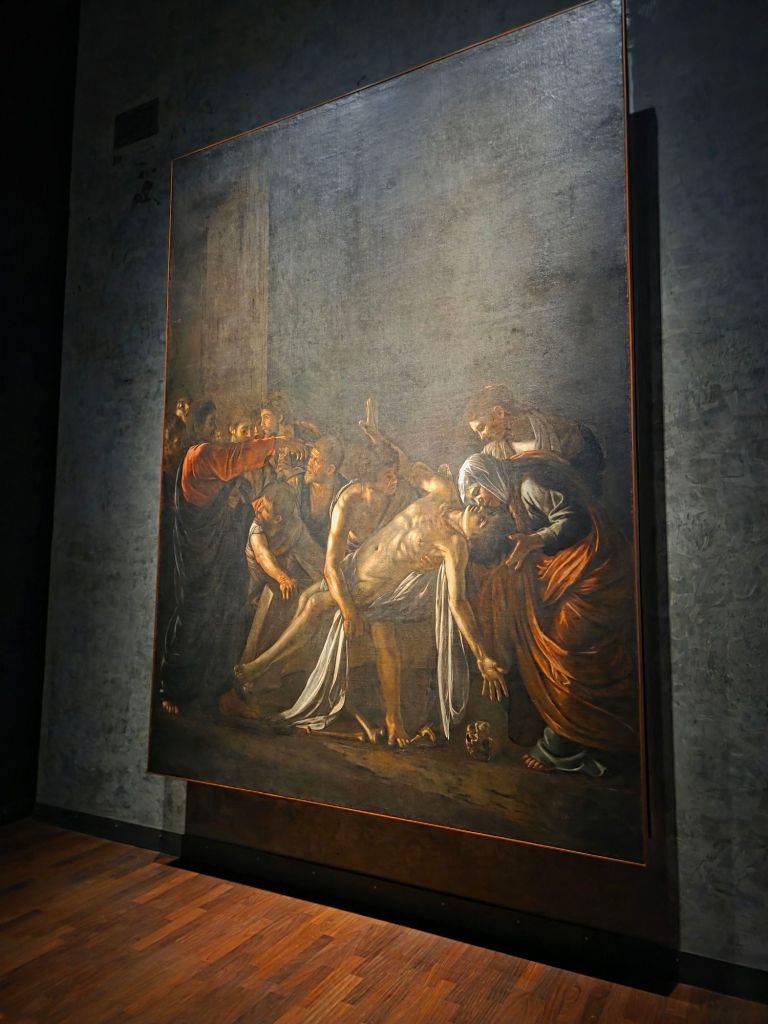
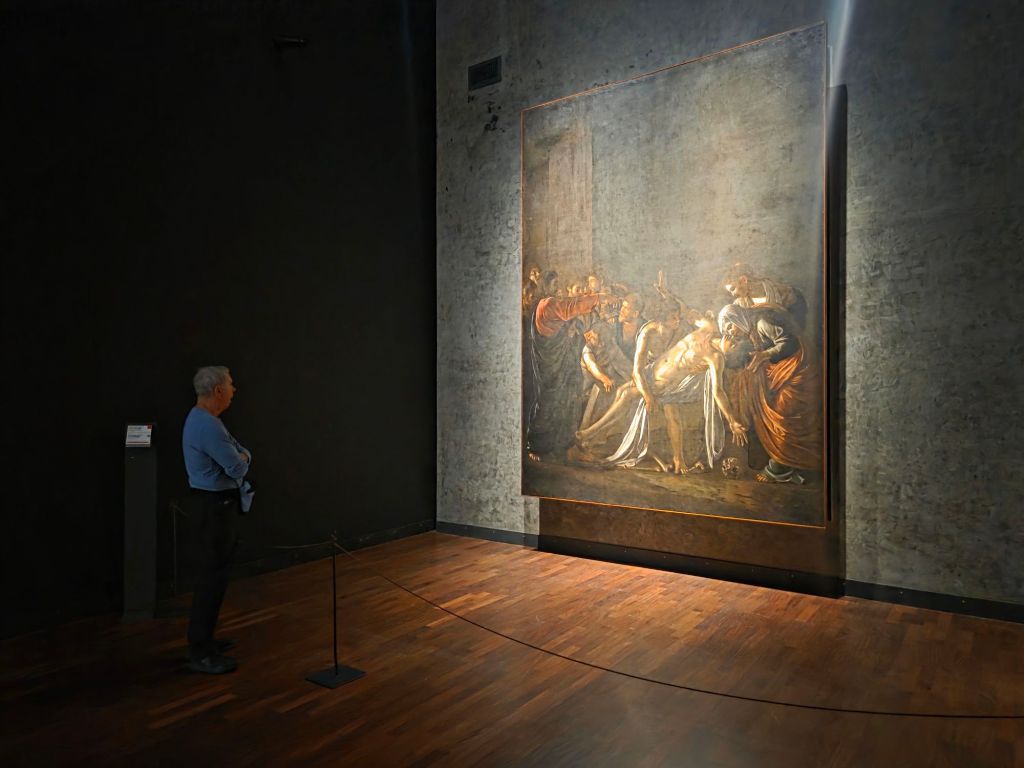
Next to Adoration of the Shepherds is displayed The Resurrection of Lazarus
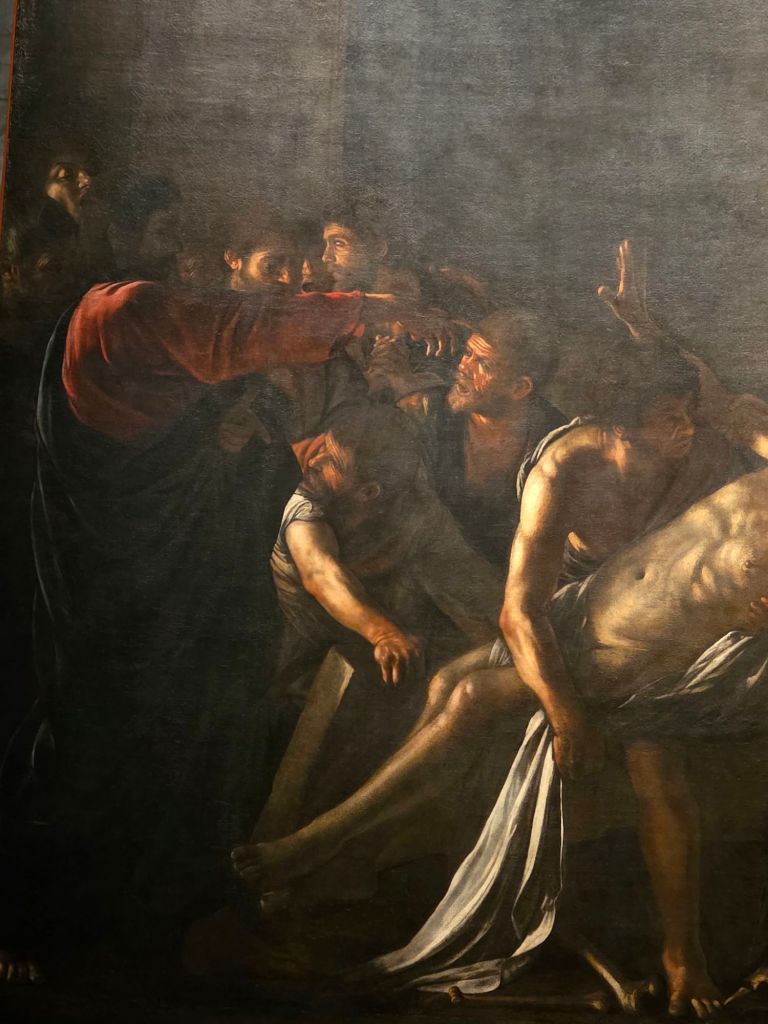
Painted around the same time as Adoration, Resurrection shows the moment when Jesus, in red robe at the left, raises his arm and commands, ” Lazarus, come forth!”
Lazarus’ corpse is so clearly four days dead that the return to life is unmistakeably miraculous. Notorious and groundbreaking in his realism, Caravaggio enlisted gravediggers and their subjects as models for this painting.
Above Jesus’ raised arm can be seen one of Carravaggio’s many self portraits. Why is he looking away from the miraculous resurrection about to take place?
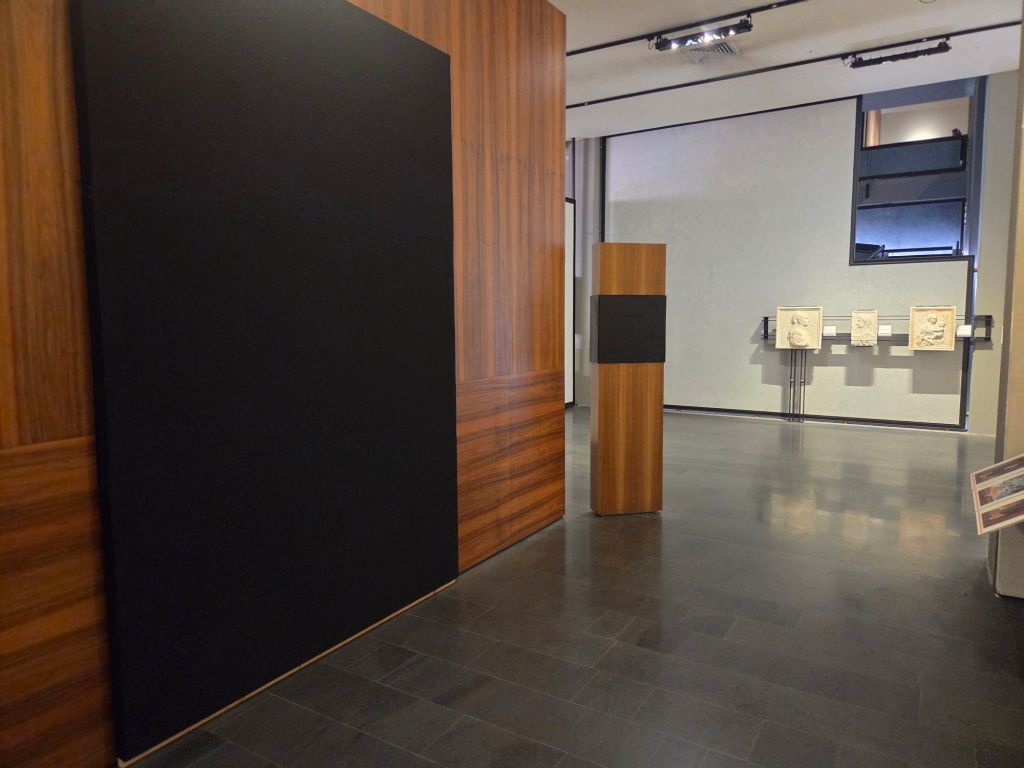
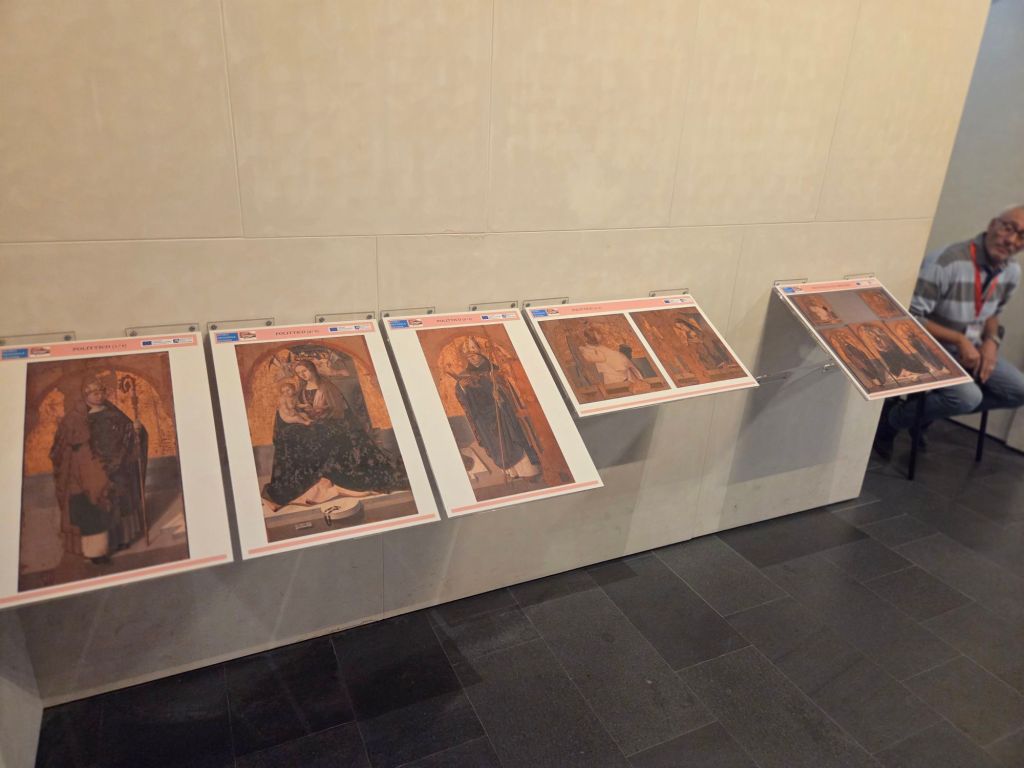
These blank, black panels sadly show the area from which four paintings by Antonello da Messina were brazenly stolen from the Accascina Regional Museum just one month before our visit. We saw da Messina’s portrait of a smiling man earlier in Cefalù.These are reproductions of the six di Messina paintings owned by the Accascina museum. Four of them were taken by the thieves. For some reason, the thieves dropped two paintings as they scaled the museum’s fence. The museum still has those two panels but did not have them on display. One suspects that they want to first enhance their security.
Art theft of famous works, whose market values continue to rise, is a fascinating topic. Indeed, Palermo, Sicily didn’t make our Camino itinerary because Caravaggio’s Nativity with Saint Lawrence and Saint Francis was stolen in 1969 from its spot in the Oratory and never recovered. Caravaggio’s Saint Jerome Writing had been stolen from Malta’s Co-Cathedral in 1984. A ransom was paid and the painting recovered in 1986. After damages were repaired, it was put back on display at the Co-Cathedral where we admired it less than three weeks ago (see earlier post.)
In August, just as we were preparing to embark on our Camino Caravaggio, paintings by Cezanne, Renoir and Matisse, stolen in March from a museum in the south of France were recovered. It is not known whether a ransom was paid.
Messina marks our last stop in Sicily. In the next post, we’d will describe our crossing of the notorious Straits of Messina.
Resurection of Lazarus was intended as an enormous altarpieceAdoration is to the right of Resurrection in a special gallery
A young woman named Lucia (Lucy, or “light”) resisted the attentions of a Roman soldier and for her refusal was brutally tortured and stabbed to death. As Santa Lucia she became beloved as the patron saint of Syracuse (Siracusa, an ancient port city on Sicily’s southwestern coast).
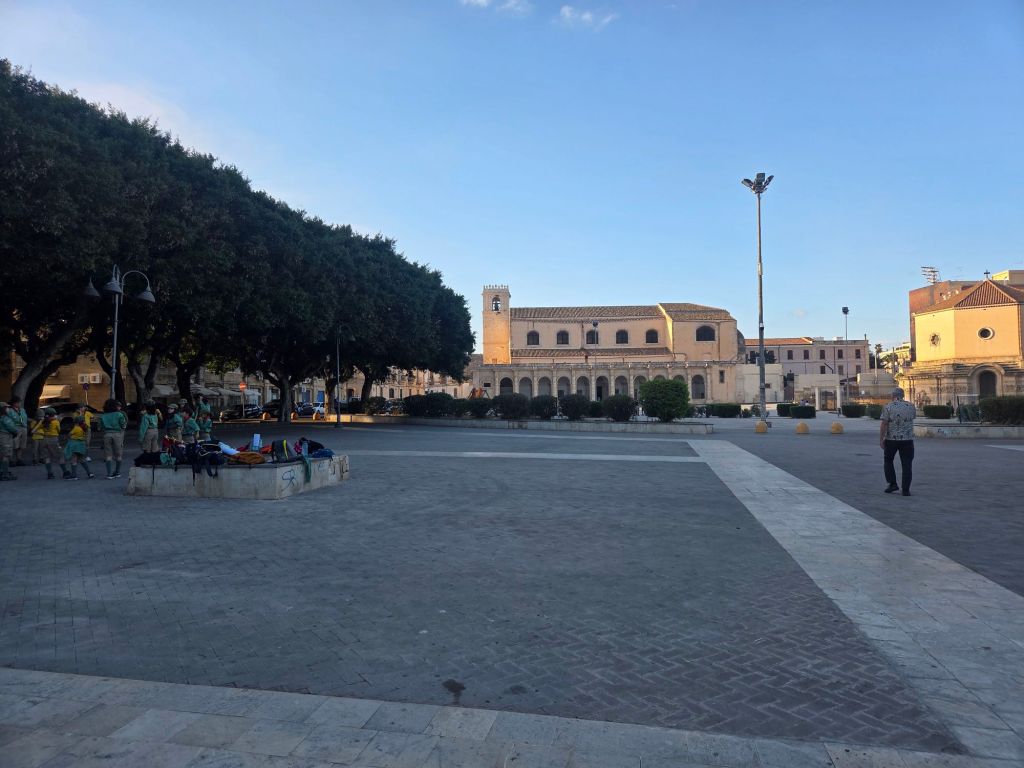
Walking up up to Santa Lucia alla Sepulcro in Syracuse, Sicily
She was buried in the catacombs below the traditional spot where she was killed, but later her remains were taken away as war spoils by Venetians. In 1509, a year before his death, Caravaggio was commissioned to paint an altarpiece for the church which had been built to commemorate her life and death as a Christian martyr.
After a two-bus, multi-hour ride from Agrigento and its Valley of the Temples to Syracuse, we discovered that, rather than waiting to the following day, we could swiftly hike to to see the painting in the golden heat of a late Sicilian afternoon. (In fact, we were able to visit it twice.)
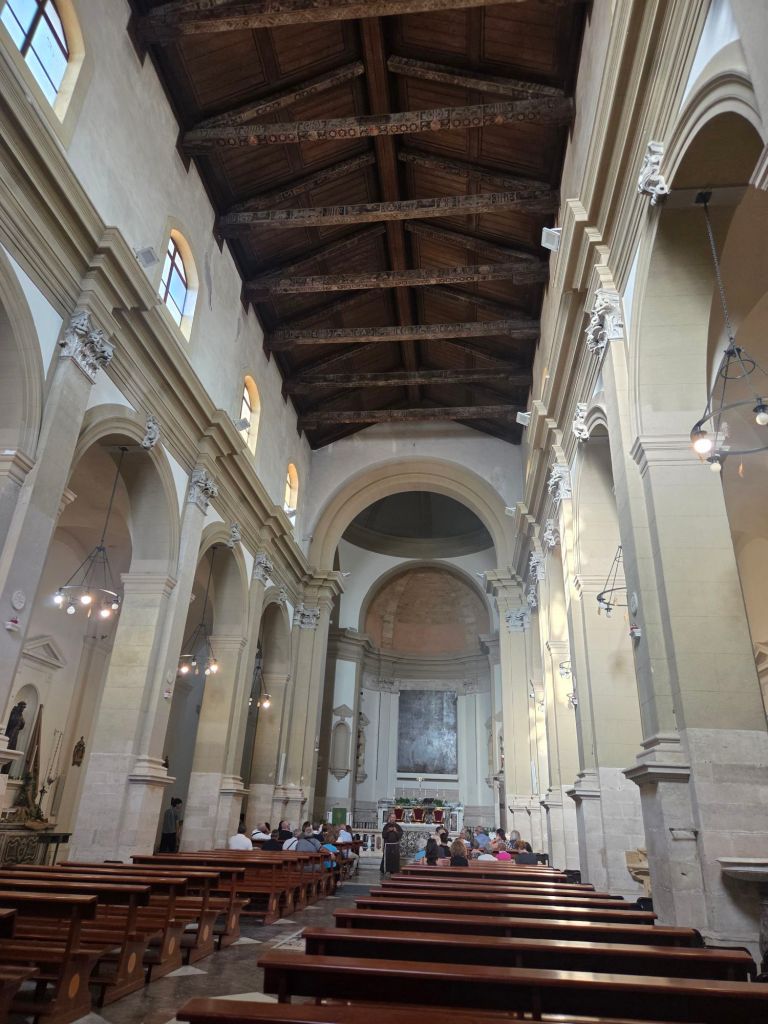
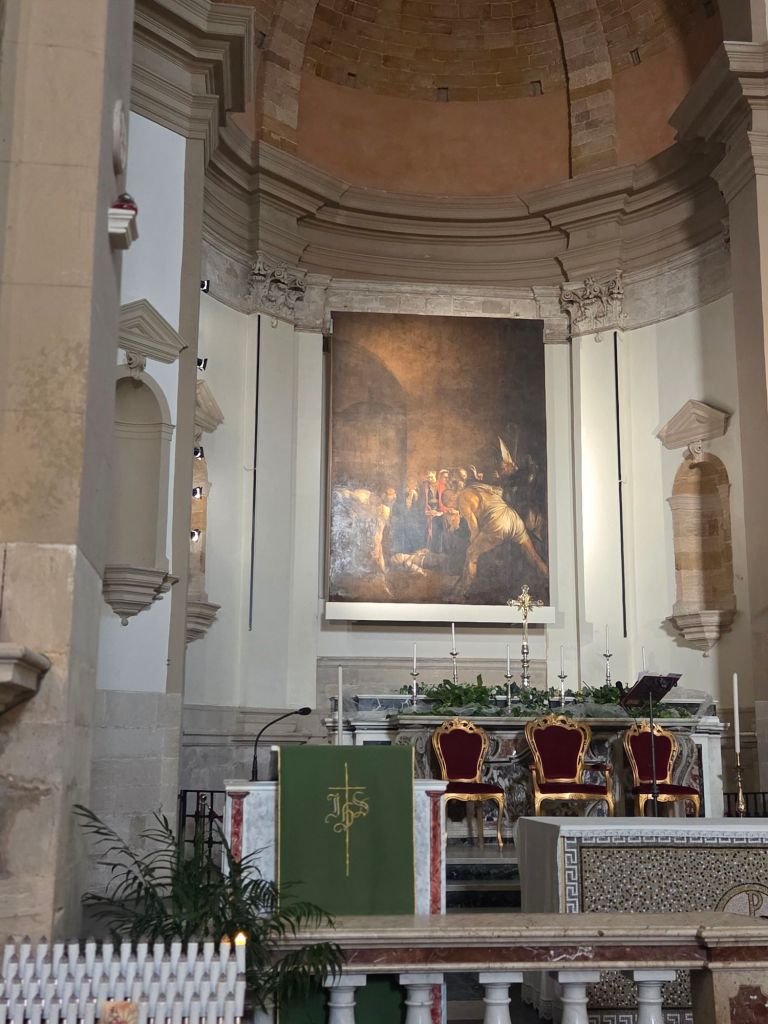
Caravaggio’s altarpiece often appears as a dark rectangle above the altar.
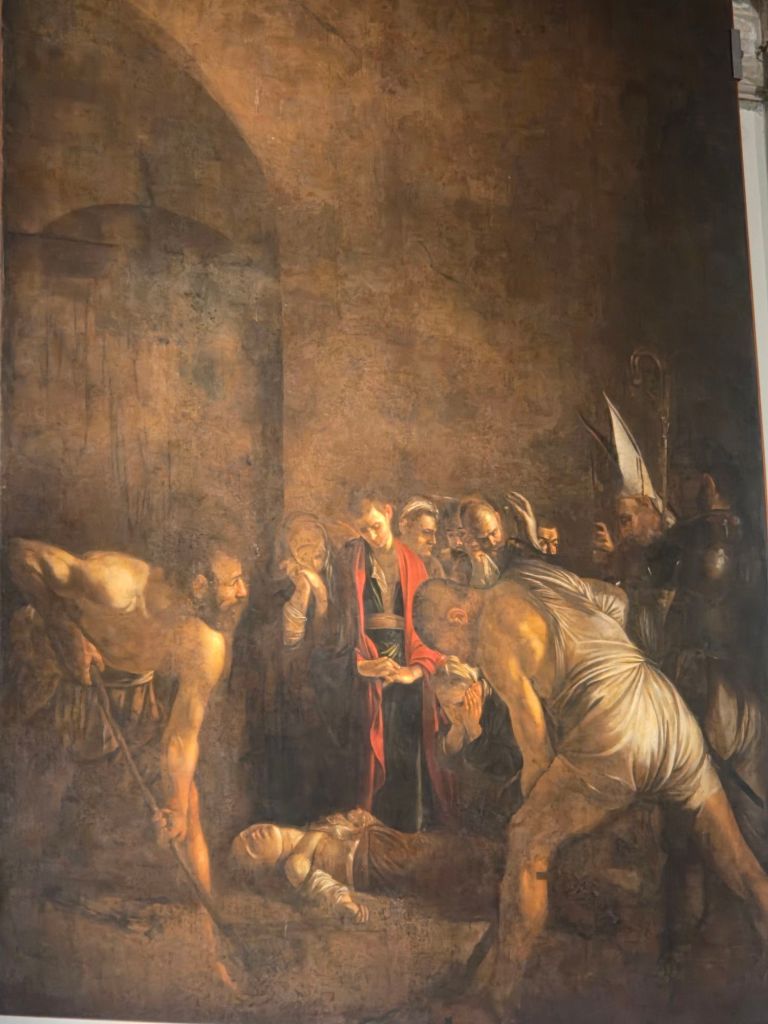
The Burial of Saint Lucy (second in size among Caravaggio’s works only to the Beheading of Saint John the Baptist that we visited in Malta) appears as a large blackish canvas behind the altar. Even though it was restored in 2020, it is impossible to make it out until one of us puts a one Euro coin into the light meter.
It takes a one euro coin to obtain illumination
Then figures and impressions begin to emerge from the gloom. The slight and pitiable girl’s body lies on a cold stone floor. Two hulking, oversized gravediggers thrust their spades repeatedly. A motley group of onlookers, includes a bishop, a young cleric, a grieving old woman and possible artist’s self portrait.
The vertical space, full of shadows, minimally suggests a stony arch in the catacombs below the place we, as viewers, stand. While the moment of death and martyrdom are more customarily depicted, this painting shows the moment of burial. Lucy is already dead. Her death is a fact.
Her death refers to all our deaths, and to our belief in God’s gift of everlasting life. Indeed, the left-hand gravedigger suddenly looks up from his desolate task and seems to see the gleam of light which pierces the gloom; the beginning of faith… as the saint hoped that her sacrifice would inspire in some people….?
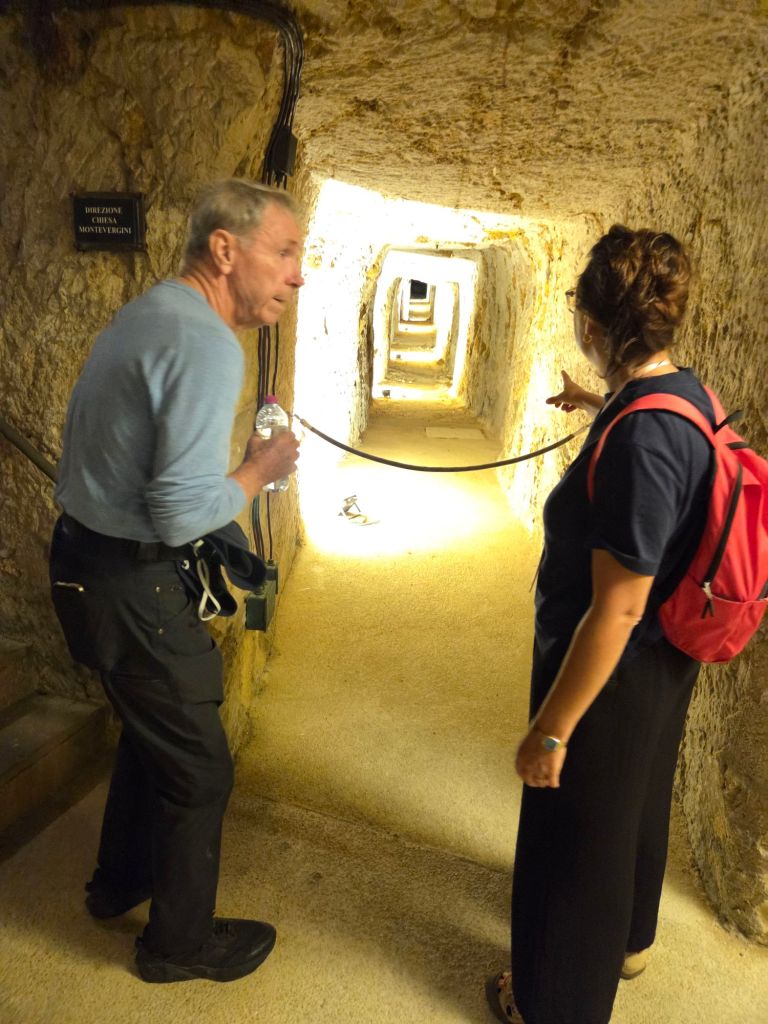
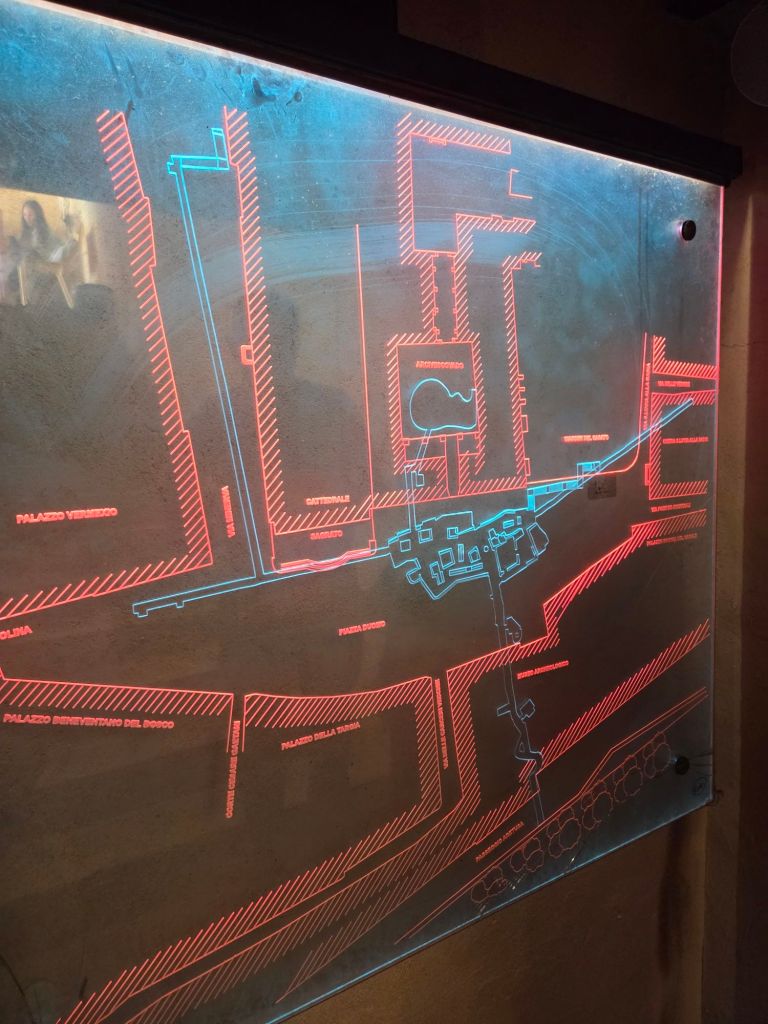
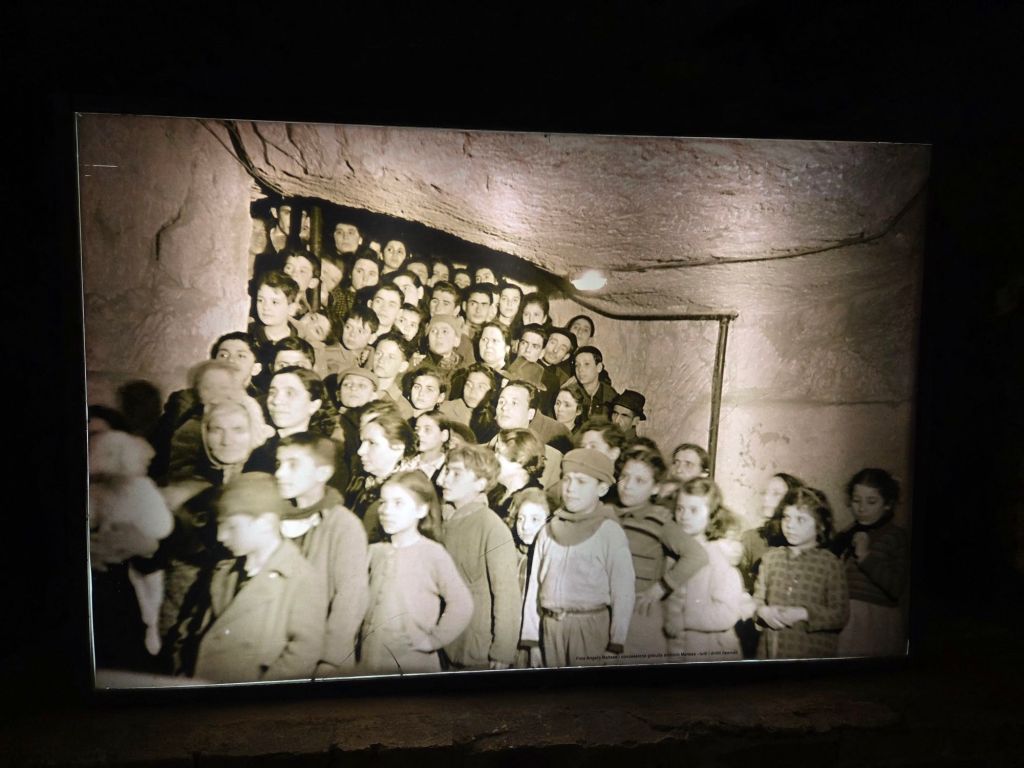
Syracuse has an extensive system of underground tunnels enhanced and used by successive inhabitants over centuries. Our guide, Valentina, who met us in Agrigento and in Syracuse, chats with Ed.Red lines denote the Cathedral, walls and other structures while blue lines indicate underground tunnels.Children and some women sheltered from bombardment during WW II in the ancient tunnel system.
Weather has been sunny and warm every day so far. We’ve enjoyed wonderful cuisine, including bountiful seafood and local produce, prepared simply but with imagination. Tomorrow we will travel by two trains to our next stop on the far, north side of the island, Cefalù.