A young woman named Lucia (Lucy, or “light”) resisted the attentions of a Roman soldier and for her refusal was brutally tortured and stabbed to death. As Santa Lucia she became beloved as the patron saint of Syracuse (Siracusa, an ancient port city on Sicily’s southwestern coast).
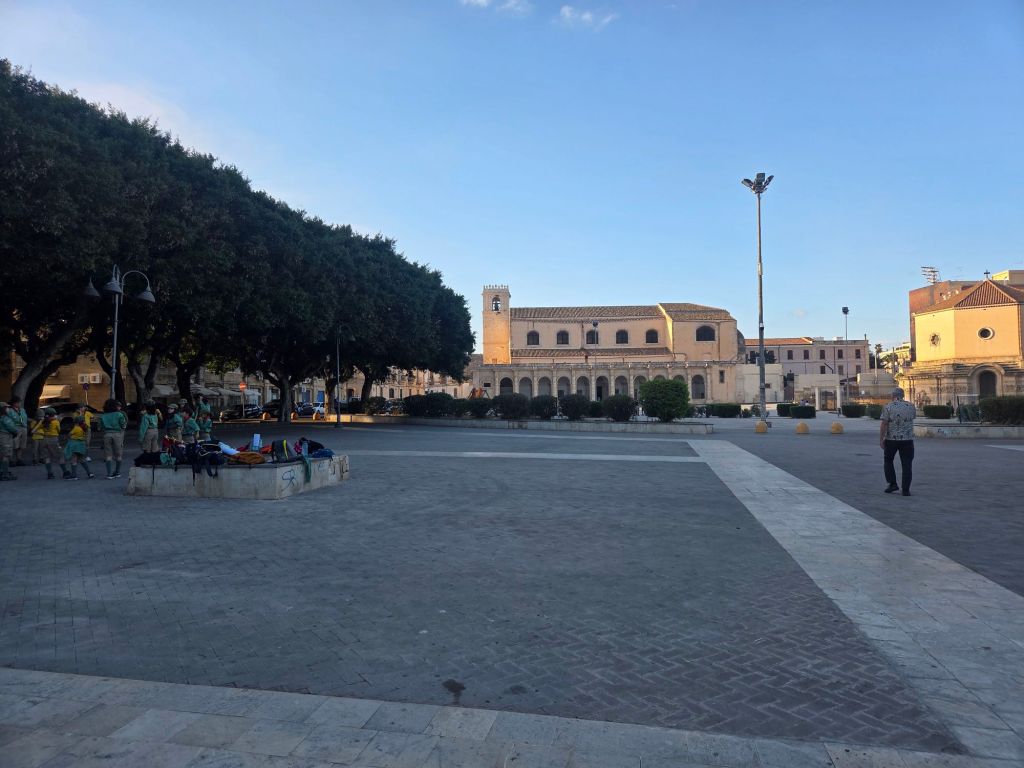
She was buried in the catacombs below the traditional spot where she was killed, but later her remains were taken away as war spoils by Venetians. In 1509, a year before his death, Caravaggio was commissioned to paint an altarpiece for the church which had been built to commemorate her life and death as a Christian martyr.
After a two-bus, multi-hour ride from Agrigento and its Valley of the Temples to Syracuse, we discovered that, rather than waiting to the following day, we could swiftly hike to to see the painting in the golden heat of a late Sicilian afternoon. (In fact, we were able to visit it twice.)
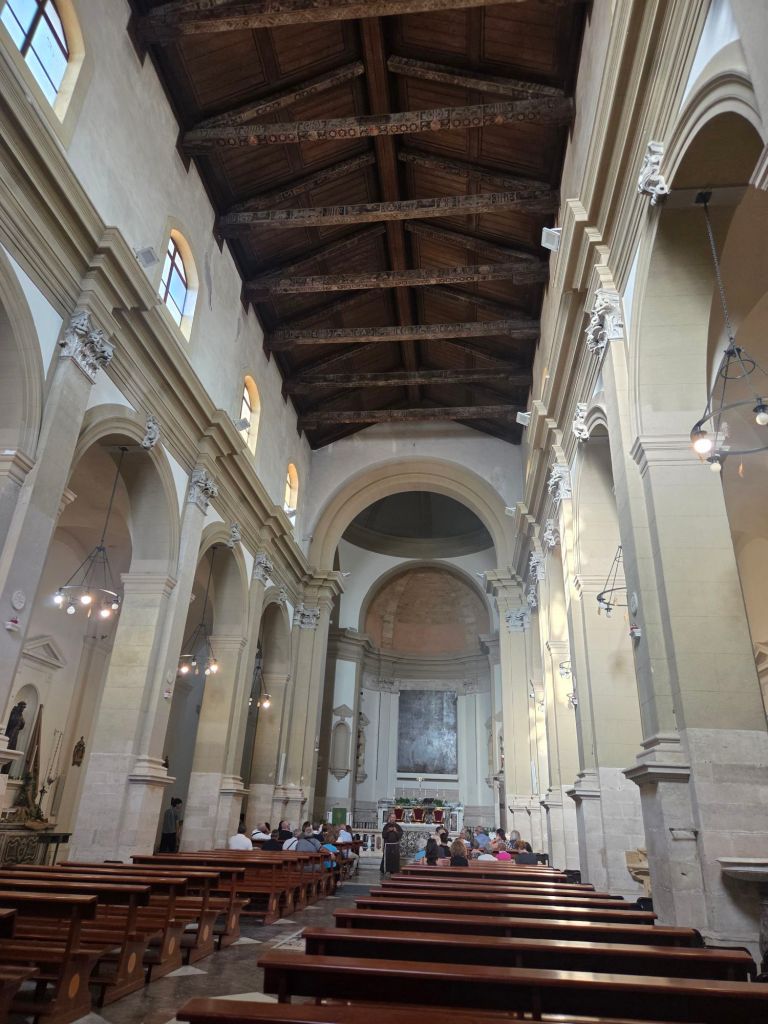
The Burial of Saint Lucy (second in size among Caravaggio’s works only to the Beheading of Saint John the Baptist that we visited in Malta) appears as a large blackish canvas behind the altar. Even though it was restored in 2020, it is impossible to make it out until one of us puts a one Euro coin into the light meter.
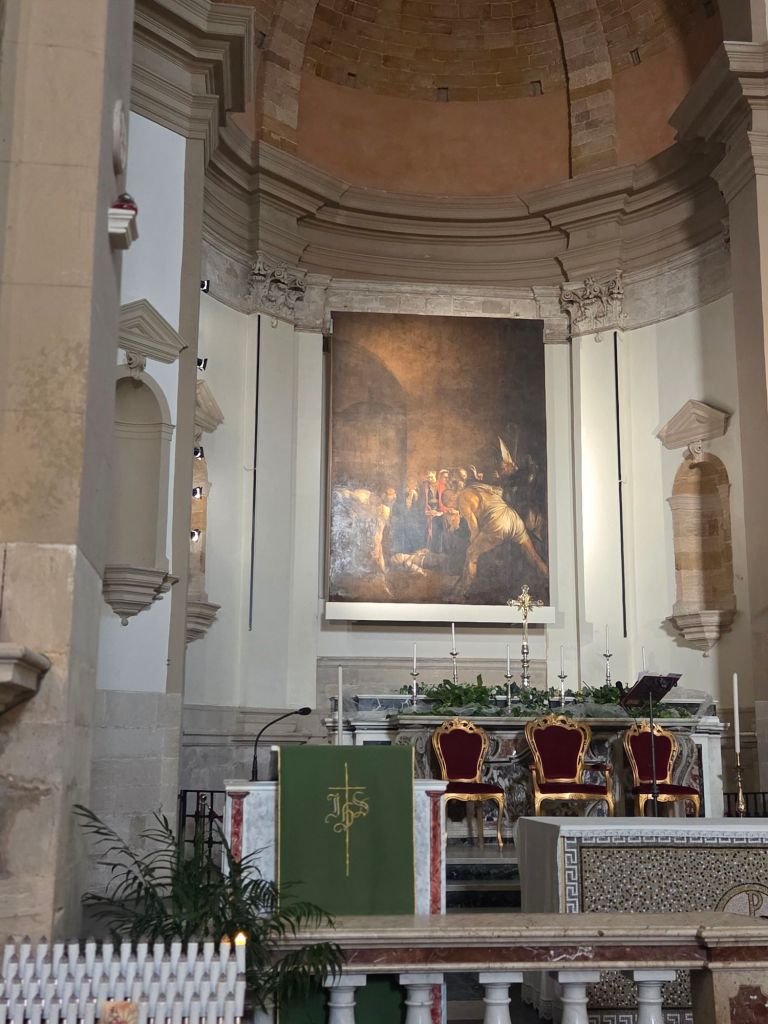
Then figures and impressions begin to emerge from the gloom. The slight and pitiable girl’s body lies on a cold stone floor. Two hulking, oversized gravediggers thrust their spades repeatedly. A motley group of onlookers, includes a bishop, a young cleric, a grieving old woman and possible artist’s self portrait.
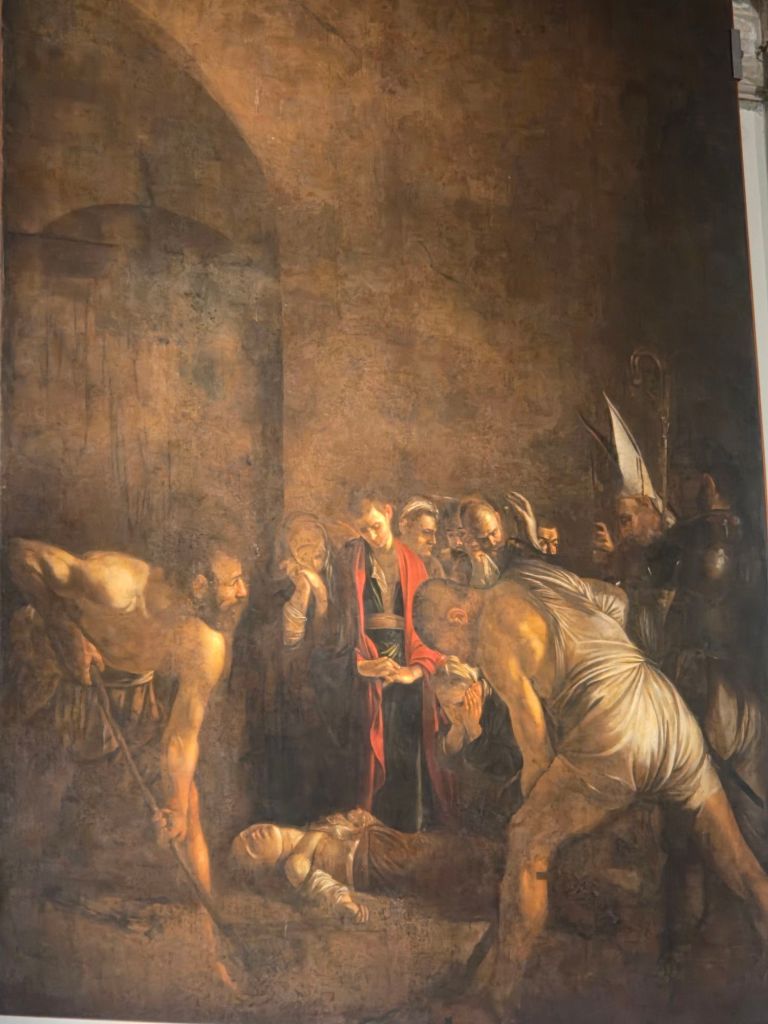
The vertical space, full of shadows, minimally suggests a stony arch in the catacombs below the place we, as viewers, stand. While the moment of death and martyrdom are more customarily depicted, this painting shows the moment of burial. Lucy is already dead. Her death is a fact.
Her death refers to all our deaths, and to our belief in God’s gift of everlasting life. Indeed, the left-hand gravedigger suddenly looks up from his desolate task and seems to see the gleam of light which pierces the gloom; the beginning of faith… as the saint hoped that her sacrifice would inspire in some people….?
Weather has been sunny and warm every day so far. We’ve enjoyed wonderful cuisine, including bountiful seafood and local produce, prepared simply but with imagination. Tomorrow we will travel by two trains to our next stop on the far, north side of the island, Cefalù.

