It’s a good thing that Ed scheduled 8 days in Rome for us at the end of our Camino Caravaggio. Not only is it among our favorite cities in the world, but in her can be found the largest number of Carravaggios open to public view: 20 paintings in 8 venues. We walk to most of our destinations. Walking in Rome is full of excitement and challenge, rewarding each step with unparalleled sights and the pleasure of surviving to reach the goal!
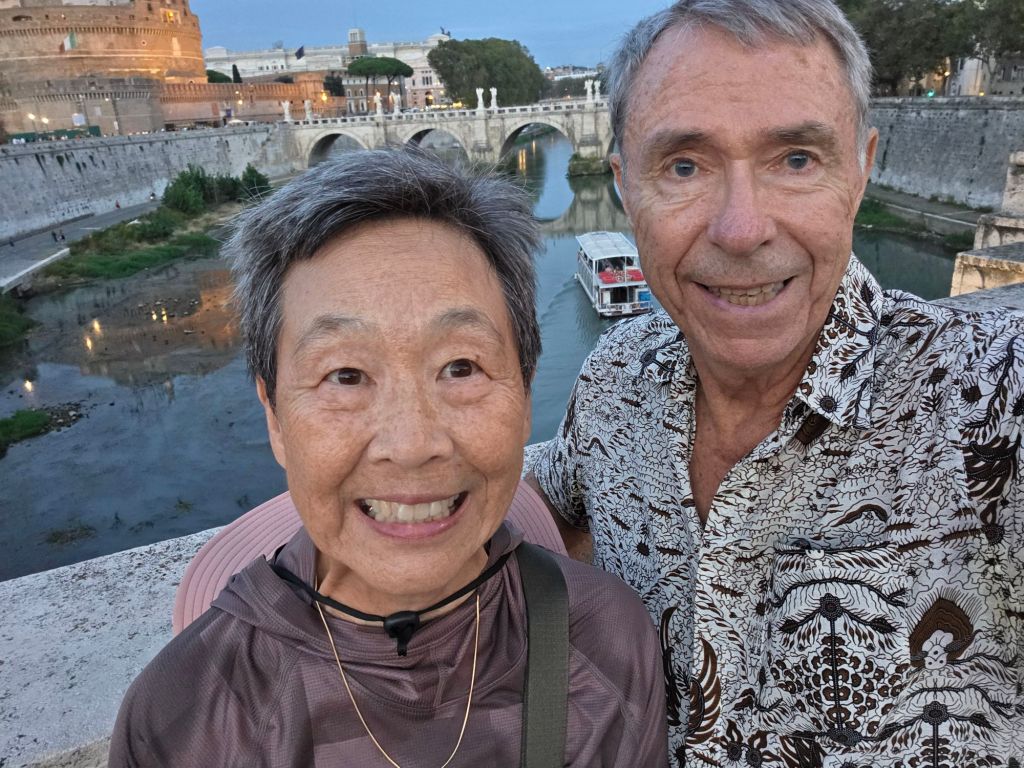
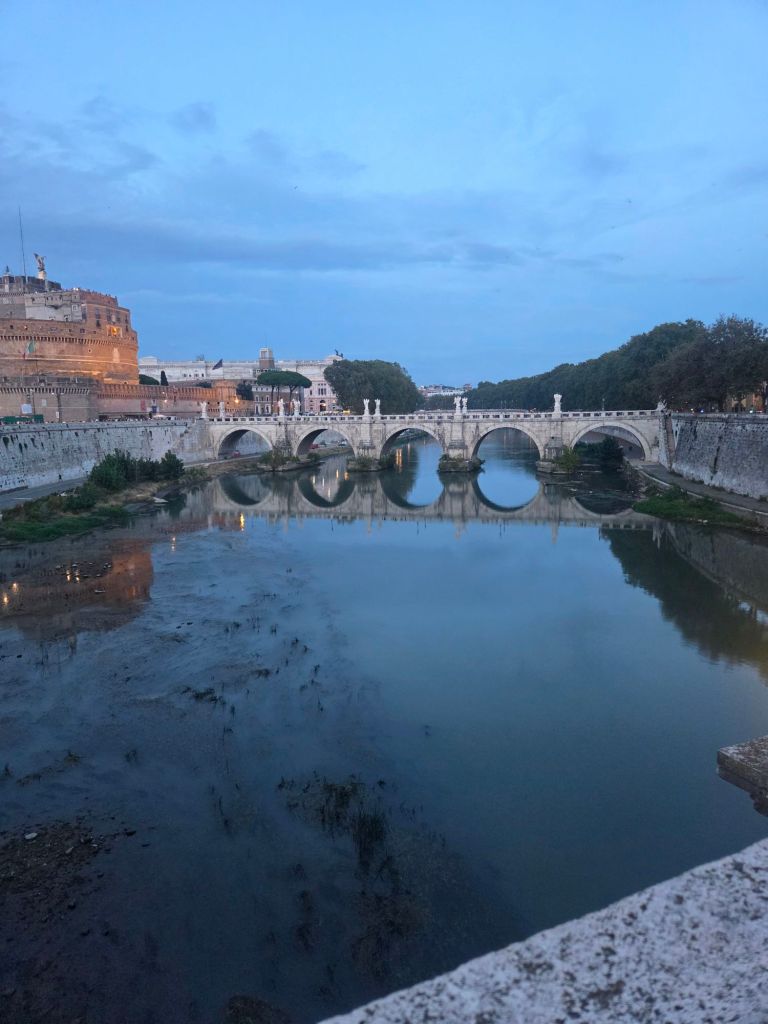
Crossing the Tiber towards Saint PetersA Roman view approaching dusk
Galleria Borghese, thanks to its voracious owner/collector, Cardinal Scipione Borghese, nephew to Pope Paul V, has 6 Caravaggios. Other state and private galleries in Rome each have one to three. Three churches still display works that were created for them 400 years ago, in their original locations.
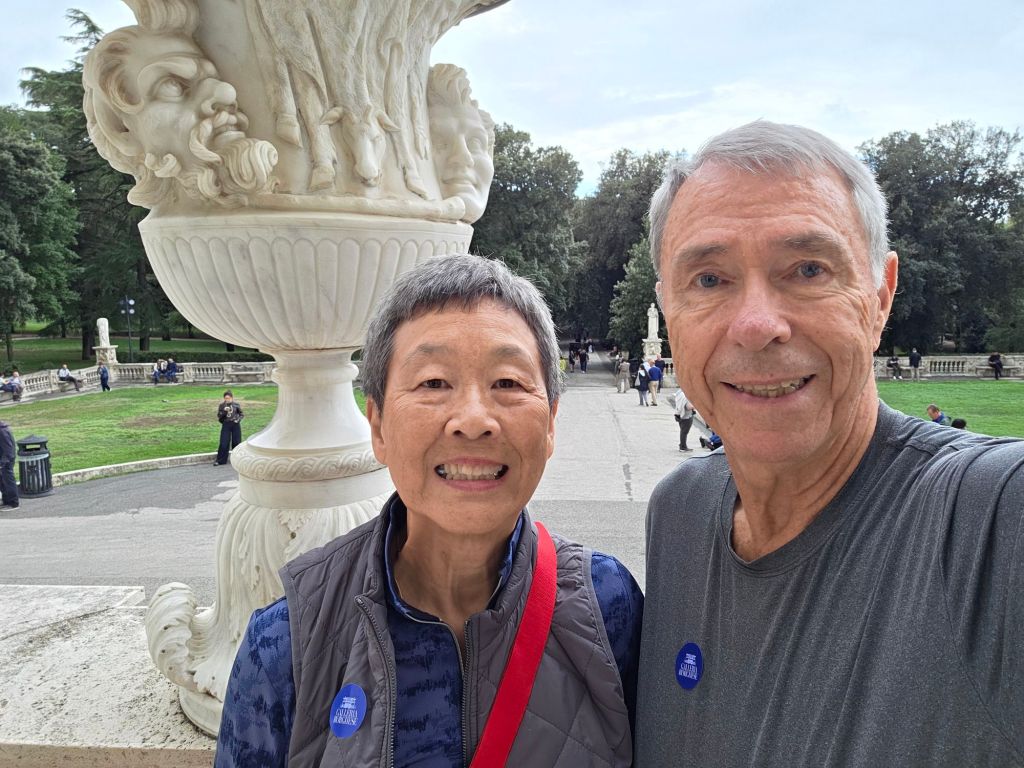
From the Borghese’s front balcony, looking out over its gardens
We save the Borghese for our last Saturday because we visited it two years ago. It was that visit that first ignited our interest in Caravaggio. Our first investigation this time will be Galleria Doria Pamphilj and its masterpieces of stunning beauty.
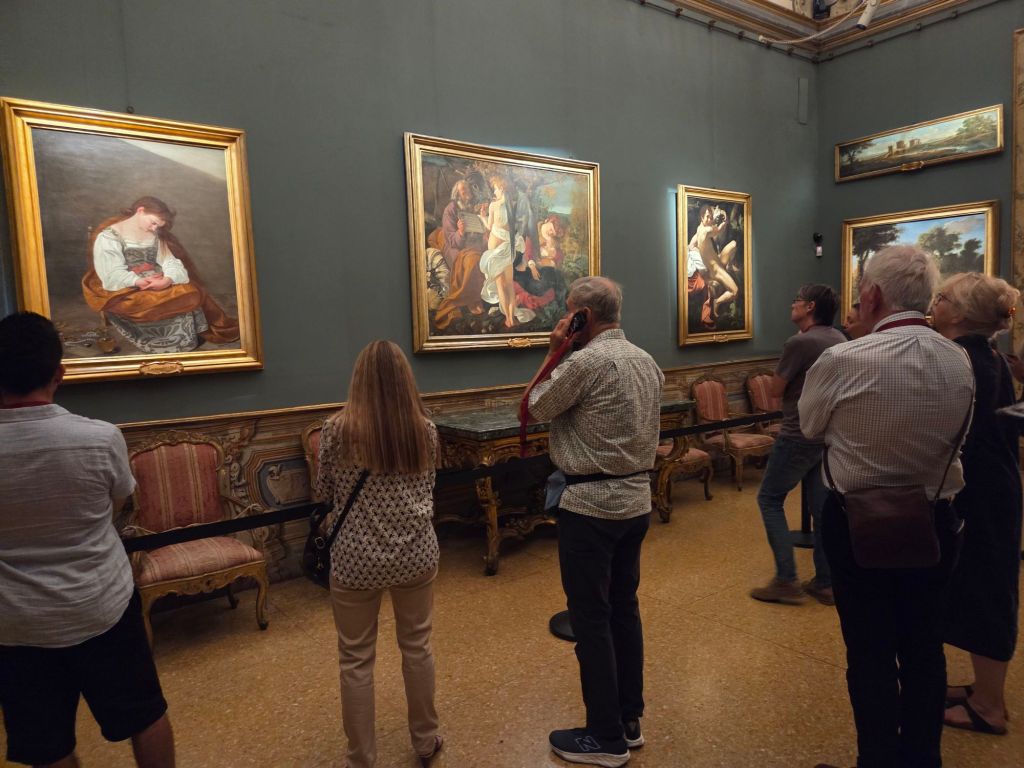
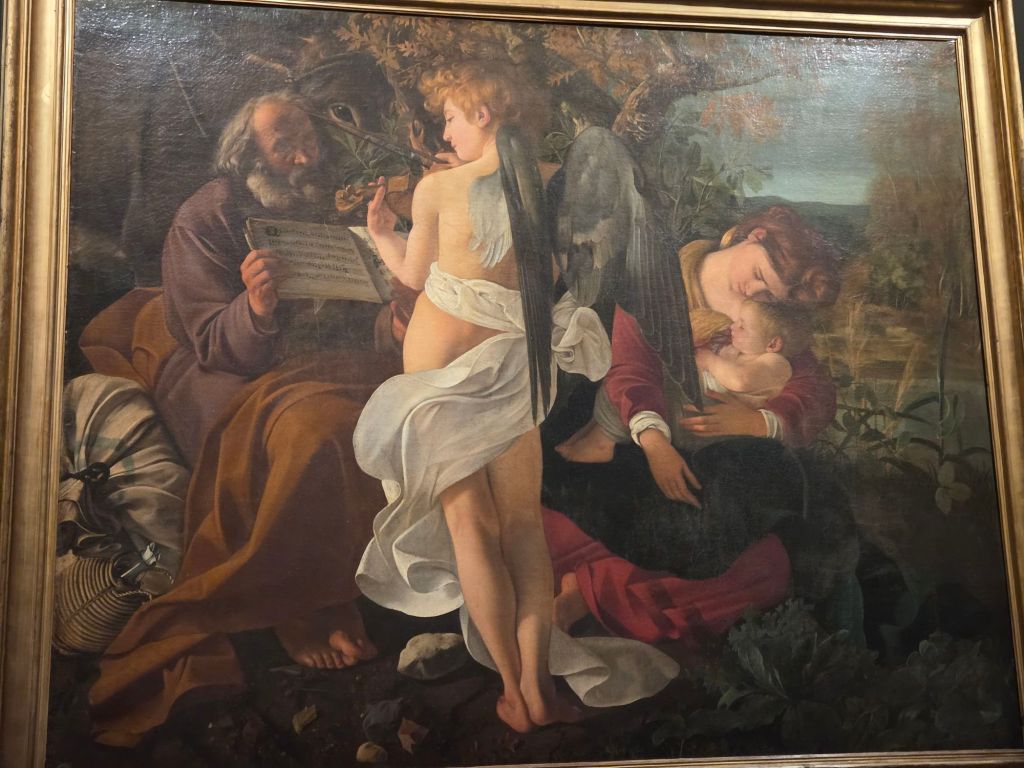
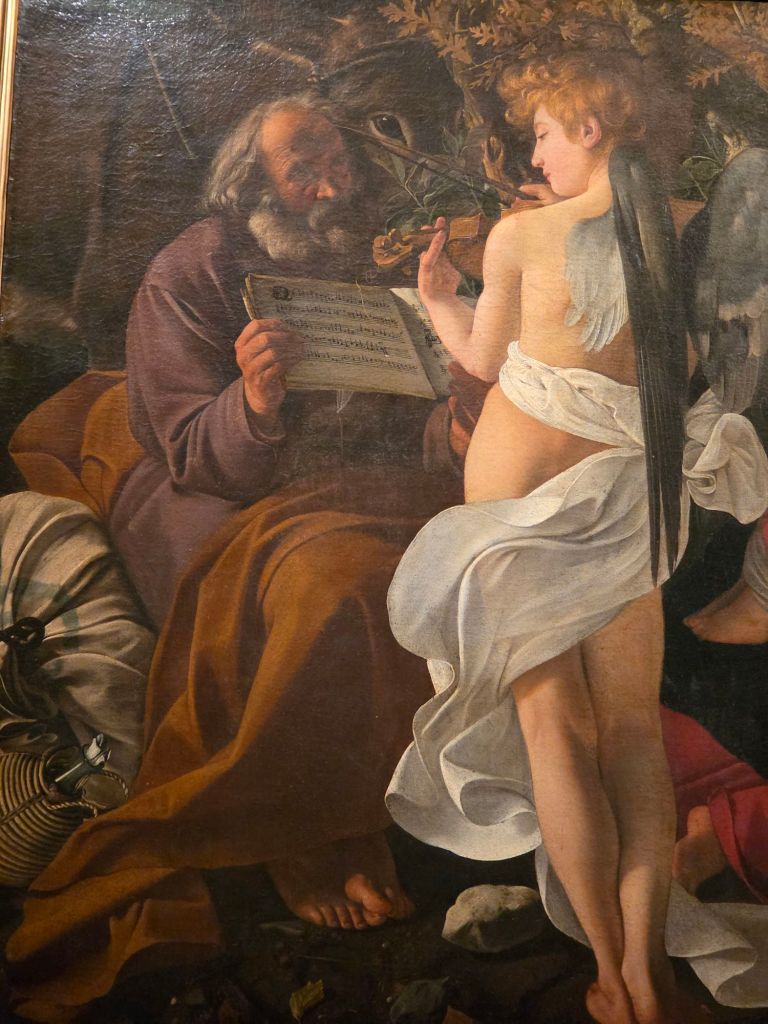
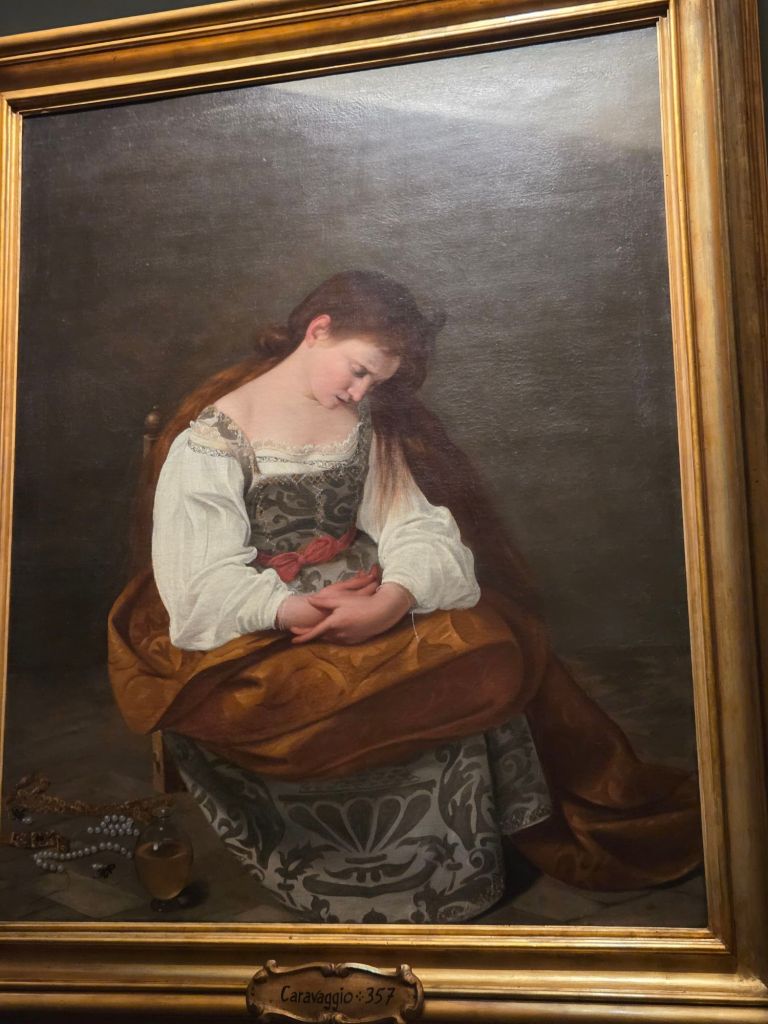
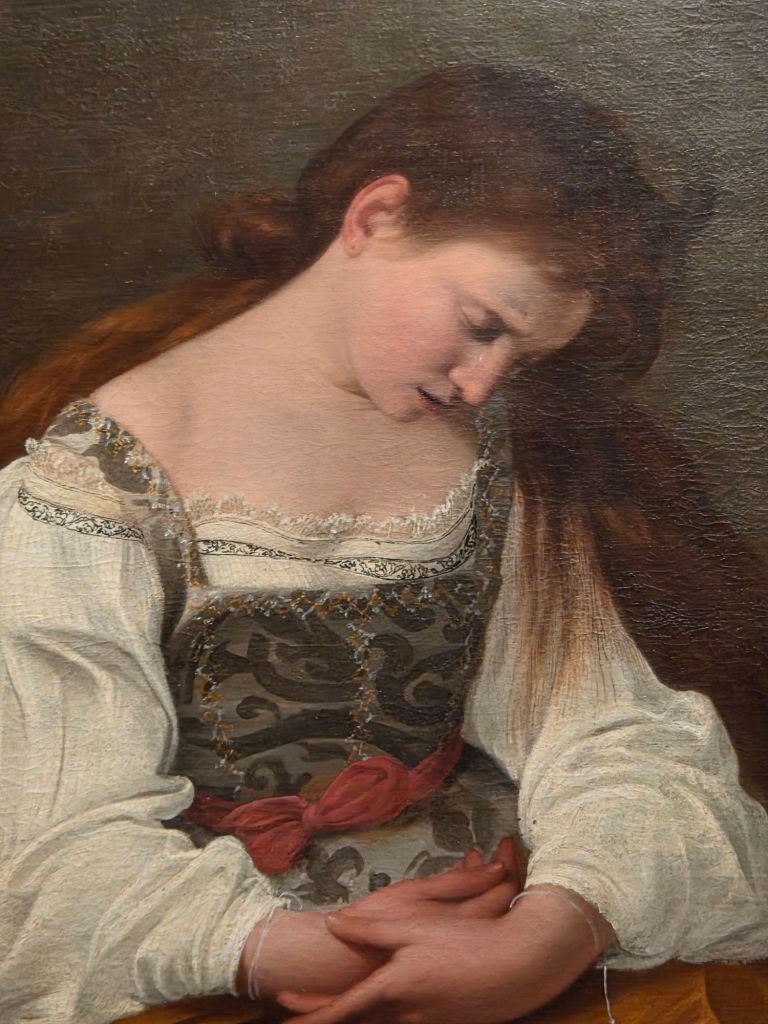
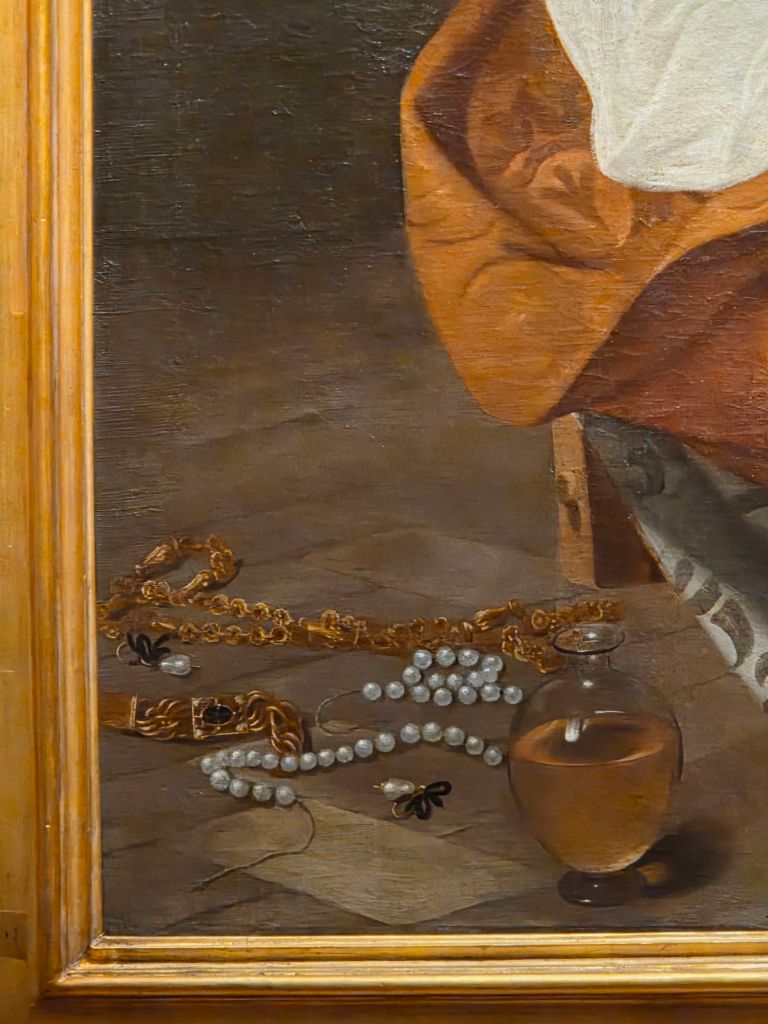
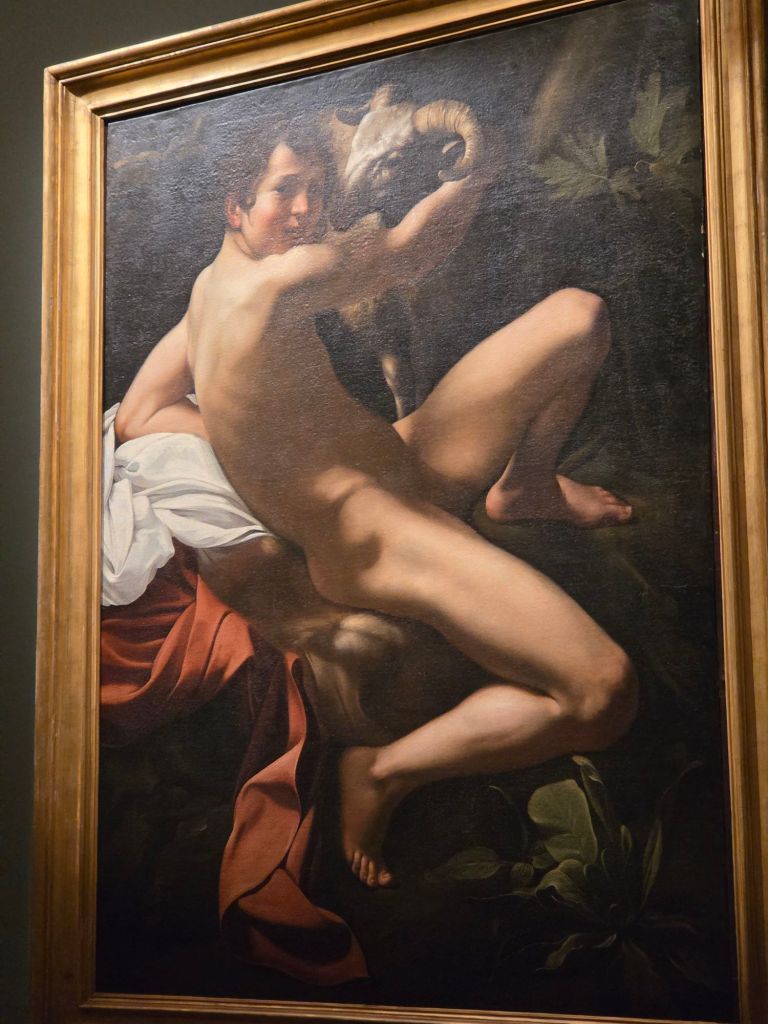
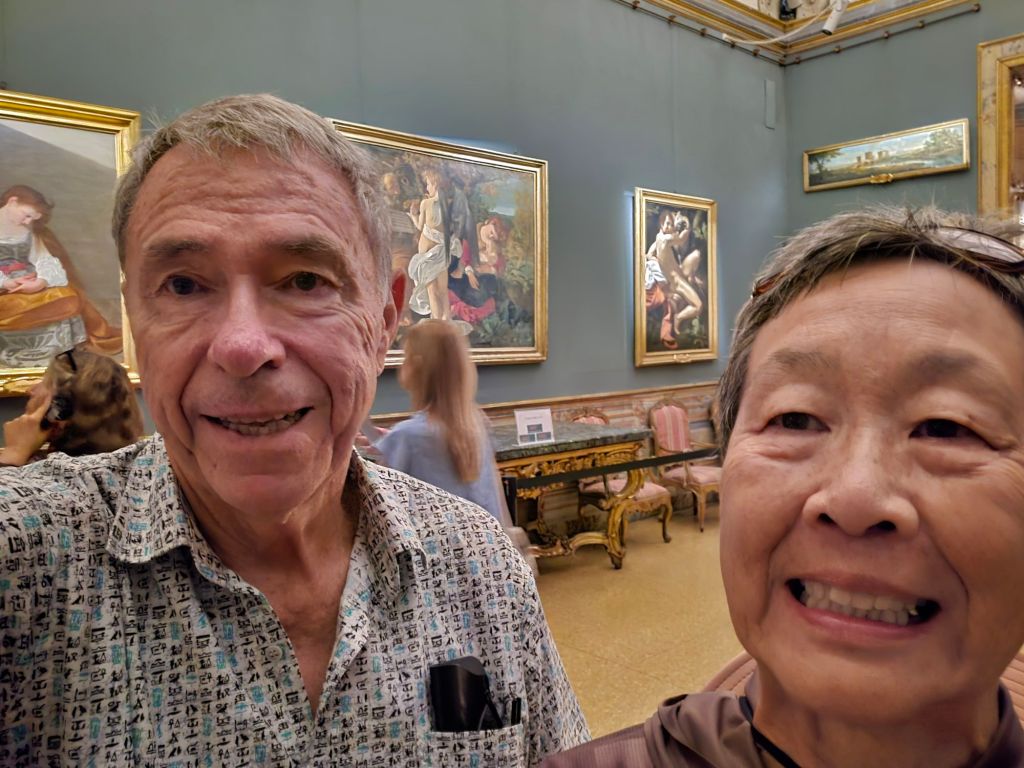
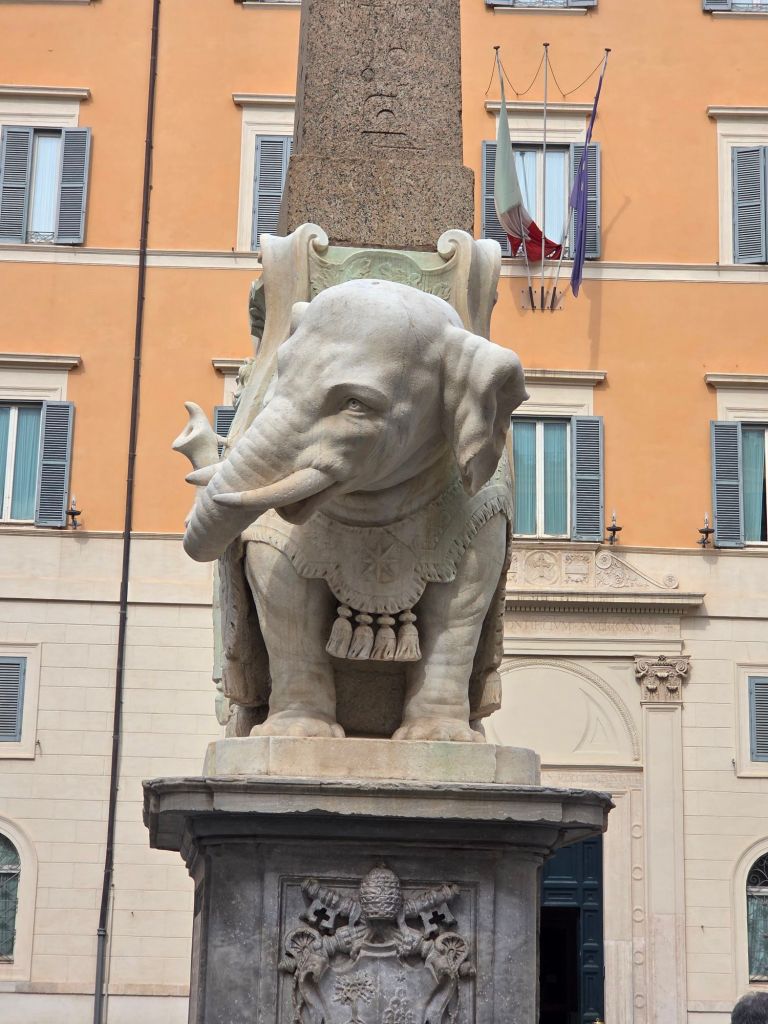
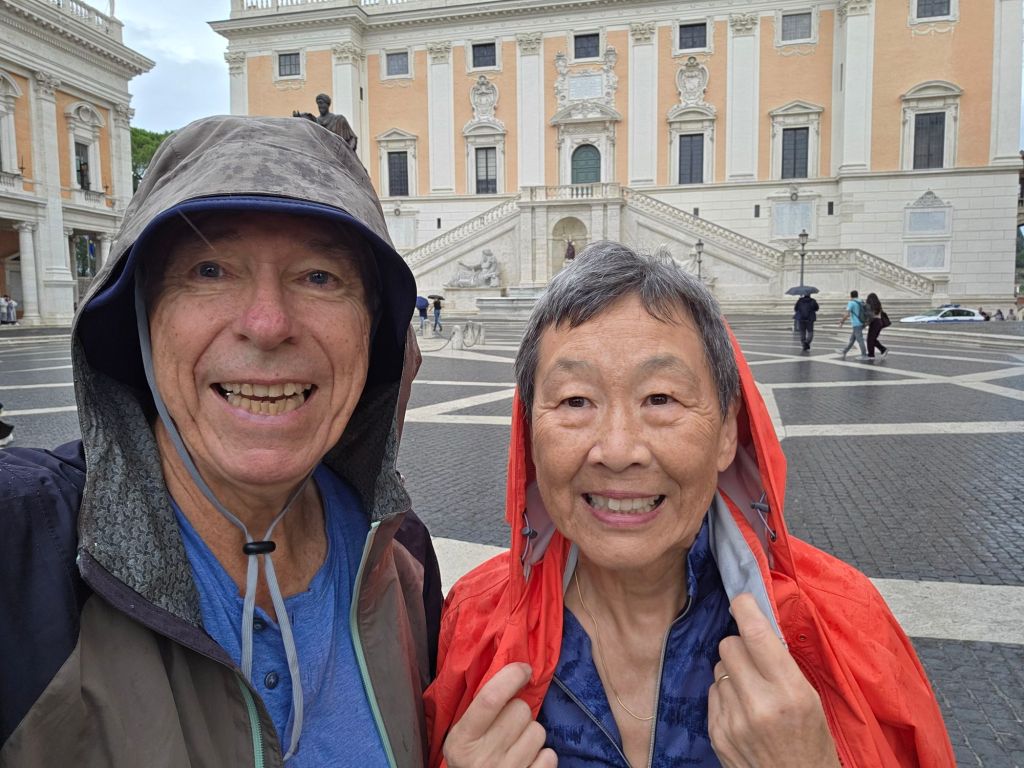
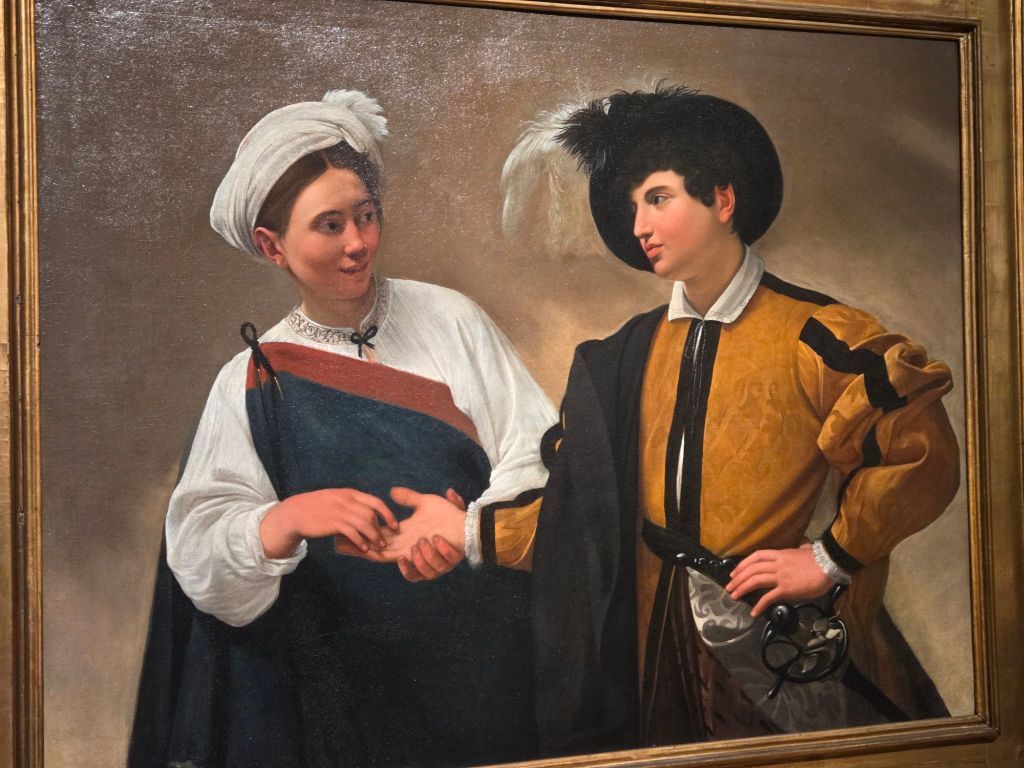
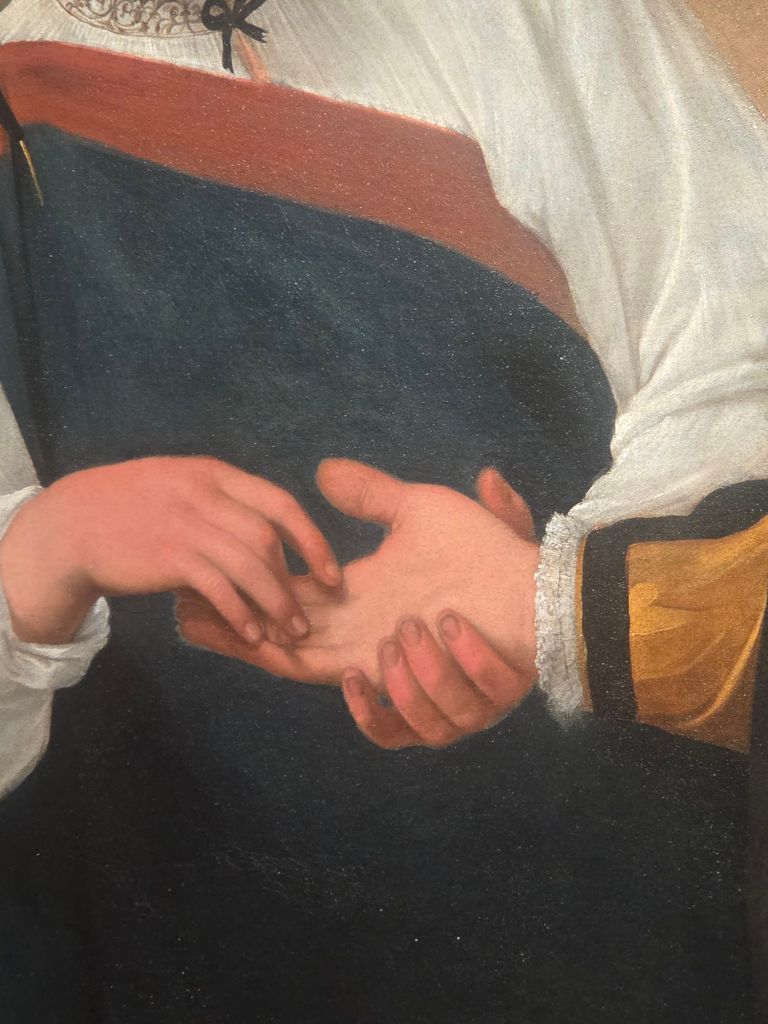
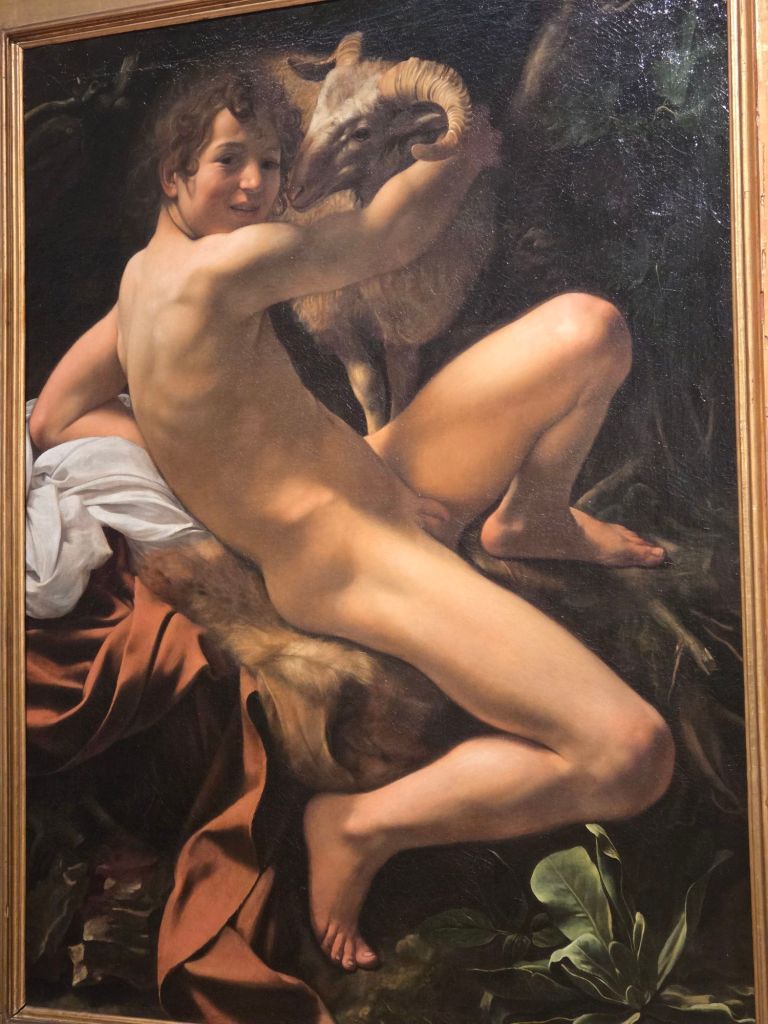
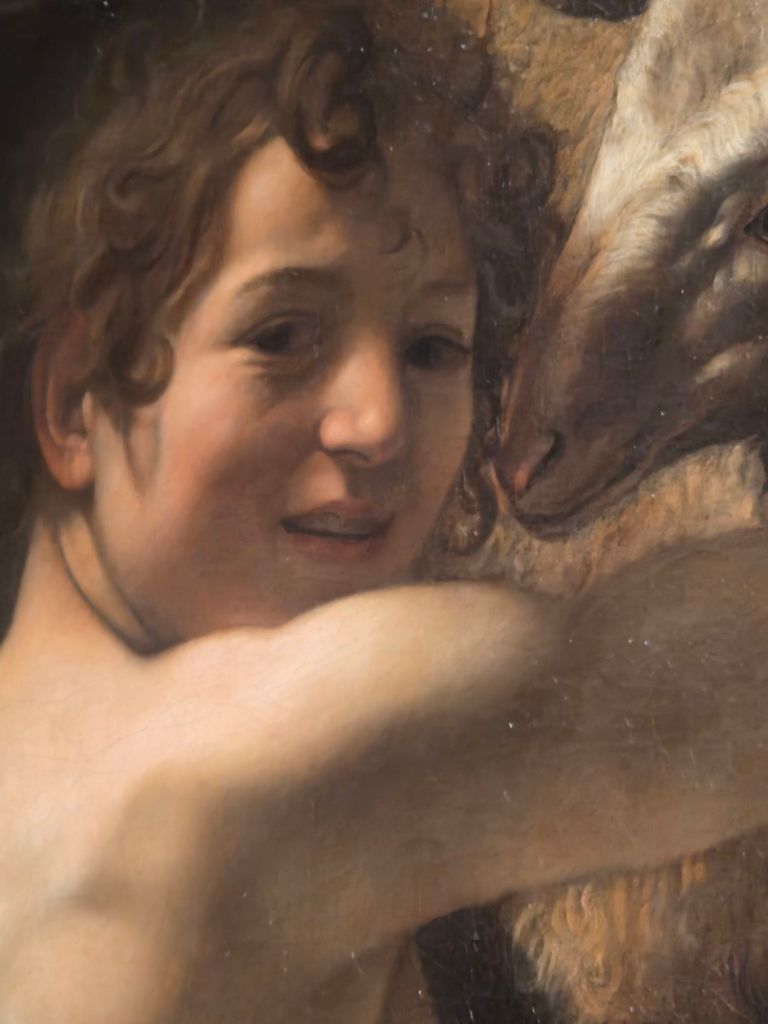
On left, Penitent MaryMagdalene (1597); center, Rest on the Flight to Egypt (1597); far right, a John the Baptist (1602), of possible attribution to CaravaggioRest on the Way to Egypt is unusually and vertically divided in two by the dark, folded wing of the musical angel. Exhausted from the journey and the worry, Mary rests with the Child on the right side. On the left side, Joseph holds the musical score for the violin-playing angelPenitent Mary Magdalene uses the same model as Mary in the previous paintingThe jewels discarded by the Magdalene are artefacts of her prior, worldly preoccupations. The flask of precious unguent refers to the anointing of Jesus’ feet carried out by an (unnamed) woman, conflated with the Magdalene. Caravaggio’s talent for still life is shown, which matches his remarkable genius for depicting people, emotion and complex content.This delightful, youthful John the Baptist, a repeated theme of Caravaggio’s, is labeled by the Gallerie Dora Pamphilij as “attributed to Caravaggio” so it’s not universally accepted as his work. Three masterpieces on one wall behind usOne of Anne’s favorite Roman scuptures, the elephant can be found near the Galleria Dora Pamphilj and the PantheonOur next stop is the Capitoline Museum. We climbed the Campodoglio on a rainy afternoon, our first rain of the trip and a presage of autumnAn early painting, The Gypsy Fortuneteller (1595) is a tour-de-force of story telling and personality.The clever and vivacious young woman steals the young fop’s ring while pretending to read his palm.John the Baptist (1602). Compare this to the Dora Pamphilij’s on the previous stop.Who wouldn’t love this face?
After two (2) tries when we found two churches locked tight although expected to be open, we struck gold on our third attempt.
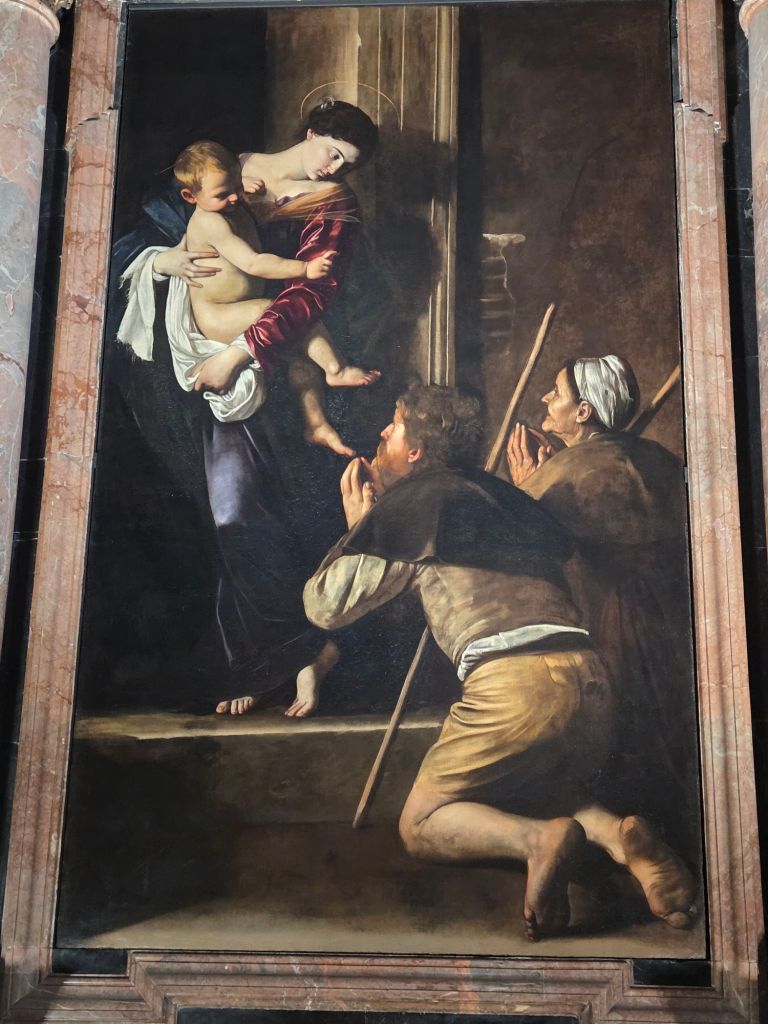
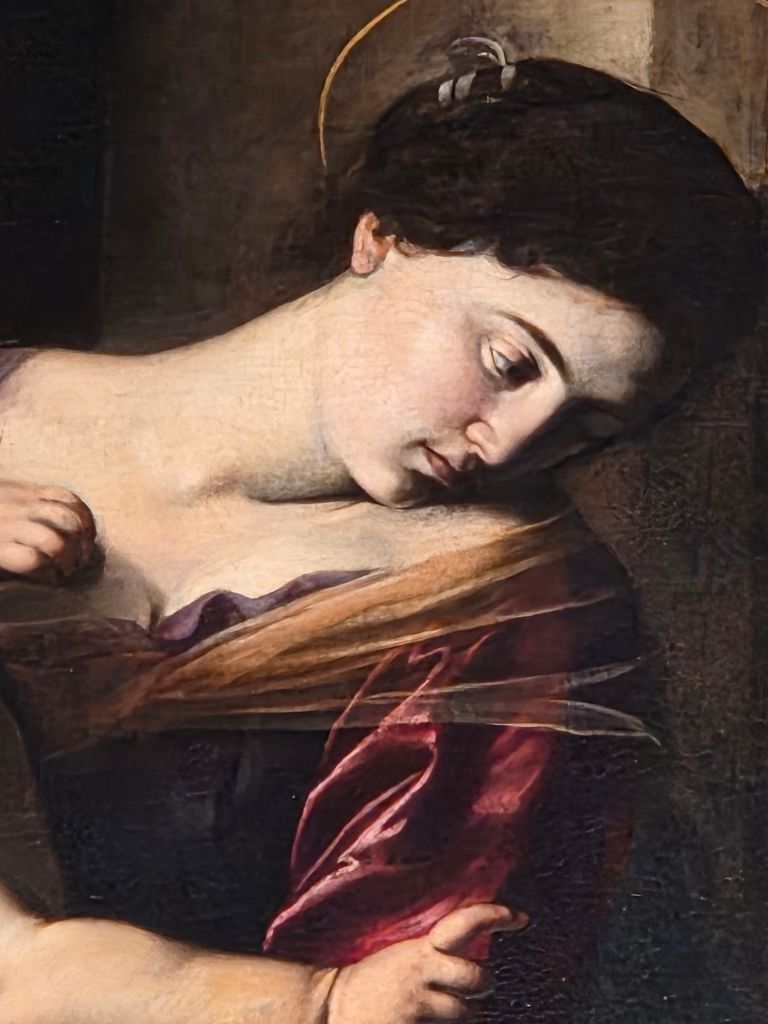
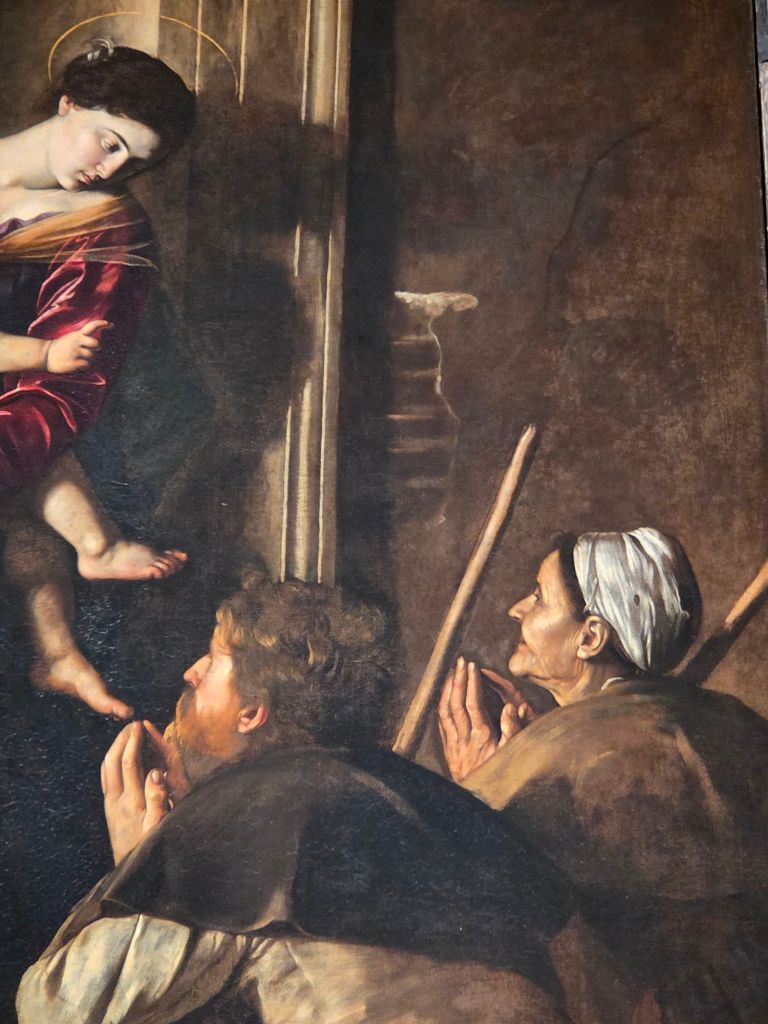
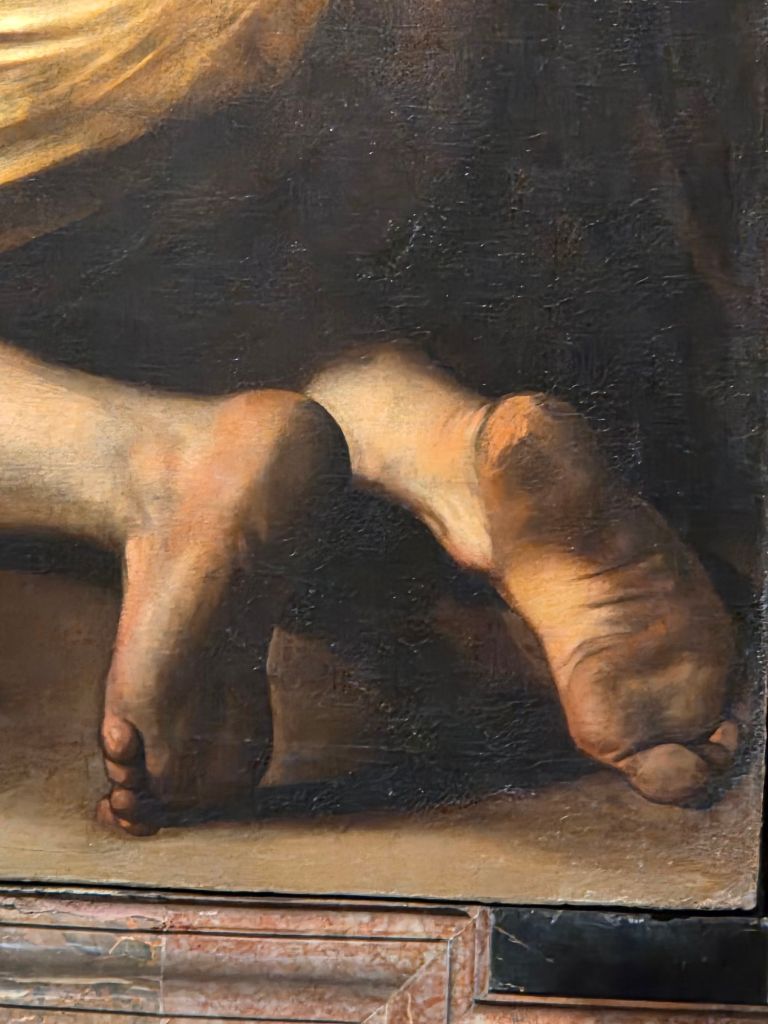
In the church of San Agostino (Saint Augustine), near the Pantheon, the touching picture, Madonna of the Pilgrims or Madonnaof Loreto (1604-6). Humble and ordinary, a couple have trudged many miles in pilgrimage to the Holy House of Loreto, believed in the Middle Ages to be Jesus’ childhood home miraculously transported from the Holy Land to Italy. They are rewarded with the presence of Mary and Child, themselves.As pilgrims who walked the Camino de Santiago de Campostela and several other Caminos, Ed and Anne respond viscerally to the sight of the walking sticks of the pilgrims (sticks are essential) and their dirty and battered feet.
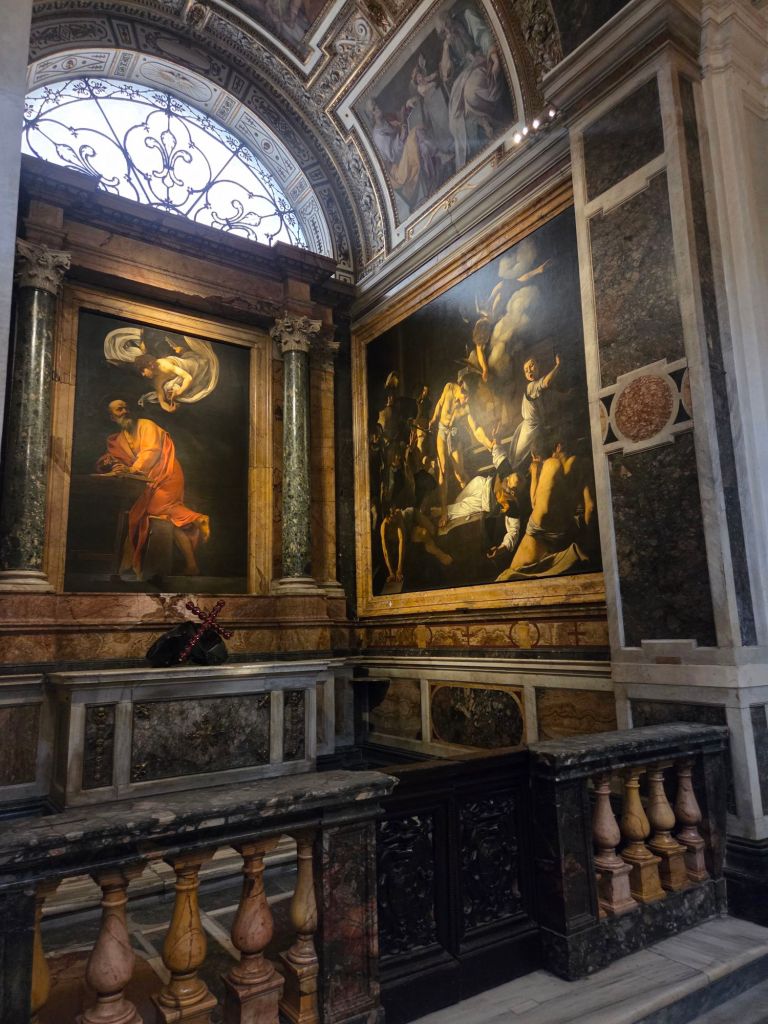
On the third try, too, we were able to enter the Church of San Luigi dei Francesi, the French national church in the next piazza to San Agostino. San Luigi is home to three masterpieces.
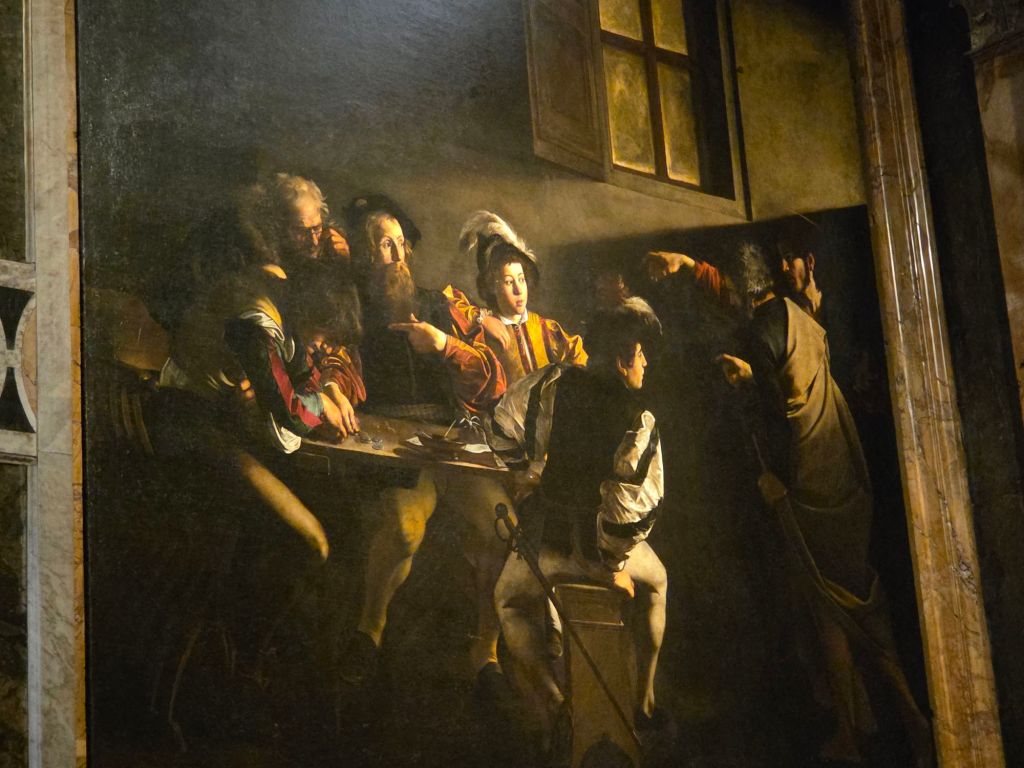
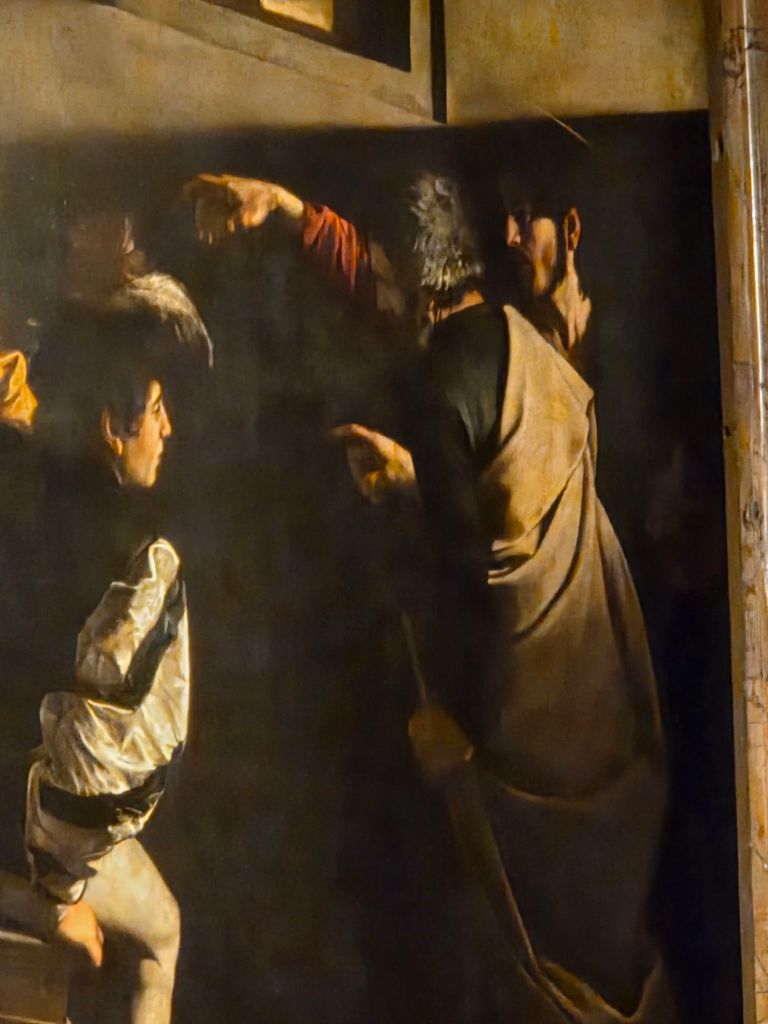
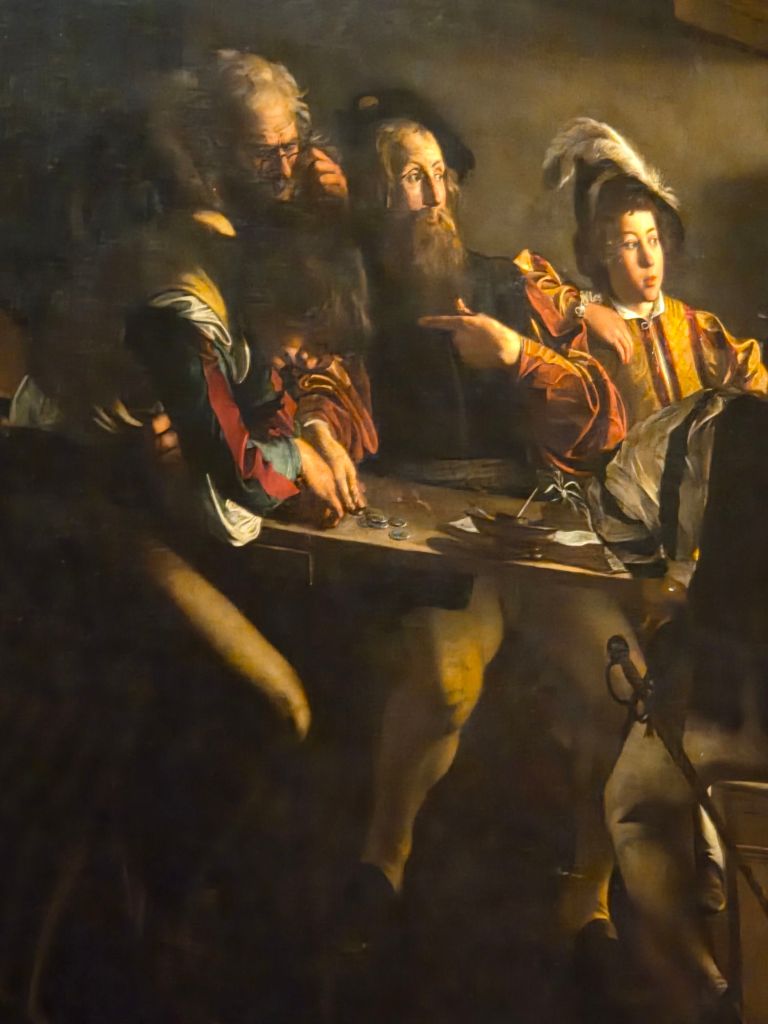
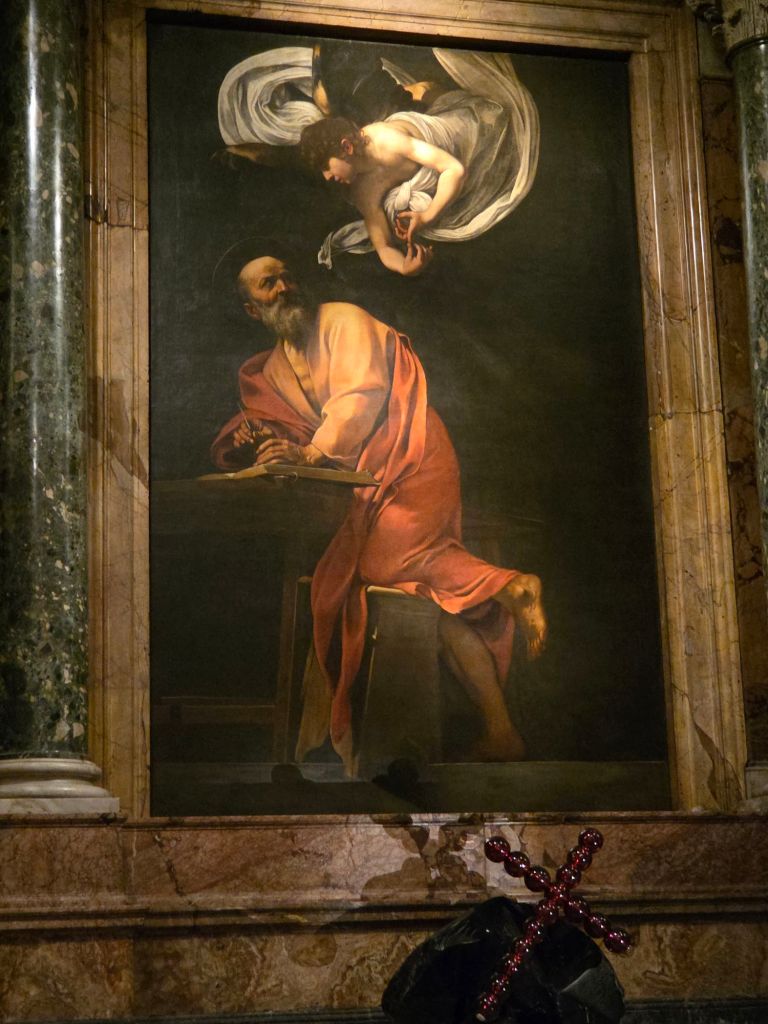
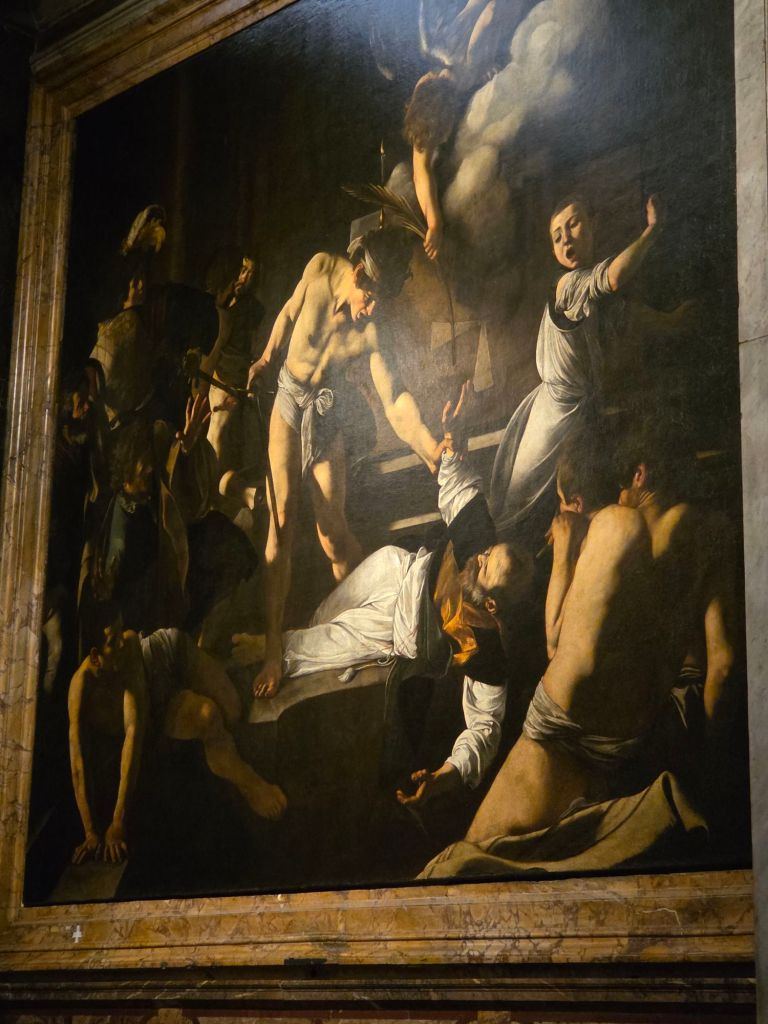
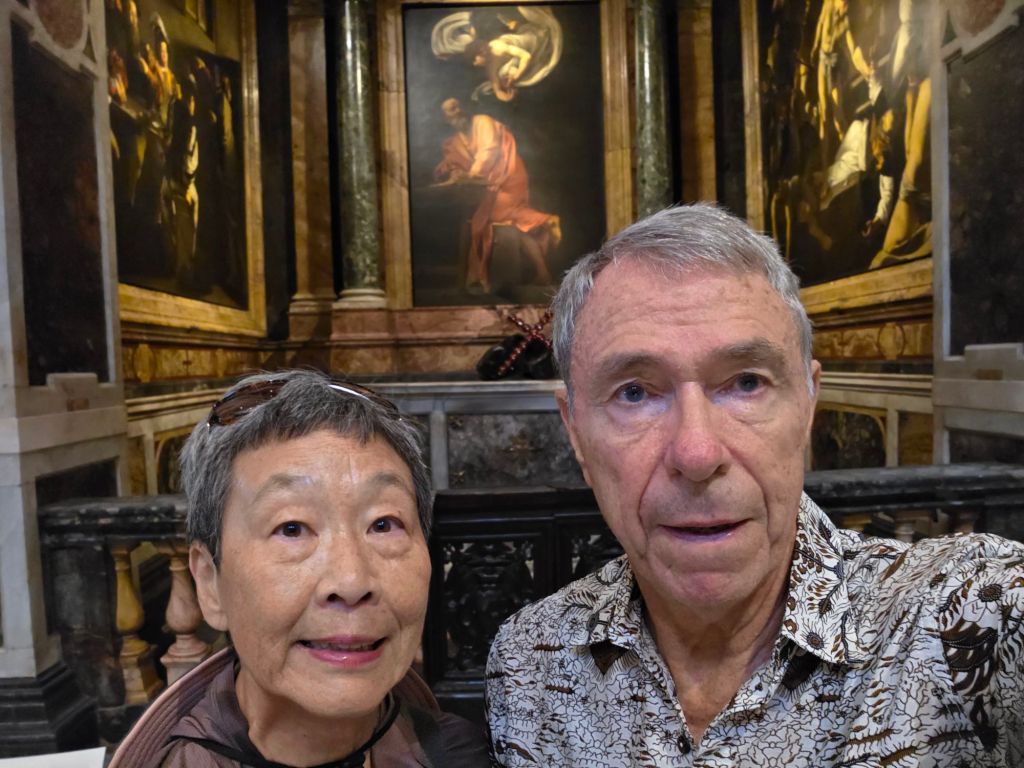
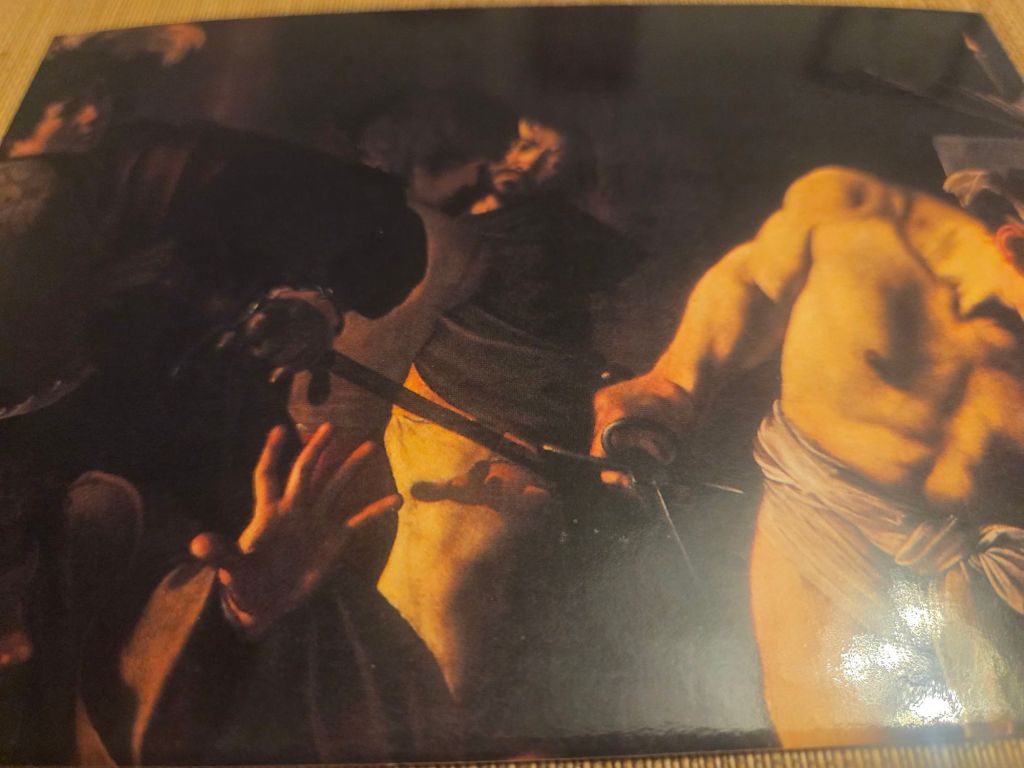
Thr Calling of Saint Matthew (1599-1600) was reputedly Pope Francis’ favorite painting. Jesus, in a simple red robe on the right, accompanied by Saint Peter in a brown robe, raises his arm to point at Matthew. He is summoning Matthew to “Follow me.”Jesus and Peter (who was the first to be called as an Apostle)Matthew, a tax collecter, that is, a venal man working for the hated Roman oppressors, points to his own chest, as if to say, “Who, me? You want me?” Under the table we can see that Matthew is already tensing his legs to stand and go with JesusSharing the three walls of the compact Contarelli Chapel with the Calling are Saint Matthew and the Angel (1602) and The Martyrdom of Saint Matthew (1599-1600)Saint Matthew is receiving divine dictation from an angel in order to write the Gospel named for him. The Angel is counting “One” on his fingers, as if to say, “Chapter One, Verse One…”The Martyrdom of Saint Matthew centers on the Apostle who had been struck down by an assassin wearing only a loincloth. The killing apparently takes place while Matthew is baptizing some of his many converts. Onlookers flee in horror, among them, the artist.Today we can only view the two side paintings from a cramped angle, as you see behind us. Self-portrait of the artist witnessing but fleeing the scene of Matthew’s martyrdom (apologies for reflection)
Both churches, San Agostino and San Luigi, were the precise locations for which the four paintings were commissioned, created and installed 400 years ago. We feel that trying three times to get inside has been well rewarded!
In the next post we will continue to reap the rich harvest of Carravaggio in Rome.