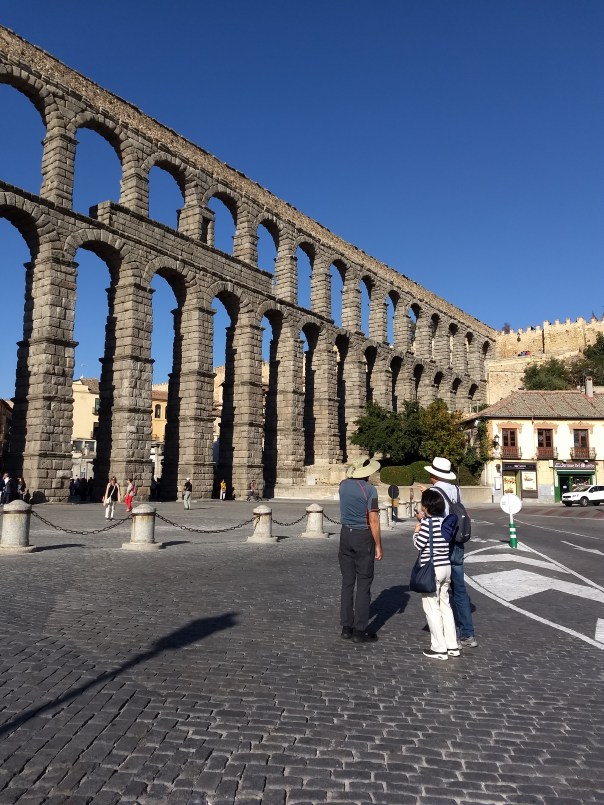
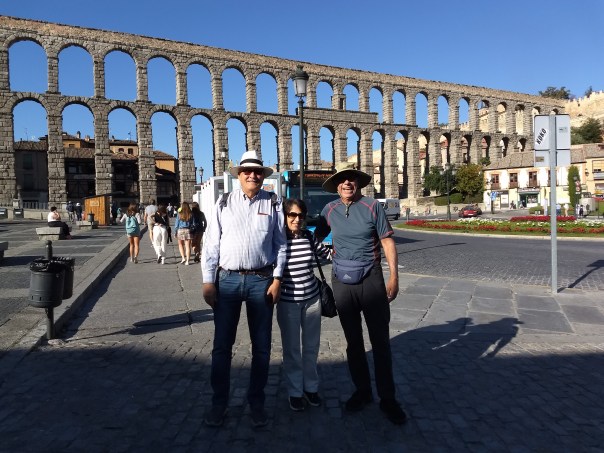
Our wonderful Madrileno friends, Julio and Luz, took us to the magical city of Segovia on Friday. On one end of the town is a magnificent Roman aqueduct, which was still operational as recently as 50 years ago!
On the other end of town is the former royal palace and fortress of Alcazar. Looking like a fairy-tale castle, it dominates a tall eminence and is guarded by an incredibly deep moat. In between, there are well- preserved residences, civic buildings and churches that testify to the prosperity and artistry of Segovians of hundreds of years ago.
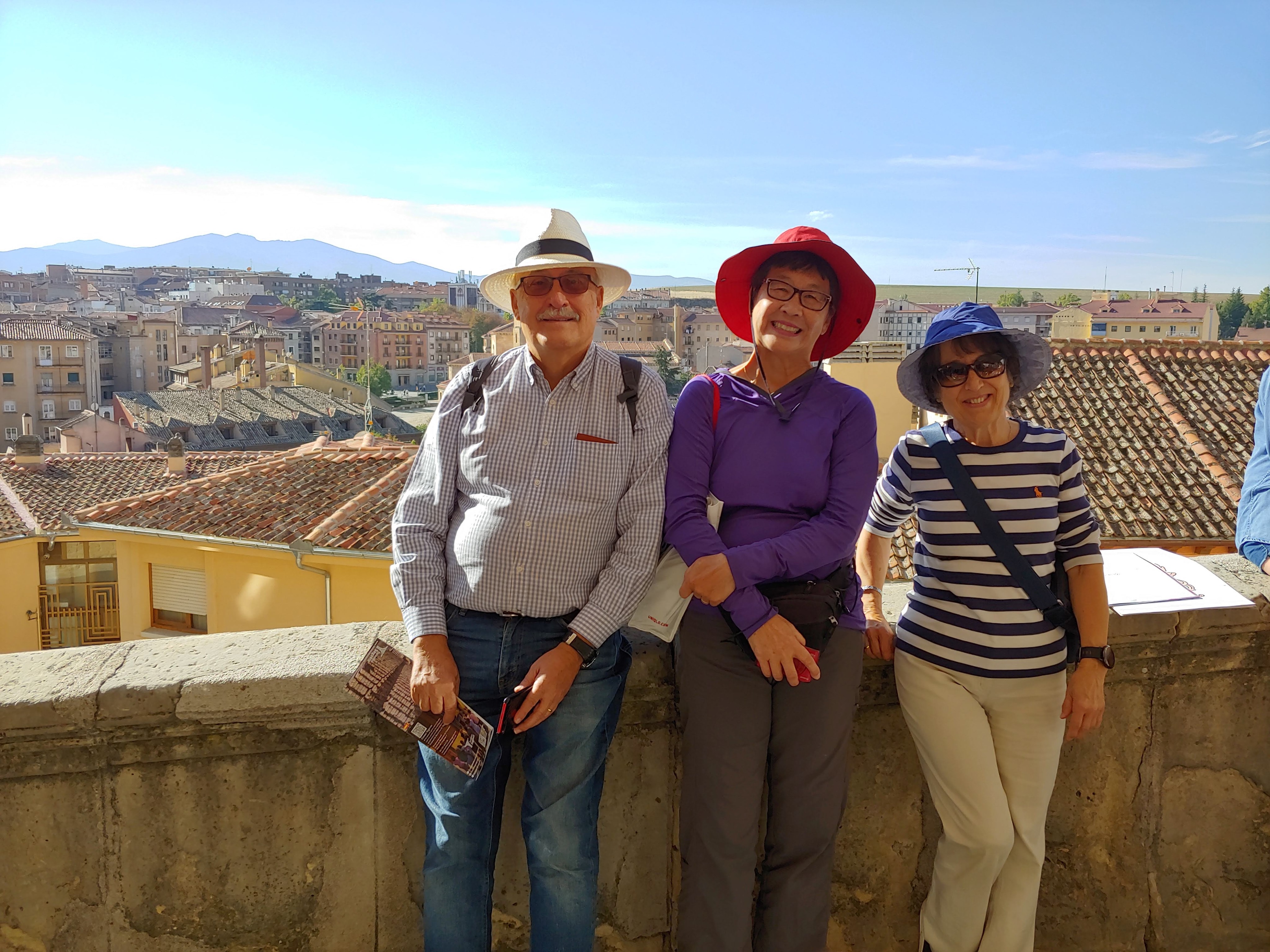
View of Guadarrama mountains from the Alcazar palace, Segovia. Julio, Anne and Luz
We regretfully say hasta luega to our friends and their beautiful country. Sunday night we are scheduled to arrive in Amman, Jordan.
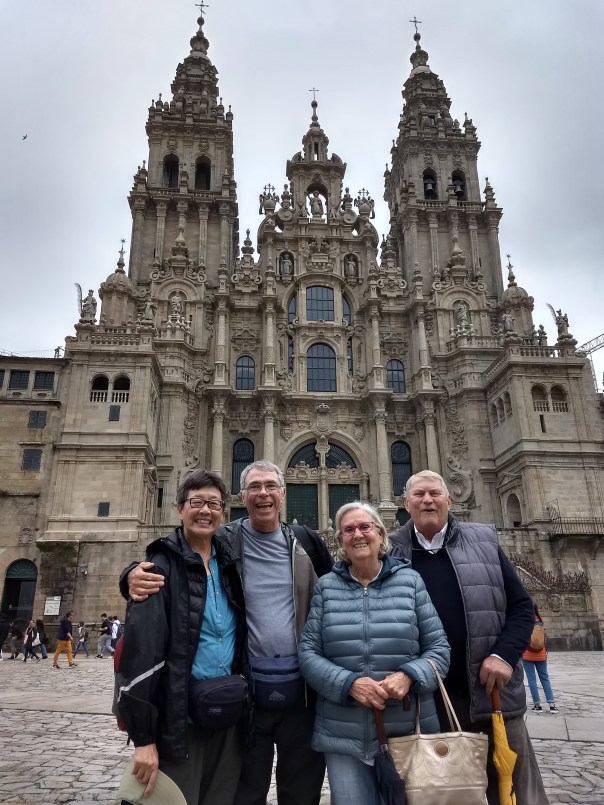
Yes, that is the Cathedral of Santiago de Campostela in the background. We reached the pilgrimage point on Monday, October 7 in a chilly rain, not atypical of Galician weather. This milestone of our journey had its own ups and downs. Up: the laundromat started by a pilgrim-supporter three years ago was still in business and we were able to process a big load. Down: the hotel had erroneously rejected our luggage from the Correos Paq-Mochila baggage forwarding service.Up: a trip to the Central Correos (Post office) reunited us with our bags. Down: when we went to the Pilgrim Office to obtain the credentials certifying completion of the pilgrimage, we were issued numbers 1106 and 1107. The Office was dealing with number 525 at the time (2:45 pm). Only 581 people in the queue ahead of us!Up: at 9:15 pm that night, we received our credentials!Above is the credential, known as a campostella, for Lady Mariam Muldoon MacDonald (Ed’s sister, Mary, in whose memory we walked this Camino). In Latin, the ancient form of words had been used for many of the 1,100 years that pilgrims have been making their way through hills, valleys, mountains, rivers, mud, dust and other perils to the resting place of Saint James the Apostle.Perhaps those 1,100 years of pilgrims is the reason our queue numbers were 1,106 and 1,107. The high numbers also mean that the daily total was higher than 1,100. In the city, there were more pilgrims than we expected to see in October. Indeed, when the 2019 numbers are compiled, we may find that recent annual counts of 250,000 on all the various routes of the Camino are exceeded this year.
As you see from the lead photo, the facade of the Cathedral has been magnificently cleaned and restored over a ten year period. We finally viewed the Portico della Gloria on this, our third attempt, and it did not disappoint. (Photography was not allowed). Maestro Matteo, the designer and artist, somehow converted cold stone into the grace, warmth and vitality of human and angelic forms.
What’s next? We are already enjoying the incredible hospitality of our friends, Marta and Rafael, appearing in the lead photo with us, at their beautiful finca across the ria from Vigo. Tomorrow we’ll go to spend three days in Madrid and to see our friends, Luz and Julio. Then, on to Jordan and Egypt!We’ll continue to blog until we return to the States.
We just learned that our nephew, Kevin Muldoon, passed away in his sleep. Another death we were not expecting. So we add Kevin, and his wife, children and grandchild, and Kevin’s dad, Ed’s oldest brother, Arthur, to our litany of loved ones whom we are carrying in our hearts to Santiago de Campostela. In addition to Ed’s sister, Mary and her husband, Bill MacDonald, those we’ve lost just recently include nephew Thomas Muldoon and dear family friend, Gary Thomas.
We should reach Santiago tomorrow, God willing. The Camino had taught us much about patience, persistence, providence and kindness. In the free quiet moments before going into tired sleep, Anne has been re-reading Richard Rohr’s book The Universal Christ, to absorb more of its insights. We’ve also been fortunate to participate in Mass many times — in Spanish, Asturiana or Gallega — another “universal” experience.
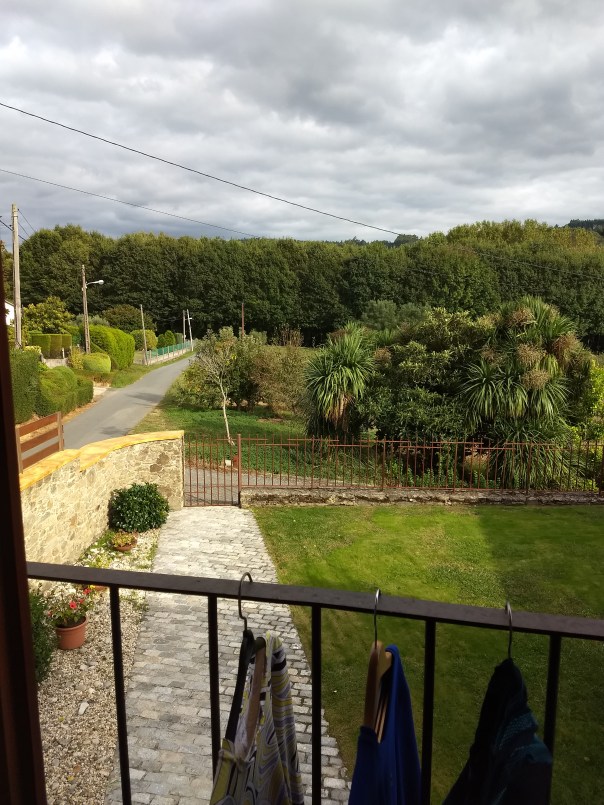
Penultimate night before Santiago: clothes dry on our balcony overlooking farm and woods.
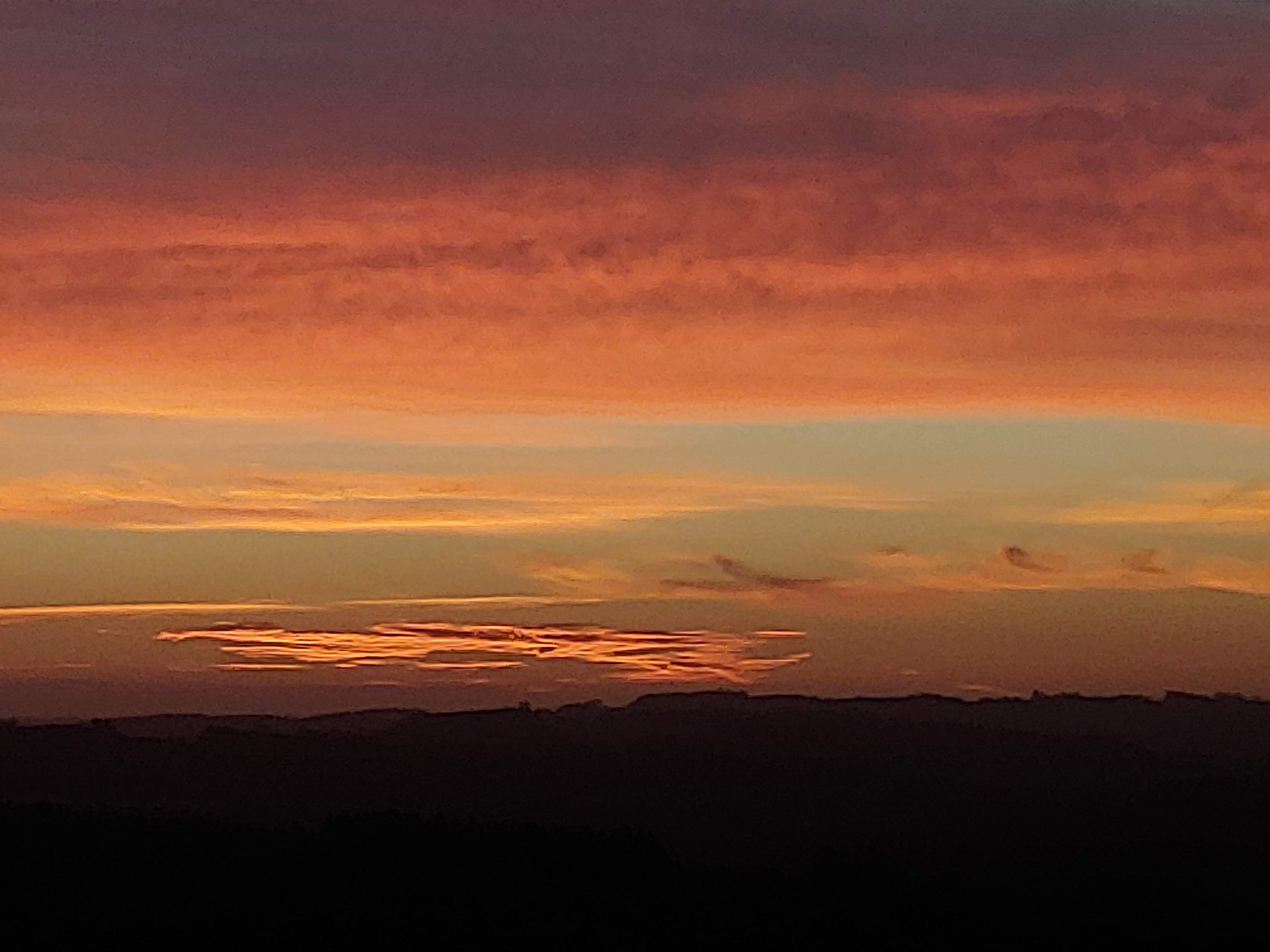
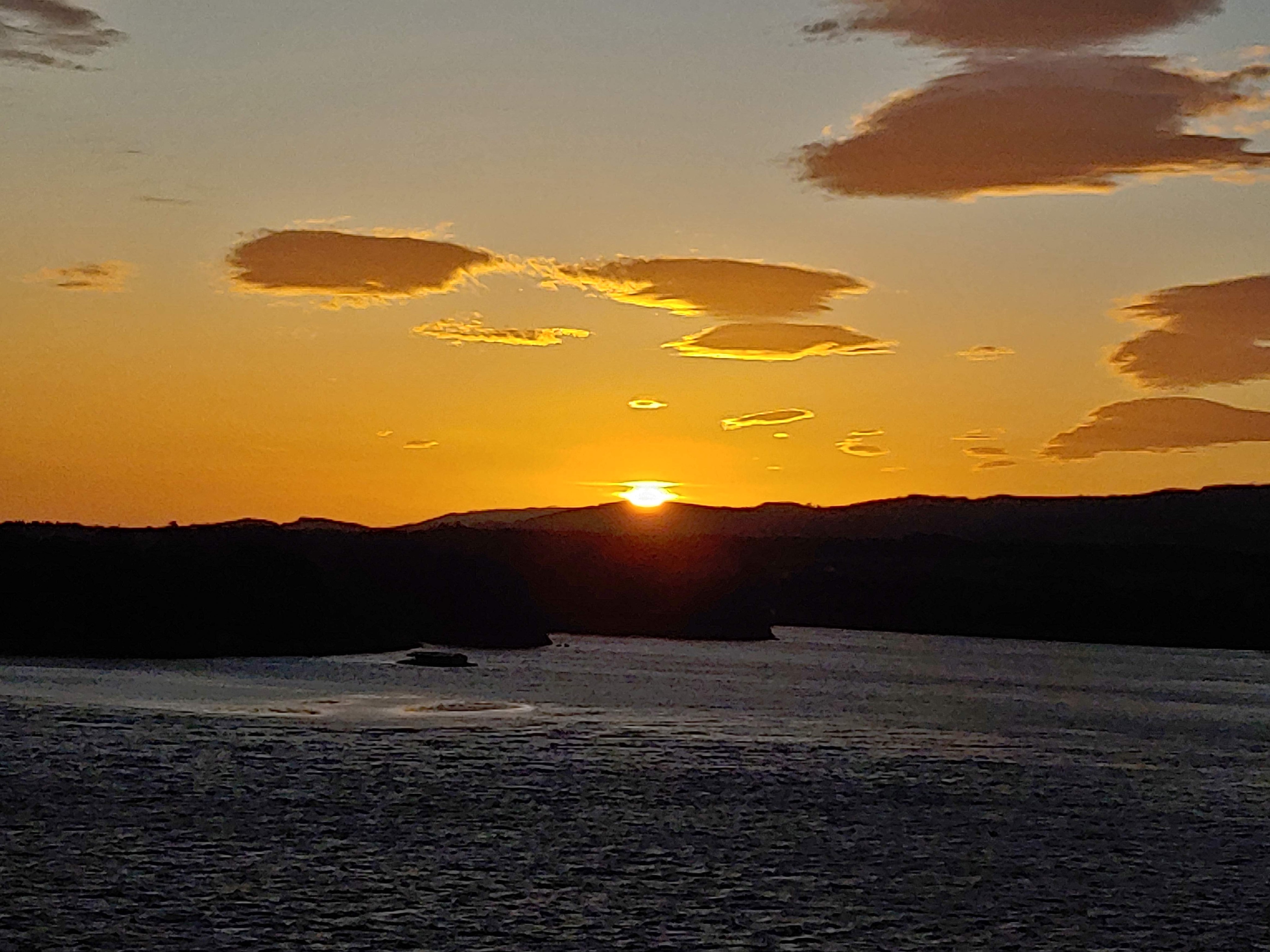
The last sunset (below) before we walk into Santiago and our prayer for Kevin, Mary, Bill, Thomas, Gary and all our departed family and friends:
Eternal rest grant unto them O Lord and may perpetual light shine upon them.
Yesterday, September 27, we walked in light rain and cool (65°) from Navia to Tapia de Castariego. Both are fishing ports (neither as dramatic as Luarca) but Tapia thrusts out furthest on a slim peninsula. This morning the temperature is only 49° at waking, so the seasonal change is felt.
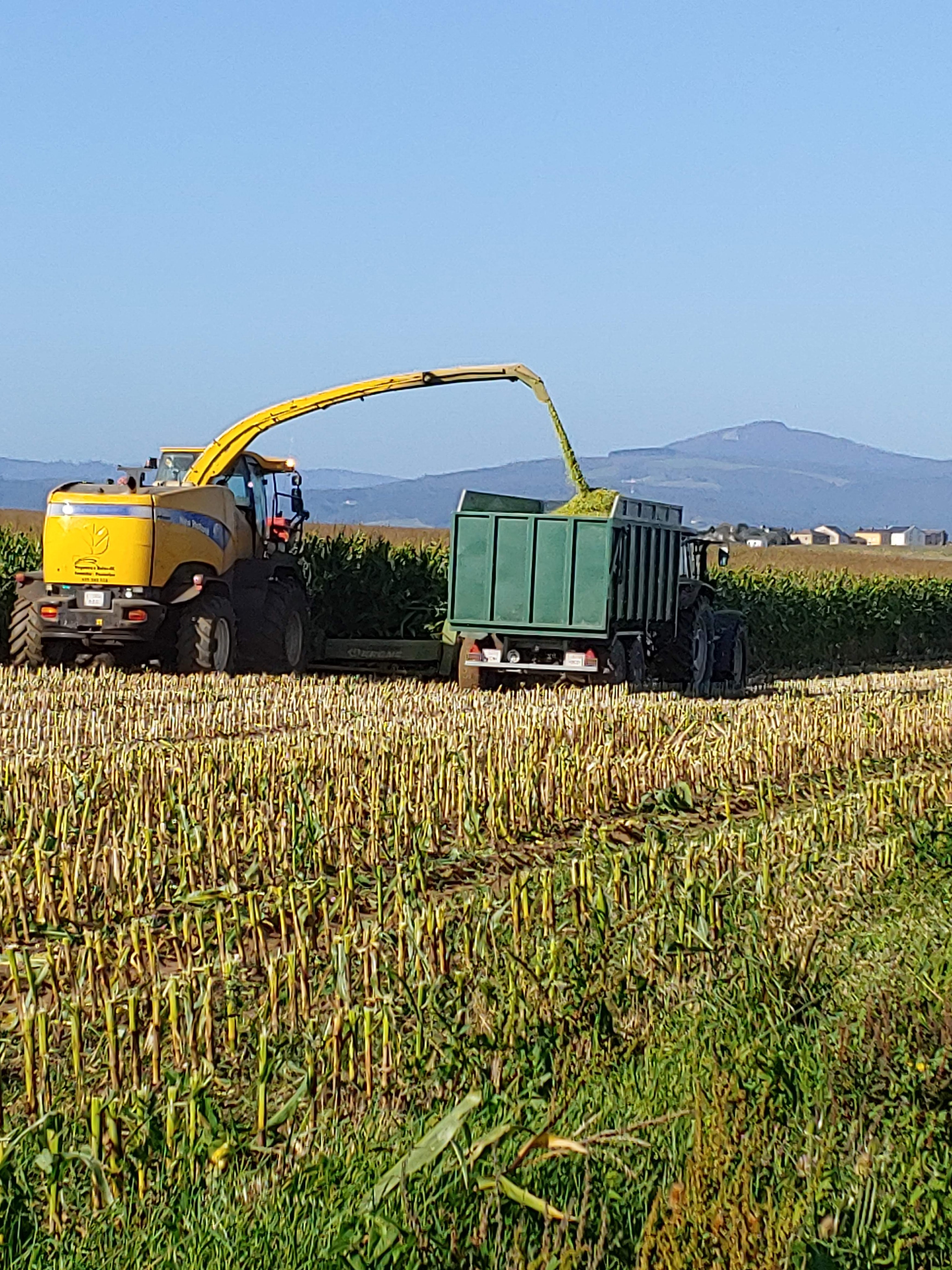
The maize is being harvested (Ed is hoping to witness the process in person) and we walk by fields of bronzed stubble. Occasional song birds break the silence.
We were happy to celebrate Mass last night in Tapia’s parish church, San Esteban. The last five nights did not offer Mass opportunities. We have been walking through even more remote, small places with few people compared to the first two weeks.
The quality of the seafood in small places next to the fish landing spots is delightful. Navia’s famous (we were told) El Chikren del Puerta has only a small sign on its door, obscured when the door is left open. The navarones (razor clams) were amazing. Tapia’s La Marina answered with Sopa de Pescadore and rabadolla (turbot).
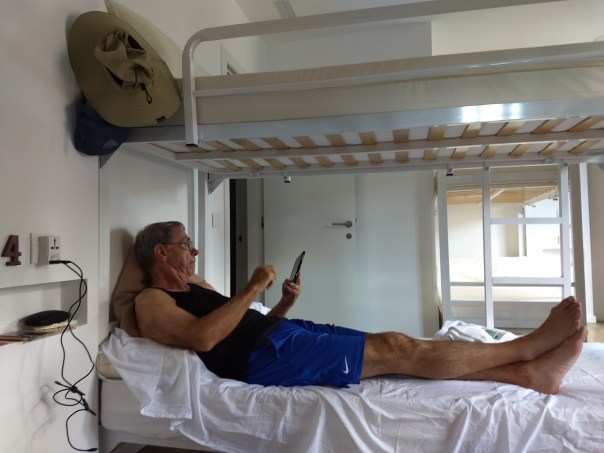
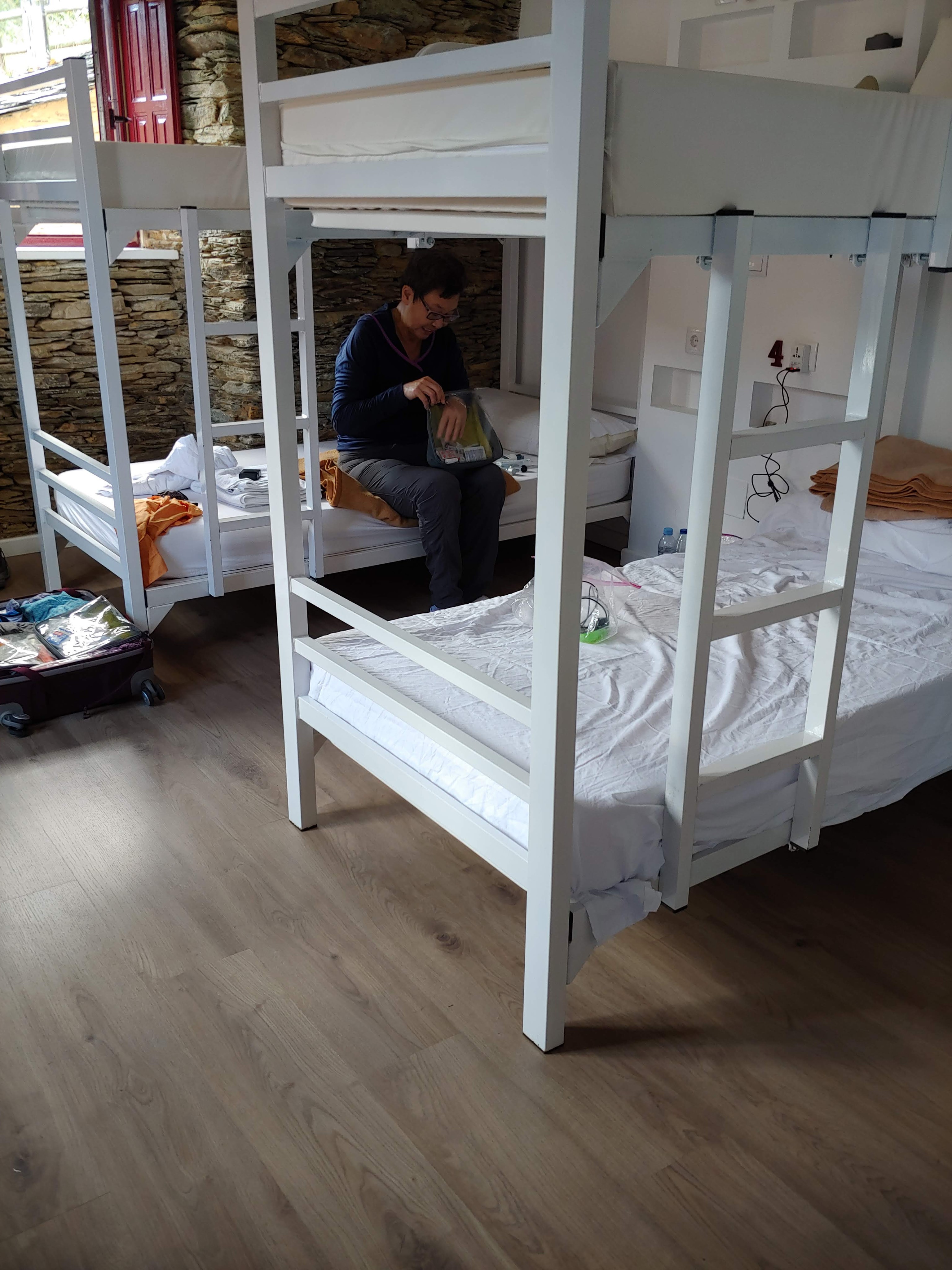
What’s this? You may remember our story from the first Camino of Anne’s unfortunate experience in the top bunk at an albuergue, the most modest level of pilgrim lodging. At an albuergue, on a first-come basis, a pilgrim can get a bed for about 12 Euros including shared showers and toilets. Sheets, pillows and blankets may, or more likely, may not be included.
After our early experience in 2015 that also included a cacaphony of snorers and a bad night’s sleep for Anne, we have mostly reserved ahead at casa rurales or pensions (modest lodgings with private rooms). But last night, deep into the Camino del Norte along the inland portion in a little town called Lourenza, we enjoyed a flashback to an bunk bed albuergue.
This one was pretty nice, with beds actually anchored to the walls rather than freely swaying from side to side, and both bottom and top sheets! And we each got a bottom bunk, hooray. Our roommate was a young German woman who had walked 40 kms that day (almost 25 miles) because the albuergue she assumed would have space for her was full, and the next one was 10 miles further! Ouch!
Although the TV playing at our modest dinner location announced scary predictions of Hurricane Lorenzo threatening Galicia, our walk today was under sunny skies with cooler temperatures (63°) and some wind.
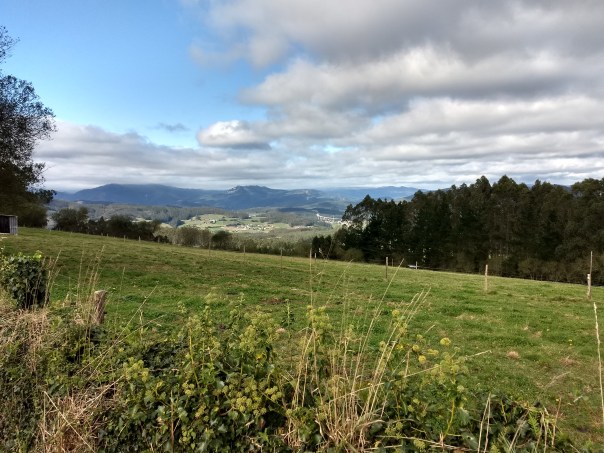
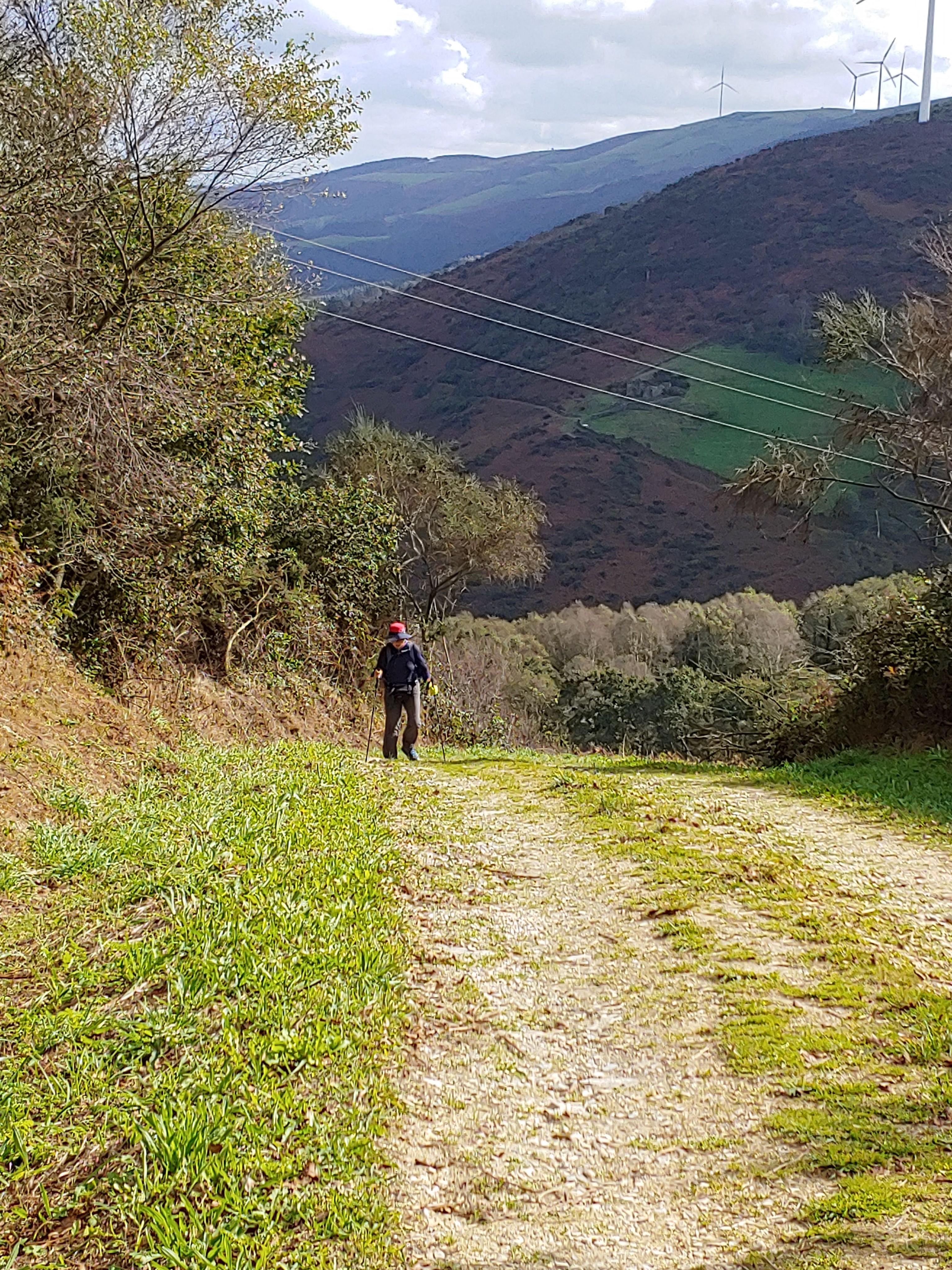
Today’s walk was an up and down hill day which resulted in our walking from the valley floor up and out of that valley into the next one. The elevation change was about 800 to 900 feet but the up and down terrain meant that we walked up at least twice that much. You can see the valley in the next photo.
Today was another good day on the Camino. We think every day of all of our family and friends with joy. What a blessing to walk quietly and to recall the good (and not so good) times we have shared. Thanks to all of you for all that we have shared.
Climbing from valley floor to ridge top over and again.
On Saturday we left the beautiful province of Asturias to enter Galicia. Asturias –apple capital of Spain, as you will recall — has a stunning coastline and abundant hilly and even mountainous terrain. Naturally, it has an indigenous language (Asturiana), foods and customs. We have been surprised, however, at the extent to which fields of ripening maize adjoin cow pastures almost to the top of the shoreline cliffs.
Ed has been very curious as to how the maize is harvested, so imagine our pleasure when we encountered an active harvesting operation on our last day in the province! In case you are wondering, it turns out that the entire stalks, ripened ears and all, are cut, ground and stored as animal feed.
Leaving Asturias, in which we have walked for 15 days, not only means a nostalgic goodbye, but a somewhat harrowing walk over a long and high highway bridge over the estuary of the River Eo to the beautiful port town of Ribadeo. (The walkway is only wide enough for one person, and the outer rail is only at waist height.)
On the other side, however, we have been rewarded with gorgeous views of the salmon-rich estuary, sea birds and hills and mountains stretching into the distance. Since dawn happens around 8:25 am, we witnessed the sun coming up over the bridge to set the water sparkling.
A long walk brought us close to Wednesday’s destination of Luarca. We decided to use Ed’s newly acquired Spanish SIM card to find our way through the town rather than directly to Apartamentos La Capitaine. Mistake???
Turning a corner, we gasped at the beautiful little port laid out far below. There had been no hint of the beauty — or elevation change — until that moment.
Naturally, we plunged down the hill to investigate. Later, we were ready to call it a day. We bought some groceries because the apartamento was supposed to have a kitchen and might be a distance from town.
Not only were we on the wrong side of the Rio Negro at this point, but faced another steep climb. And when we arrived, no one was there; the place was locked up tight.
No worries. Ed made a few Spanish phone calls, we waited, and Ángel and Josefa appeared. (It took a while for them to figure out how the stove worked, and meanwhile a concerned neighbor had called the Policía because two suspicious people — us– had been hanging around.) But the evening had a happy ending and we slept well!
We resumed our Camino pilgrimage on September 24 after a rest day. It rained on our rest day and that night. We thought that there might be some mud so both of us wore our water proof/resistant boots. We had another day of up and down but the slopes were not as radical or as many as we experienced on our last walking day. We started late and walked into Cadavedo around 5:00 pm.
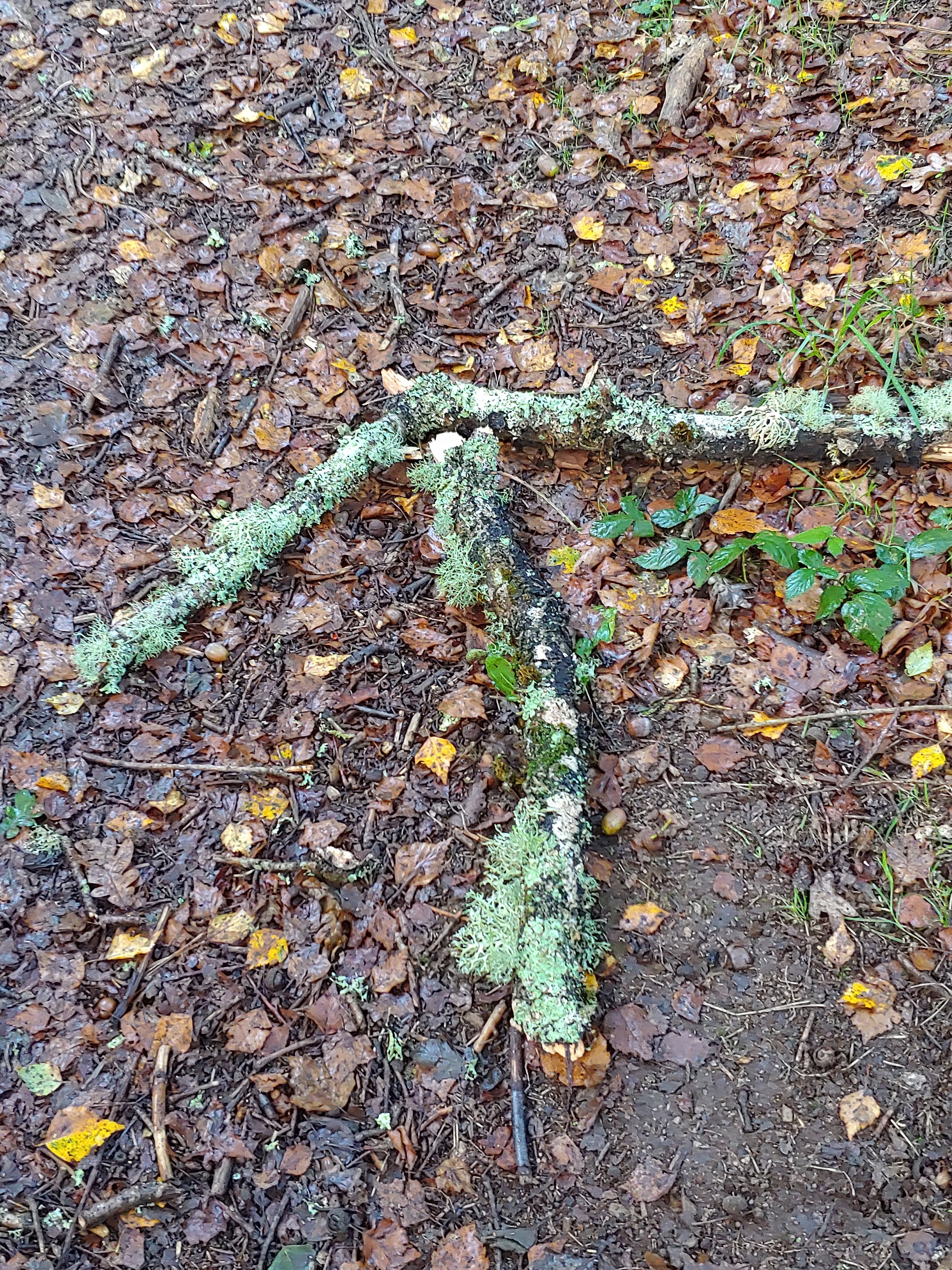
We did need our boots. See attached photos of parts of the trail. We had barro (mud), brambles, and beaches as we walked.
We checked into our hotel. No wifi.
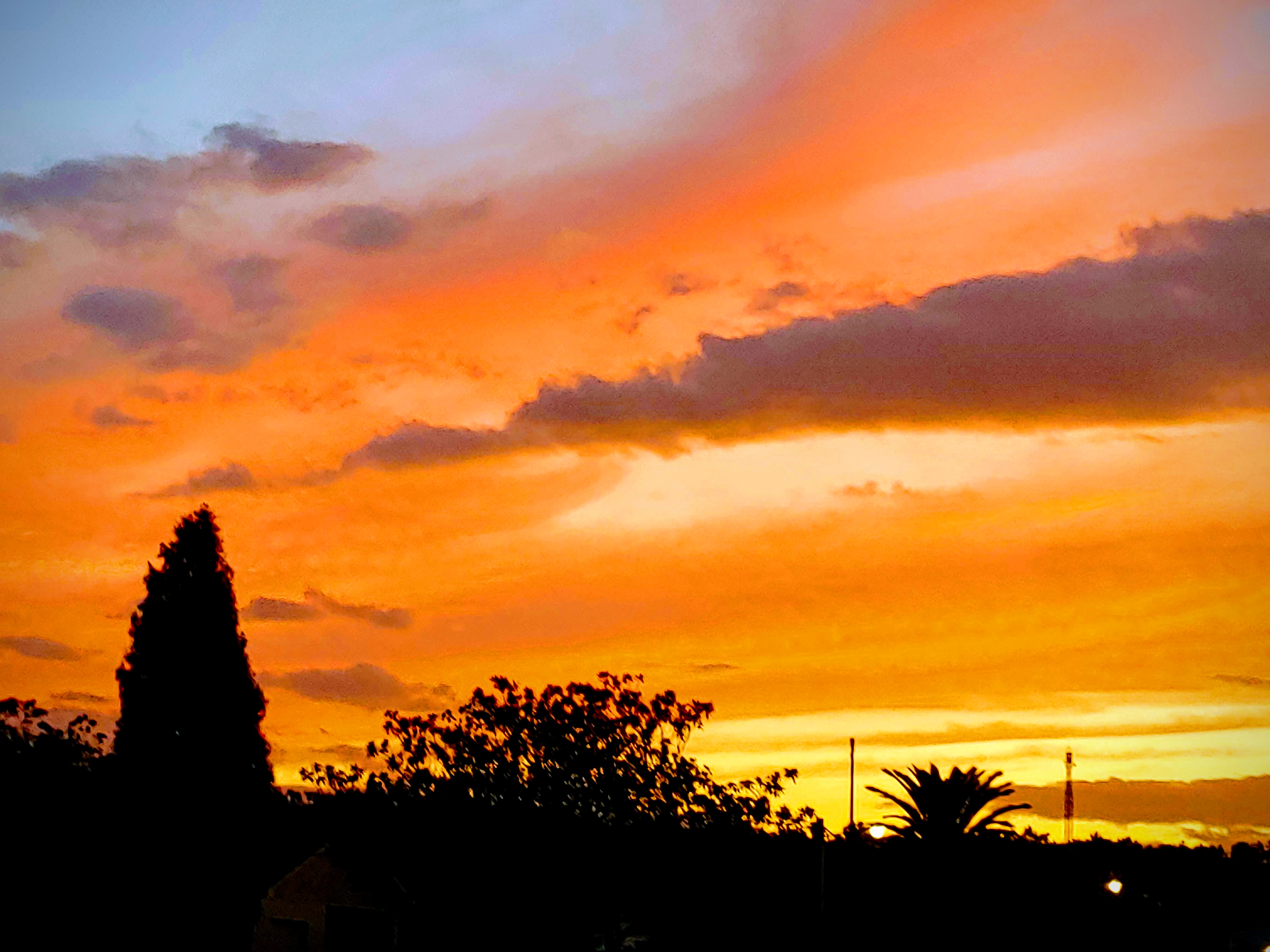
We went out to the only restaurant in town and had a variation of the “Pilgrim Menu”. It was filling. There was a great sunset
What a change! From warm and sunny Rome to cool and damp (one might say, CHILLY) Northern Ireland. But we have been enveloped in the warmth and hospitality of Mary, Ed’s second cousin on his mother’s side, and Mary’s husband Tony. Ed and I first met Mary and Tony in 1989 when Ed’s brother, Bill, the Muldoon…
Our beloved Pope Francis declared 2025 a Jubilee Year of forgiveness, love and joy. So we knew that Rome would be especially crowded with pilgrims… but we were not prepared for the sizes of the crowds we encountered. We visited Rome twice on this trip — once to catch the Ryanair flight to Dubrovnik, and…
To explain why we went to Dubrovnik, go back in your mind to the pre-Covid era. At that time, Ed and I had begun to plan a rail trip to parts of Central Europe (formerly known as Eastern Europe) that we had never visited. Since those plans were quashed by the pandemic, more recently we…
We walked from Muros de Nalon to Soto de Luina today. It was a very difficult walk. It was about 16 – 17 km but it was up and down hills all day long. Most had very steep slopes of 10°, 20°, and some were 30° and more. The path was filled with loose rocks and stones, many roots, leaves and in places, mud (barro). Our legs are really tired. Today was the 6th day in a row that we walked, so we are glad to have a scheduled rest day! Not to mention rain in the forecast…
Our approach to each day is to start around 10:00 am and to walk without stopping for rest until we get to our destination. Today we walked for about 6.25 hours. We carry food and water and stop only to take a drink or get the food out of the backpacks. If we were to stop longer and sit down our joints would stiffen up. Experience tells us that it takes a while to get loose again, so we just don’t stop.
We are almost half way to Santiago. We will walk 5 days in a row starting on Tuesday. Then a day off. Next we walk 4 days and then take a day off. Then we walk for 3 days and walk into Santiago de Campostela on the last day of this Camino.
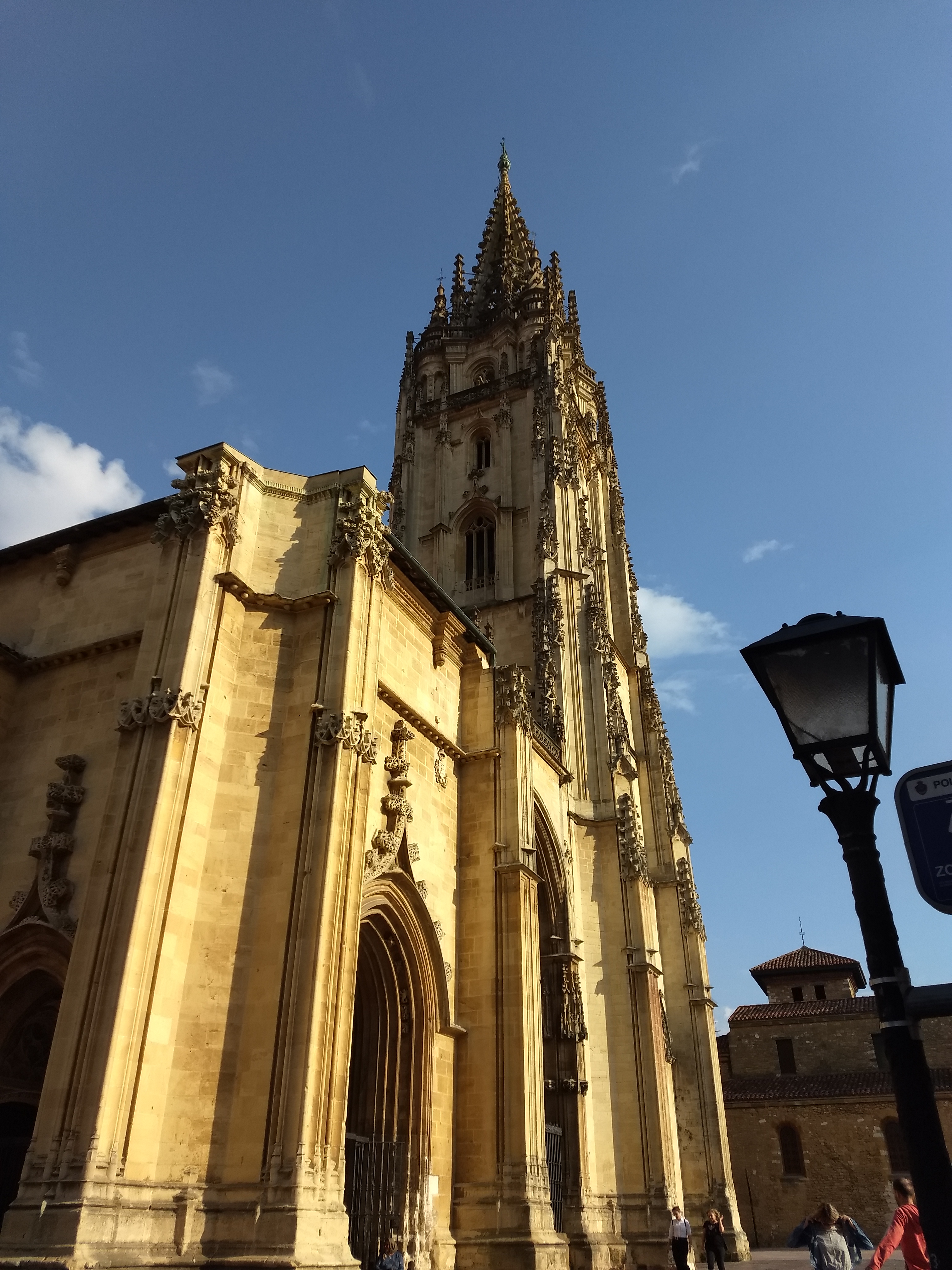
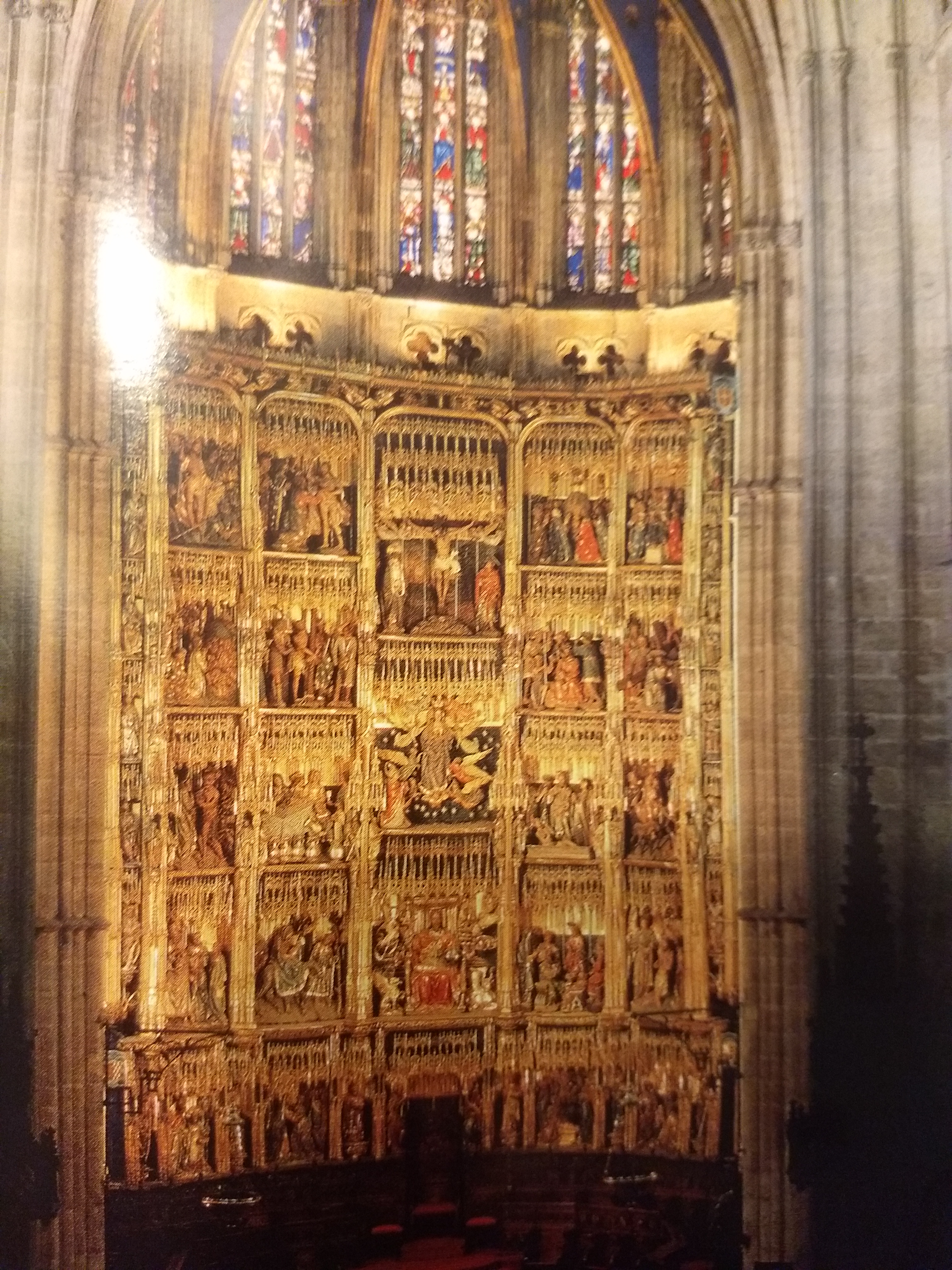
We felt impelled to take a detour off the Camino del Norte to visit Oviedo, one of the most storied locations in Spain. The cathedral (seen above) is wonderful. Its huge altarpiece presents 23 scenes of the Life of Jesus and the Virgin which are more brilliant and eloquent than any movie or video. Its Sacred Chamber holds many priceless relics. Although bombed at least twice (once during the Civil War and later by anarchists) its antechamber is decorated with wonderful stone sculptures of the Apostles talking, two by two.
No photo can do justice to the beauty of each scene and the overall effect.
Artists from Burgos, our favorite city along the Camino Frances, were brought in to decorate Oviedo’s cathedral. The Apostles chamber has been compared to the Portico della Gloria of the Cathedral of Santiago de Campostela. We are anxious to see that Portico on this Camino: it will be our third try as it had been under major restoration during both our previous visits.
God is smiling on us during our Camino. First, the weather has been almost completely dry and there has been very little mud (“la boue” in France, fango in Italy and barro in Spain). Second, the circus has been following us from one small town to another, and then our overnights have coincided with the town’s major annual festival three different times. (Lots of fireworks and drinking.)
Most significantly, when we inquired about mass last night in Oviedo, we learned that it was the penultimate night of the sacred week during which worshippers at Oviedo receive a plenary indulgence. If you don’t know what that means, let’s just say that we are very lucky, indeed.
The feet are a bit tired. Your “likes” and comments on the blog are much appreciated!

 Yes, that is the Cathedral of Santiago de Campostela in the background. We reached the pilgrimage point on Monday, October 7 in a chilly rain, not atypical of Galician weather. This milestone of our journey had its own ups and downs. Up: the laundromat started by a pilgrim-supporter three years ago was still in business and we were able to process a big load. Down: the hotel had erroneously rejected our luggage from the Correos Paq-Mochila baggage forwarding service.Up: a trip to the Central Correos (Post office) reunited us with our bags. Down: when we went to the Pilgrim Office to obtain the credentials certifying completion of the pilgrimage, we were issued numbers 1106 and 1107. The Office was dealing with number 525 at the time (2:45 pm). Only 581 people in the queue ahead of us!Up: at 9:15 pm that night, we received our credentials!
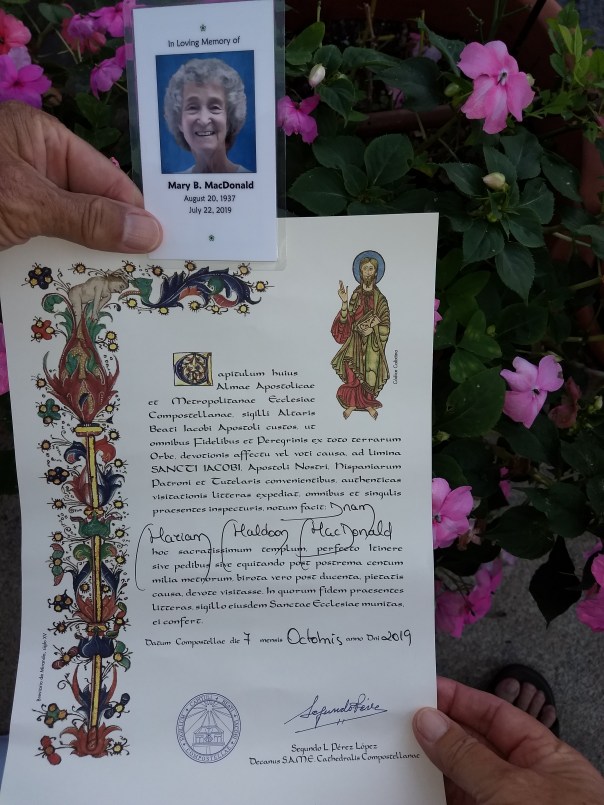 Above is the credential, known as a campostella, for Lady Mariam Muldoon MacDonald (Ed’s sister, Mary, in whose memory we walked this Camino). In Latin, the ancient form of words had been used for many of the 1,100 years that pilgrims have been making their way through hills, valleys, mountains, rivers, mud, dust and other perils to the resting place of Saint James the Apostle.Perhaps those 1,100 years of pilgrims is the reason our queue numbers were 1,106 and 1,107. The high numbers also mean that the daily total was higher than 1,100. In the city, there were more pilgrims than we expected to see in October. Indeed, when the 2019 numbers are compiled, we may find that recent annual counts of 250,000 on all the various routes of the Camino are exceeded this year.






 Anne and Ed Blog