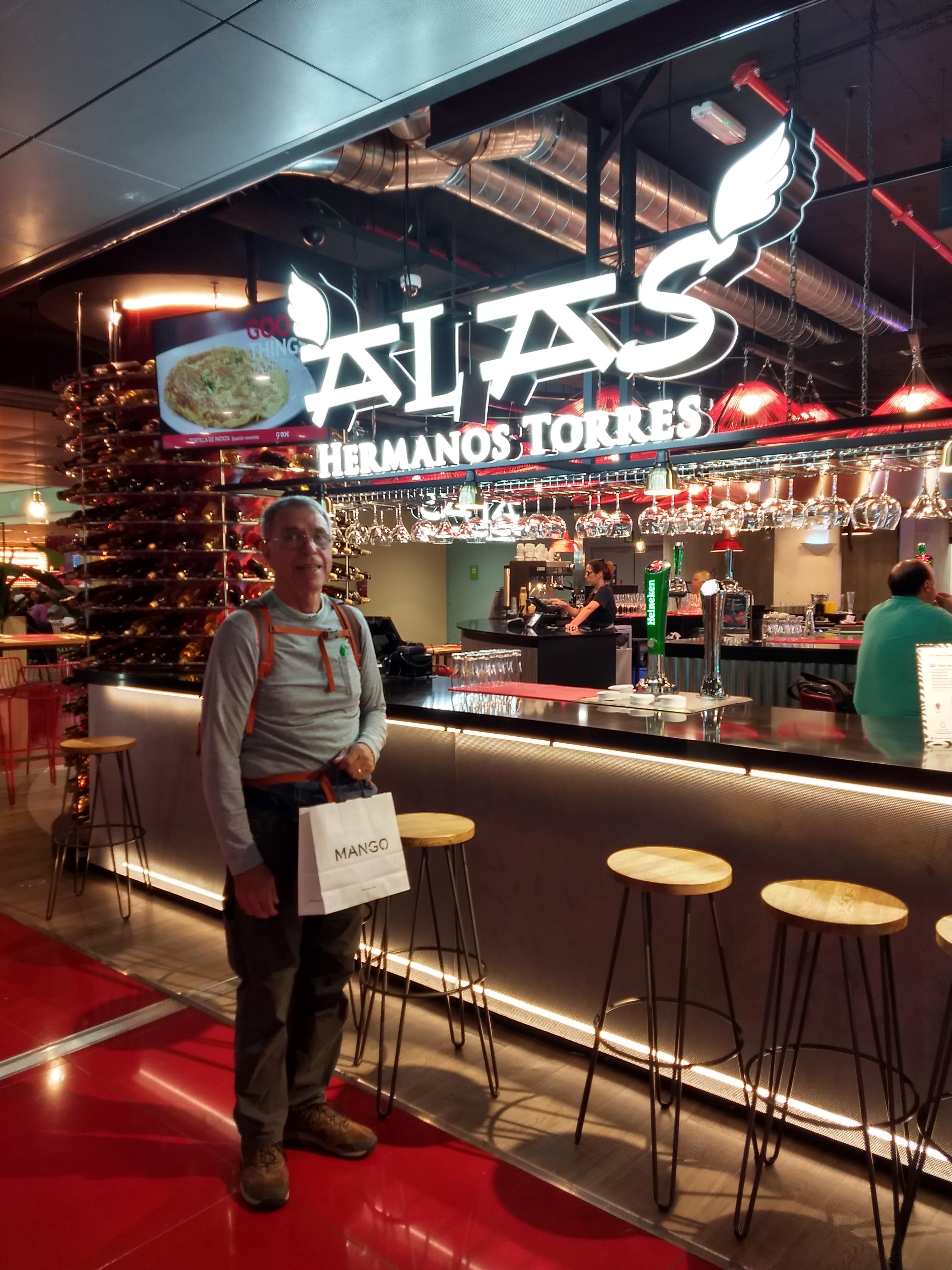
Greetings from Barcelona where it is raining, 51 degrees, and we have a four hour layover until flying onward to Santander to start walking tomorrow. Ed is standing in the photo in front of a sign which I playfully mistranslated as “Tower of Manliness,” holding a shopping bag from Mango Man.
Tomorrow, September 11, is Catalan National Day, but we will narrowly miss the marches and demonstrations by leaving Barcelona and Catalonia for Santander in Cantabria. We did arrive in Barcelona Airport during a labor strike by local security personnel, but so far that hasn’t affected our progress.
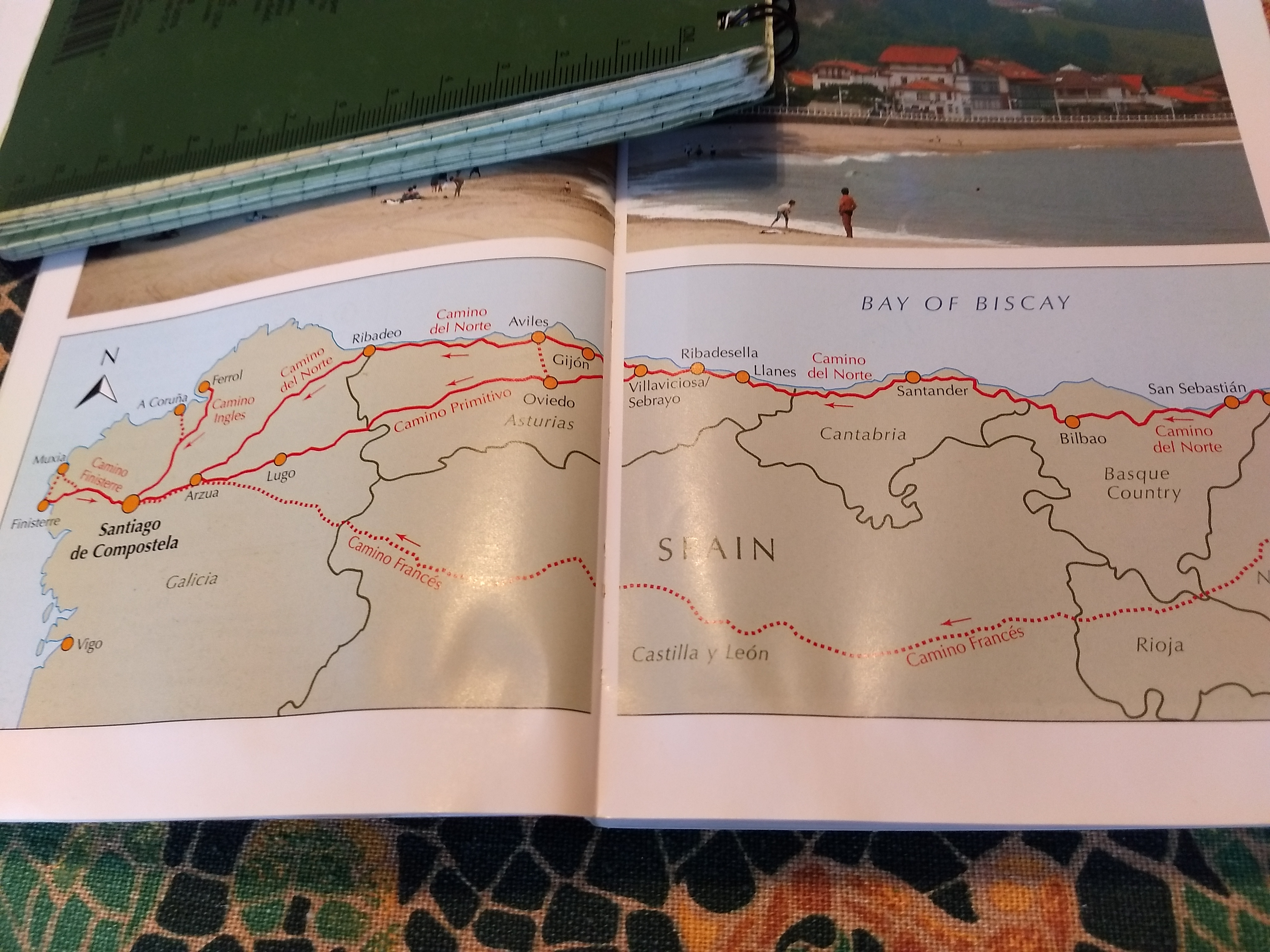
Apologies for the quality of the map (above) to illustrate our route. Mostly -but not strictly — we will follow the northernmost red line. In spring 2018 we walked one-quarter of the way down by starting in Lourdes (southwest France) and walking through mud to Irun in the Spanish border. From Irun we walked through Basque Country, including the beautiful seaside town of San Sebastien and the exciting small city of Bilbao and ending in Santander to return to the US for a family wedding.
Tomorrow we will pick up the Way from Santander, wending through the provinces of Cantabria and Asturias into Galicia. This is the ancient Camino del Norte, which is mostly even older than the Camino Frances,”The French Way, ” as is known the main route traveled today by the largest number of pilgrims (overall, 300,000 in 2017).
The Camino del Norte tracks closer to the coast than the equally or surpassingly ancient Camino Primitivo (the “original” or “Primitivo”) route. On the map (above) you can see the Camino Primitivo split off from the Camino del Norte about halfway across Spain. The Camino Frances runs even farther south, through the the agricultural heartlands of La Rioja (wine country) and the huge plateau called La Meseta.
We read that Caminos del Norte and Primitivo followed the tracks of the earliest pilgrims to Santiago de Campostela — starting in the ninth and tenth centuries C.E. — who were hardy pioneers who made their way through unmarked hills and sparsely populated valleys. Those first pilgrims stayed close to the coast to find occasional shelter and board and avoid getting lost. In the 12th century, the Camino de Santiago (the umbrella name for the varied routes to Santiago de Campostela) developed a significant infrastructure of albergues (inns), hostels, bridges, etc along the more southerly Camino Frances route, which had a generally more benign topography.
So today, relatively few pilgrims walk the Camino del Norte. We look forward to quiet, contemplative solitude, stunning scenery and fresh seafood as we take our trekking poles out of their mothballs and start walking tomorrow.
On Day Eight we will take a detour onto the Camino Primitivo to visit the historically significant town of Oviedo (see later posts). After returning to the Camino del Norte, we will take another detour on Day 23 to veer north to visit the famous port of A Coruna, location of the oldest functioning lighthouse in the world.
Although we’ve ended two previous Caminos in Santiago de Campostela (2015 and 2017) we are excited to finish there for a third time on Day 27. We will finally be able to walk through the cathedral’s Portico della Gloria, which had been closed for restoration for years, including both of our previous visits.
After Santiago de Campostela, we look forward to spending a few days with our dear friends in Vigo and then seeing our wonderful Camino friends who live in Madrid. From Madrid we will fly to Jordan and Egypt for our first-ever views of traces of those magnificent civilizations.
END OF ITINERARY.
Please look in Recent Posts In September for the Dedication to Mary.
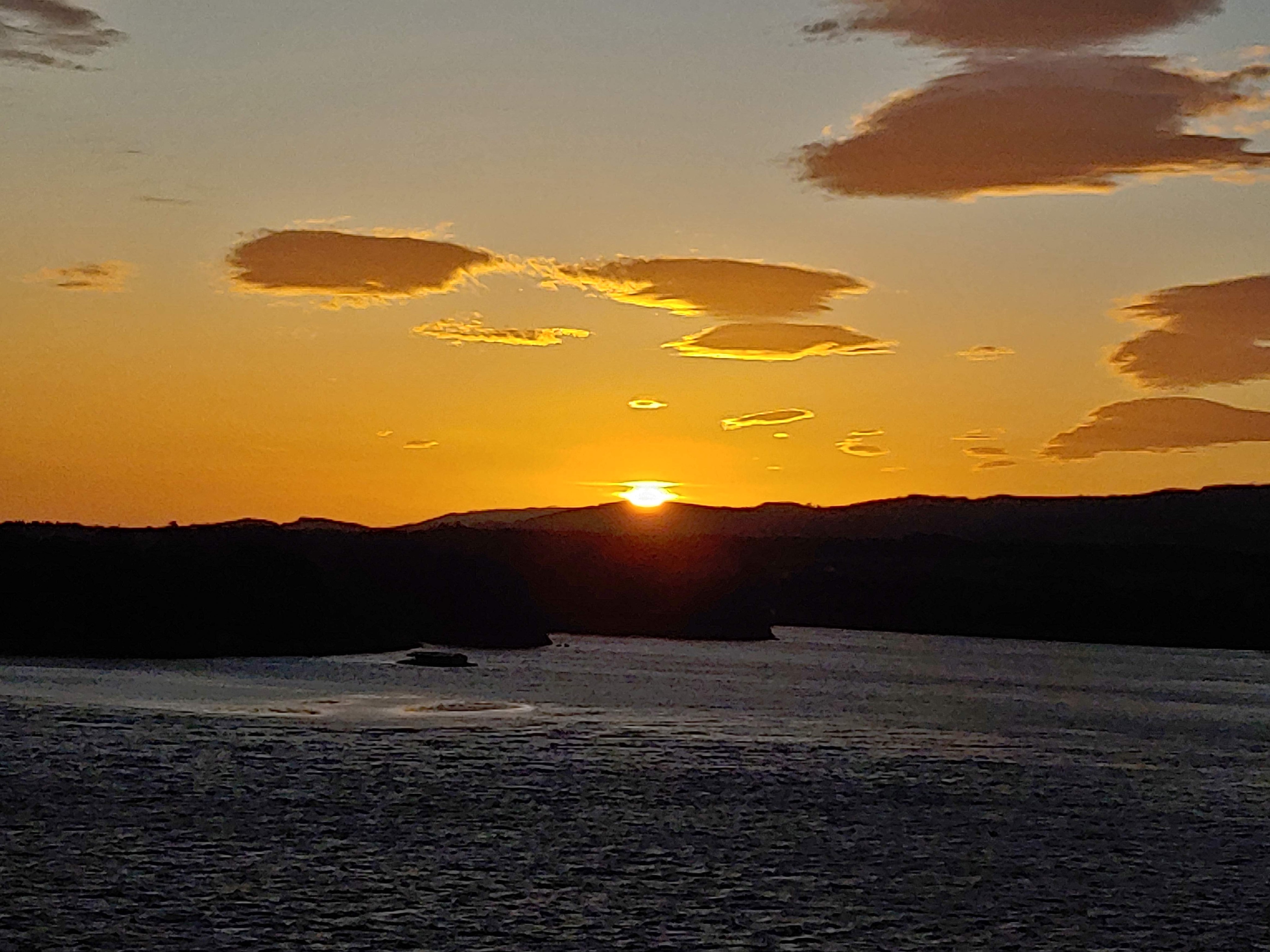




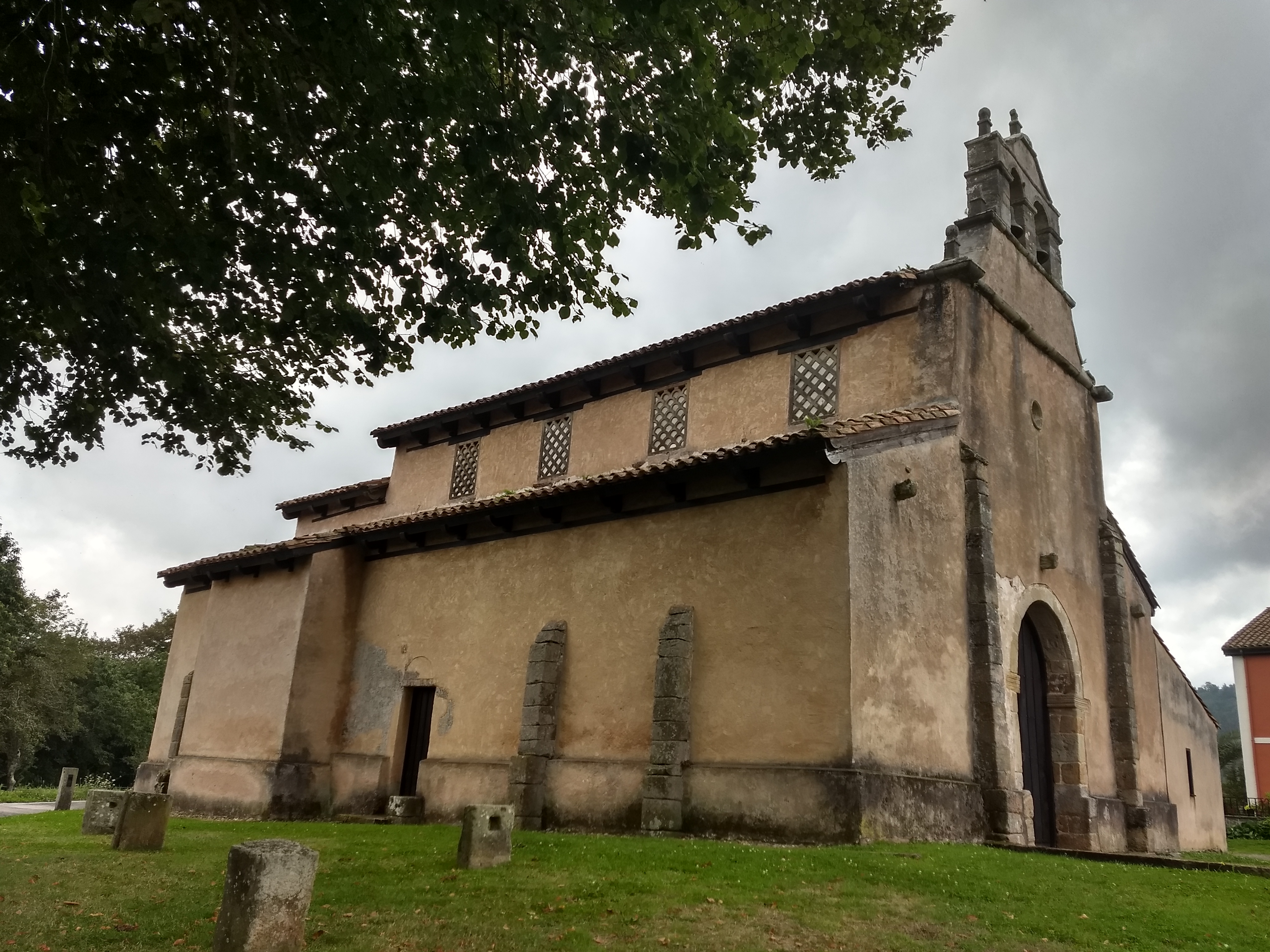
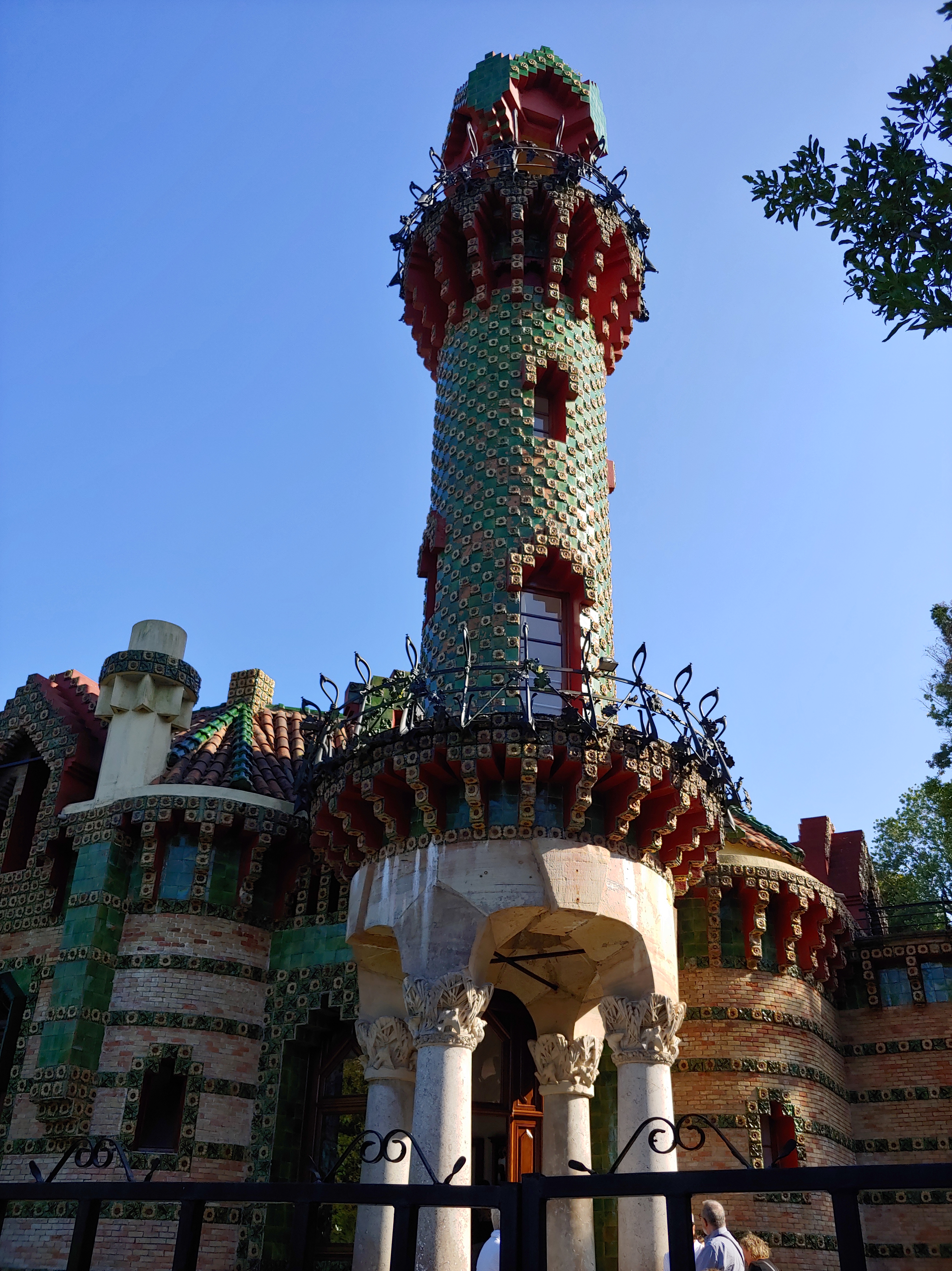
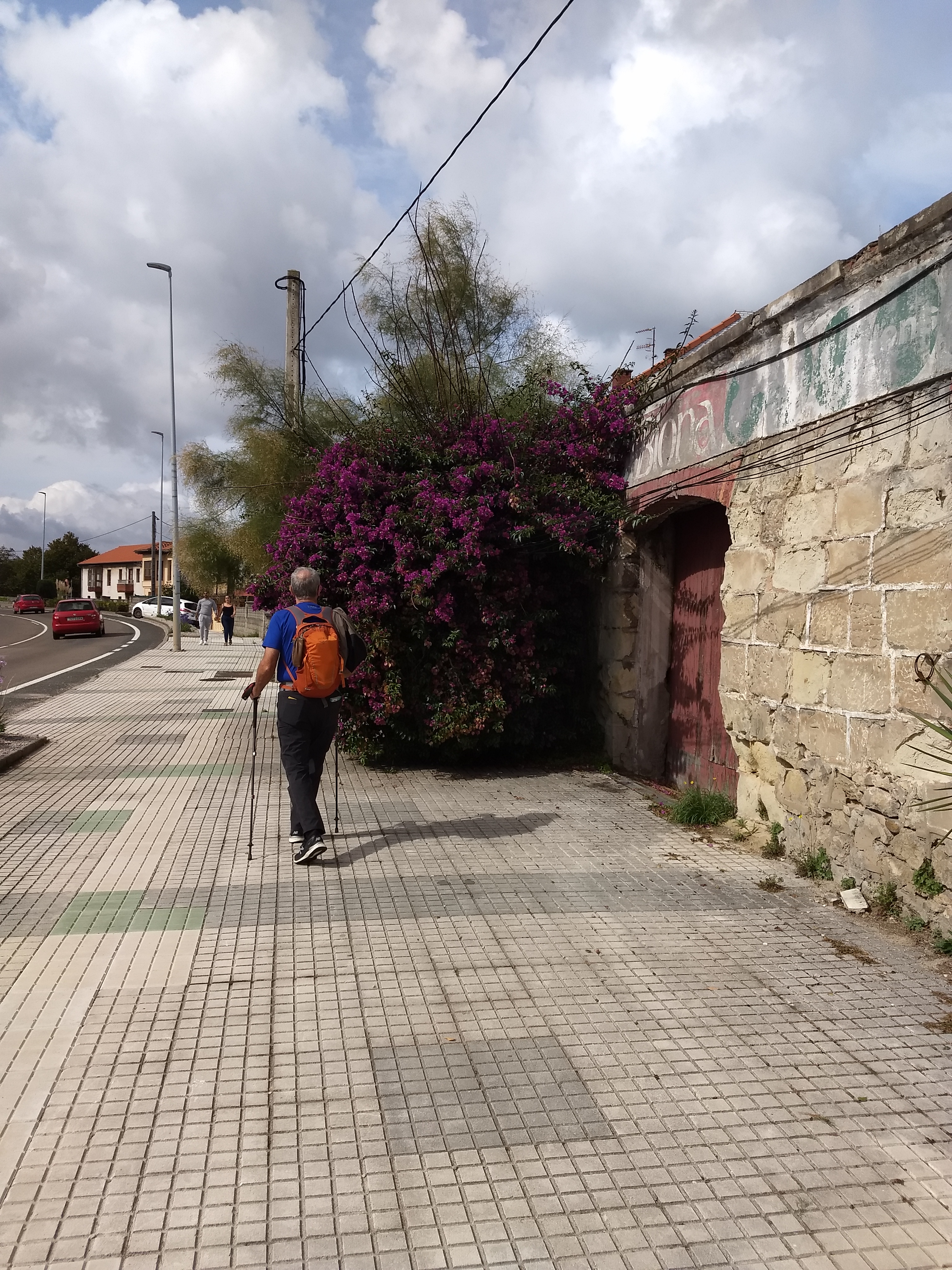 Thanks to Ed’s excellent planning, we started out with an easy stage of 11 kms by taking a commuter train out of Santander to Requejada and then walking to Santillana del Mar, which is a lovely village that has been largely restored just within the last 20 years. Sadly, the wonderful 12th century church has not received needed attention. As we knelt in worship, an alarming amount of crumbling rock and mortar ground beneath our knees and seats. Gaping cracks were opened in the back wall.Among scores of ancient Camino churches where we have celebrated the Eucharist, this was in the worst condition.
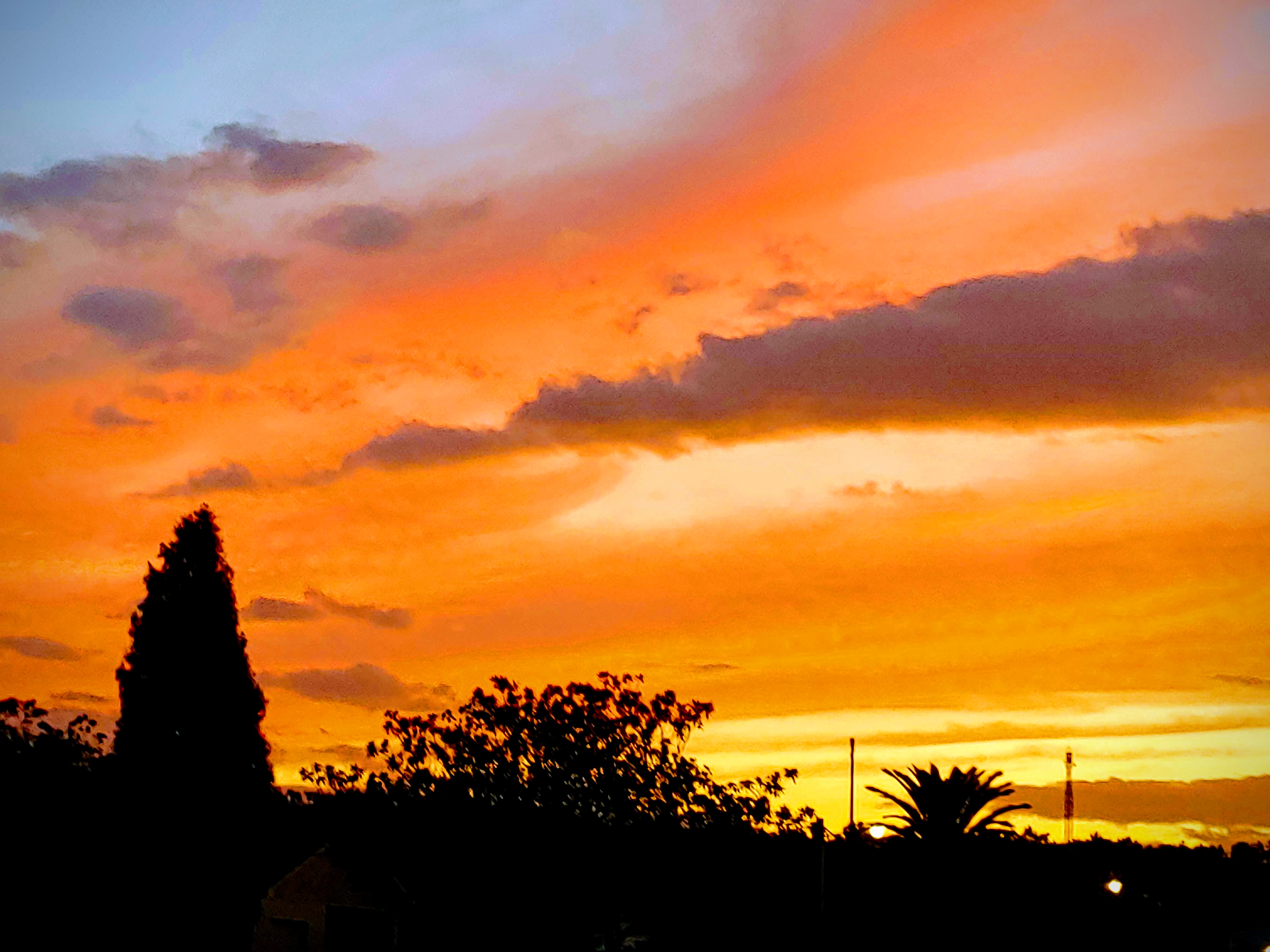
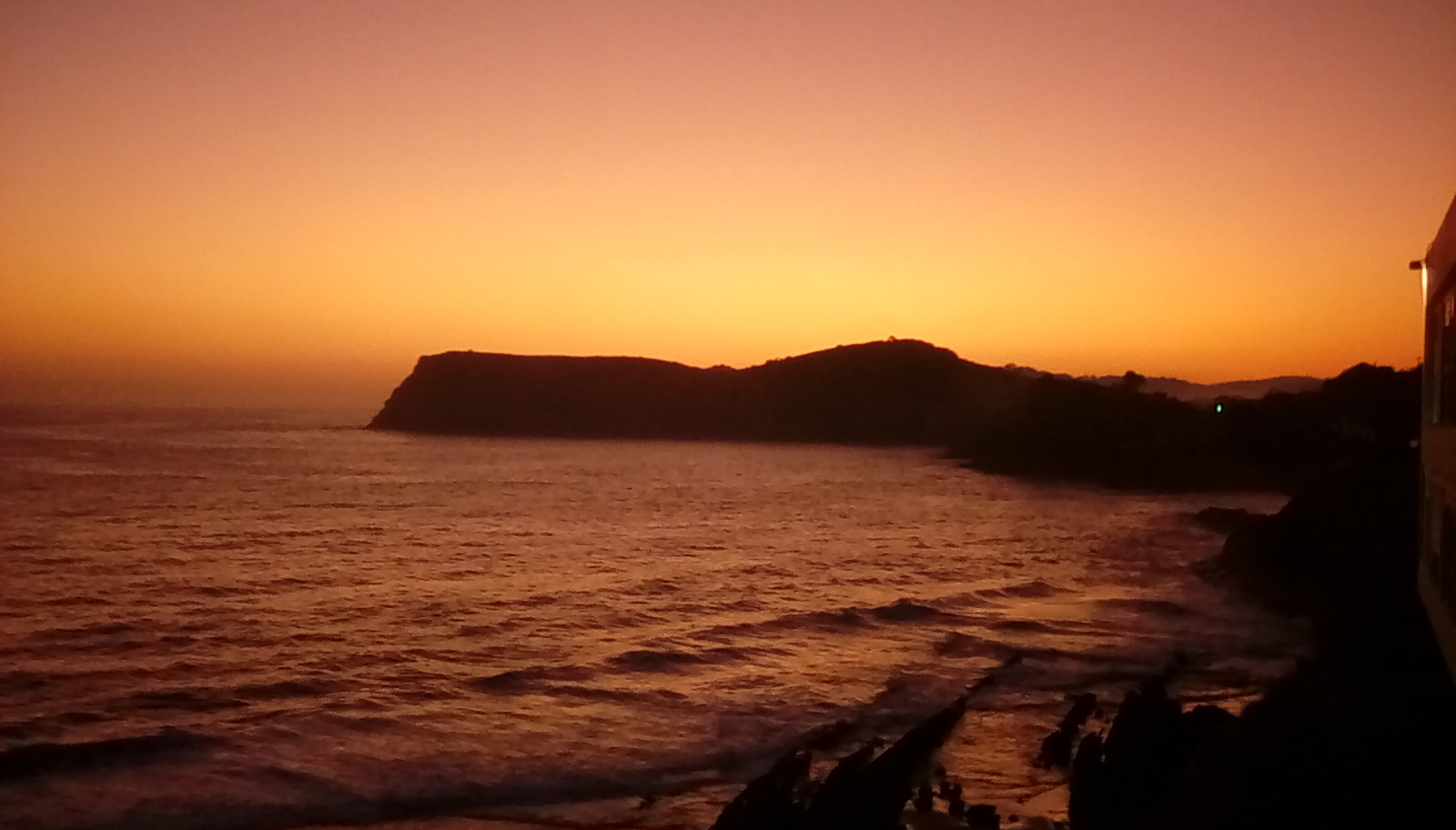
 On Day 2 we wound our way up and down hills, near and far from the coast. That night we slept to the sound of the surf and woke to a band of dusky pink reflected from the sunrise into the western sky. Knowing that our needs will be provided, we started without our pilgrim symbols –the scallop shell signifying the Way of St James– and sure enough, found the very last two shells in a tiny shop tucked into the corner of the Santillana church.
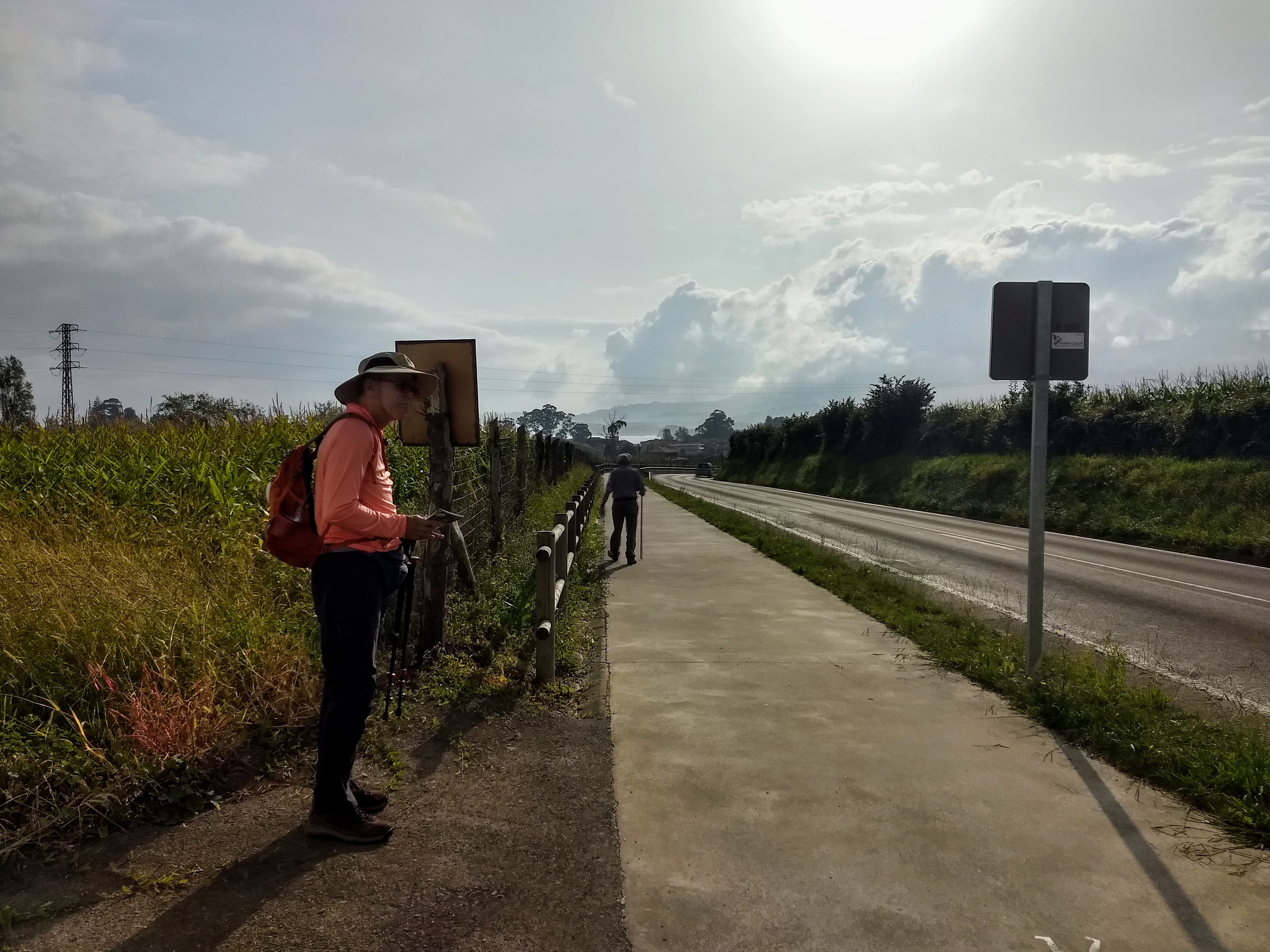
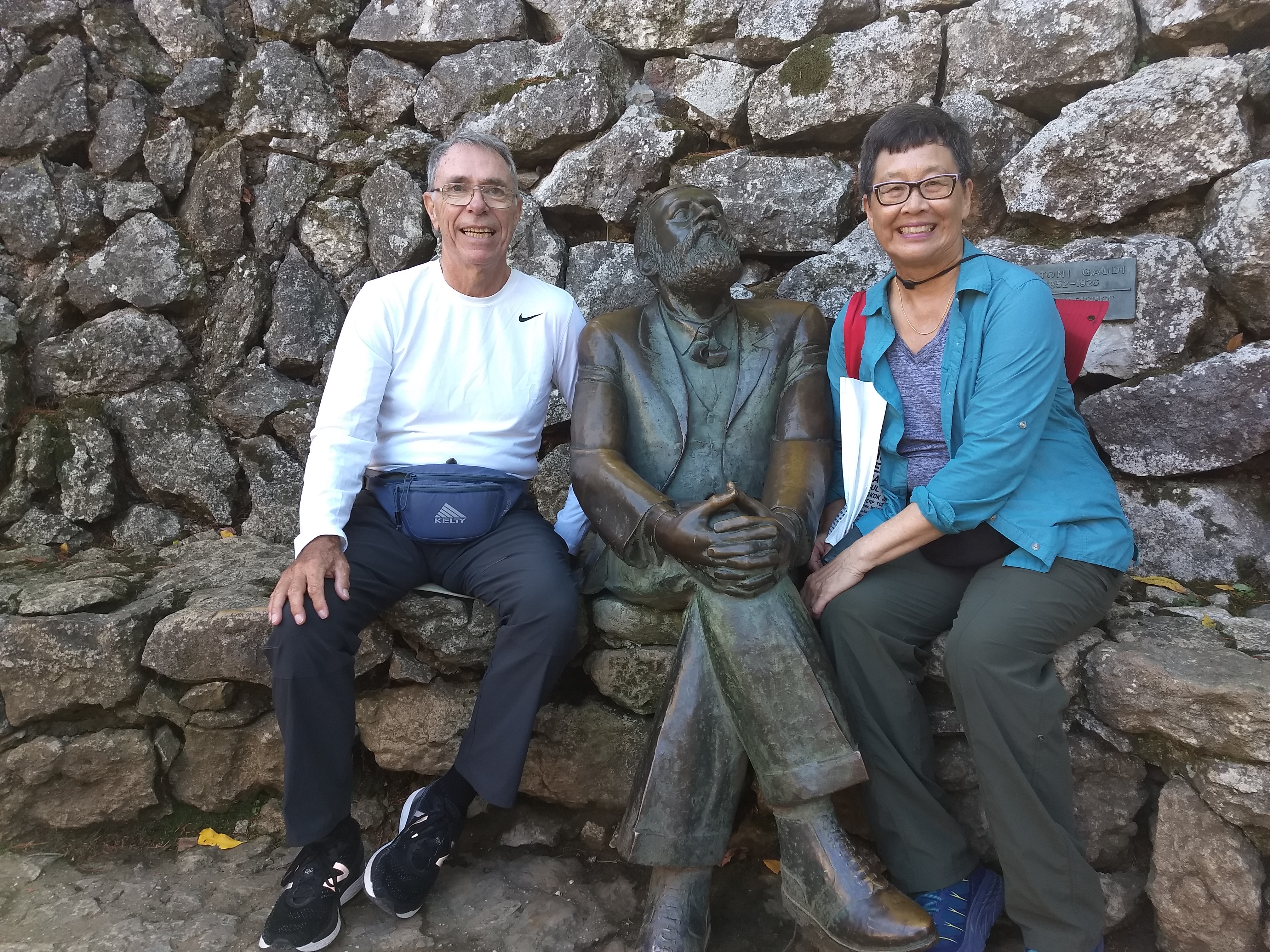
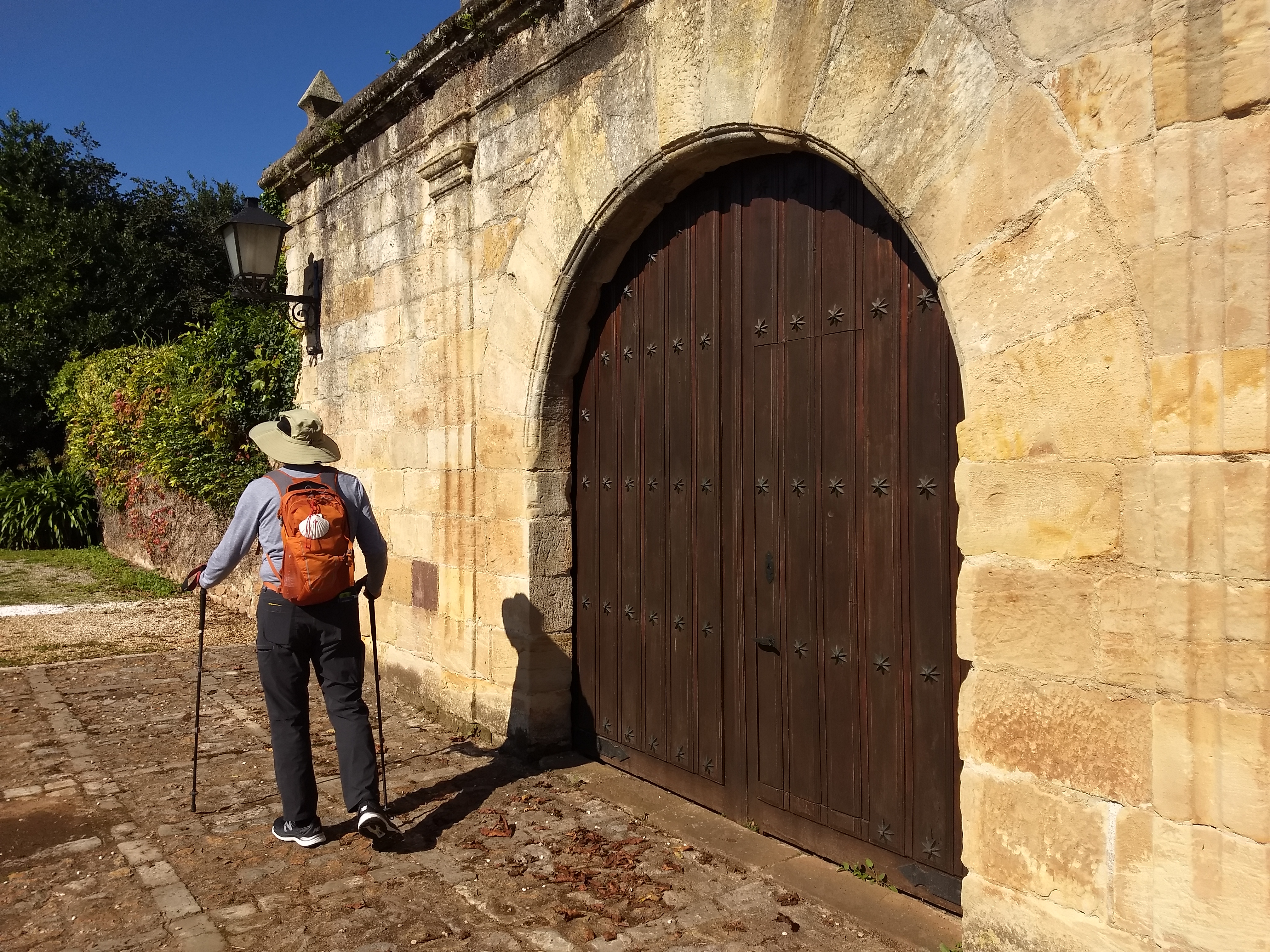 Notice the difference between this photo and the one at the top of this post. So we walk on, falling gradually into our pilgrim rhythm and listening to the quiet.
 Anne and Ed Blog